
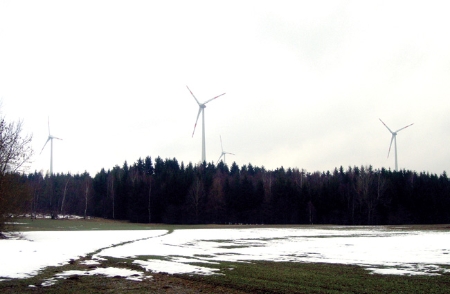
 In search of something cheering in the face of the depressing news of continuing increases in the levels of greenhouse gas emissions I found my way to the website of Renewable Energy World Magazine and the welcome reminder that alongside the increasingly dangerous exploitation of fossil fuels the renewable energy industry is making significant progress. I’ll mention two or three recent items out of many from the website to give the flavour of that progress.
Category: environment and ecology
Generation Us
Andrew Weaver is a notable Canadian climate scientist. He’s recently written a short book for the general reader to give an easily understandable account of the science of human-caused climate change, to explain its impacts and to suggest solutions. The book is published as one of the Rapid Reads series by Raven Books. It’s titled Generation Us: The Challenge of Global Warming — and if you’re wondering what the title means, it’s a contrast with Generation Me and signifies the moral dimension of tackling climate change.
His account of the science is straightforward. He explains the natural volcanic sources of carbon dioxide and points out that human activities are emitting between 100 and 200 times the amount released by volcanoes and at a very rapid rate. Tens of millions of years of storage of carbon dioxide in coal, oil and natural gas is being returned to the atmosphere in a few decades.
Key contradictions
 Gareth’s post on James Hansen’s talk at the University of Canterbury carried a link to a recent report that the Prime Minister supports the intentions of Solid Energy to develop the Southland lignite fields. The contrast between the warnings of Hansen and the bland assumptions of Key was painful.
Key speaks straight business as usual:
“At the moment companies like Solid Energy are growth companies and we want them to expand in areas like lignite conversion.”
“We know there is lots of resource there and we know they potentially have the capability [to convert lignite to urea or diesel] and so we will see how that progresses, but the briquette plant is a good starting point.”
The illustrated McKibben
[youtube]xhCY-3XnqS0[/youtube]
If you watch nothing else today, watch this: Bill McKibben’s recent opinion piece on recent US and world weather extremes illustrated with pictures of the events Bill describes. Excellent work by Plomomedia.
[Update: Amy Goodman at The Guardian provides more context: “The troubled sky reveals the grief it feels…“]
The (un)principled sceptic
 Over at Treadgold’s emporium, the owner is mining a rich vein of nonsense: he’s posting the letters to the editor the newspapers won’t print. One that caught my eye is from Professor Mike Kelly, a Cambridge nanotechnologist and climate sceptic who happens to hail from New Plymouth. Professor Kelly makes a good start:
It is perfectly possible to adopt a position, as I have, of ‘a principled climate science scepticism’.
Sounds good, doesn’t it? But a bit later on, in attempting to adduce evidence in support of his position he writes:
She [the author of the piece he’s complaining about] might like to look at the recent analysis by Pat Franks (sic) which tightens the conclusion that the anthropogenic contribution is at most 0.3°C per century. This concludes that it is rising temperatures that are increasing the atmospheric carbon dioxide, not the other way round.
Oh dear.