
 The case for putting a price on greenhouse gas emissions from human activity is not arguable. It’s undeniable. But what is arguable is the best way of achieving it in the working of a modern economy. Shi-Ling Hsu, a law professor at the University of British Columbia, argues for a currently less popular way in his newly published book The Case for a Carbon Tax. “There is no policy instrument that is more transparent and administratively simple than a carbon tax.” Unfortunately its overtness tells against it politically because voters, politicians and emitting industries see the price very clearly and can calculate what they think it might cost them. But in Shi-Ling Hsu’s view environmental measures that purport to be painless are either misleading or set to accomplish nothing.
His book is grounded in the recognition that climate change is a serious problem with unacceptably high risks of catastrophic consequences that must be addressed immediately. It is alone among environmental problems in posing the risk of such vast environmental changes that the effects could destabilise entire economies, countries, and regions. Continue reading “The Case for a Carbon Tax”
 International shipping is responsible for an estimated 3 percent of global greenhouse gas emissions, equivalent to those of Germany, thirteen times those of New Zealand. On current trends they are expected to increase by 150-250 percent by 2050. They are as yet unregulated, trapped for over a decade in a familiar impasse where developed countries argue that all ships must be covered by the same regulation, the norm in the International Marine Organisation, but most developing countries insist that any regulation respects the principle that developed countries must lead the fight against climate change, known in the UN Framework Convention on Climate Change as ‘common but differentiated responsibilities’.
 We seem to have convinced the world that we’re right up in the forefront when it comes to tackling climate change.
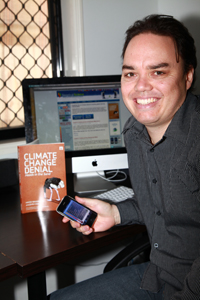 Our warm congratulations to John Cook, the creator of the widely respected SkepticalScience website, co-author of
  I was active in Amnesty International at the time when the International Criminal Court was being debated and we lobbied hard for its establishment. In view of all the obstacles it seemed a minor miracle that it finally gained enough member state support to get under way. It is by no means the universally acknowledged authority that it should be, but it is functioning and playing an important role in the modern world. I was therefore interested to see