Possible the longest ever title on a Hot Topic post: Simon Johnson continues our series on the NZ election by examining the entrails…
So whats happening with climate change in the election? Elephant swallowed by the snakeI was originally thinking about writing a wonkish post comparing climate change policies between parties. You know the sort of thing. Which parties have policies that reflect the seriousness of the impacts the science predicts? Who has got the science wrong? Which politicians are all talk and no action? What are the minute details of the each party’s NZETS policies. Such as delays to sector entry dates, partial price obligations and varying free unit allocation regimes in the . MEGO, anyone? (My Eyes Glaze Over….)
Then I thought, Nah! I am looking through the wrong end of the telescope. You know what really strikes me about climate change in the election? It’s the absence. It is as if climate change is nearly completely absent from the campaign. When climate change does pop up, it’s portrayed in simplistic soundbites.
Here’s the first in a series of NZ election special articles from Hot Topic’s contributors. More pithy comment to follow… Last week I was open-mouthed when I heard the National Party release its environment and climate policy pretty much in the same breath as releasing the agriculture policy (same province, same day). I can’t figure out how they thought these two things went together — well, in a good way anyway.
Climate change: no mention of the importance of the issue, the alarming reports coming from the scientists. A lot of blather about keeping up (or perhaps “down” would be a more appropriate term) with other countries. Slowing down the ETS. Never mind that our actions are among the smallest in the industrialised world (see the Climate Action Tracker’s assessment here — rated “inadequate”).
I was pleased to see the Labour Party’s announcement that it is opposed to the Southland lignite development planned by Solid Energy, and went looking for more detail in the party’s climate change policy. The opening paragraph of the policy statement struck me as more direct than I expected:
Climate change poses an enormous global threat and severely threatens our way of life. It is occurring more rapidly than previously predicted. Humankind is pouring carbon dioxide and other greenhouse gases into the atmosphere on a scale far greater than the ability of the environment to absorb them.
In 1932 I was born into a world of 2 billion people. Nearly 80 years on there are 7 billion, more than three times as many. My own small country New Zealand has nearly tripled its population in that time. I confess to feeling anxiety about the capacity of the globe to sustain this level of population, let alone the further billions we can expect this century. Does that make me a populationist? That’s the term used by Ian Angus, editor of online journal Climate and Capitalism, and Simon Butler, coeditor of Australian Green Left Weekly, in their new book Too Many People? Population, Immigration, and the Environmental Crisis to describe people who attribute social and ecological ills to human numbers. The authors don’t. They attribute climate change and other ecological challenges to the growth imperative of capitalism, and their book takes issue with those who see “overpopulation” as a cause of the threats to the environment.
Rosemary Lyster, Professor of Climate and Environmental Law at the University of Sydney explains the most important features of Australia’s new emissions law. It’s interesting to compare and contrast the framework with the current ETS legislation in NZ, and what may happen to our framework if National form the next government. [Republished from The Conversation]
Australia’s carbon price mechanism has become law. But how does it work? There are six key points:
1. Australia’s emissions trajectory
By 2020, Australia will reduce all of its greenhouse gas emissions by 5% compared with 2000 levels. By 2050, emissions will be reduced by 80% compared with 2000 levels.


 Here’s the first in a series of NZ election special articles from Hot Topic’s contributors. More pithy comment to follow… Last week I was open-mouthed when I heard the National Party release its environment and climate policy pretty much in the same breath as releasing the agriculture policy (same province, same day). I can’t figure out how they thought these two things went together — well, in a good way anyway.
 I was pleased to see the Labour Party’s
 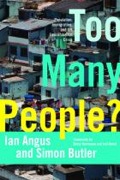 In 1932 I was born into a world of 2 billion people. Nearly 80 years on there are 7 billion, more than three times as many. My own small country New Zealand has nearly tripled its population in that time. I confess to feeling anxiety about the capacity of the globe to sustain this level of population, let alone the further billions we can expect this century. Does that make me a populationist? That’s the term used by Ian Angus, editor of online journal