| The Colbert Report | Mon – Thurs 11:30pm / 10:30c | |||
| Bill McKibben | ||||
|
||||
Bill McKibben in the lion’s den: 350 ways to tame the Colbert Nation. Brave man — but the plug for October 24th is an effective one. Check here for NZ events…
[H/T to Whoar]
Global warming and the future of New Zealand

| The Colbert Report | Mon – Thurs 11:30pm / 10:30c | |||
| Bill McKibben | ||||
|
||||
Bill McKibben in the lion’s den: 350 ways to tame the Colbert Nation. Brave man — but the plug for October 24th is an effective one. Check here for NZ events…
[H/T to Whoar]
 I watched Stephen Sackur interview James Lovelock on the BBC’s Hard Talk programme on Tuesday evening. It was a depressing experience. Lovelock largely reiterated the things he said in The Vanishing Face of Gaia, reported in my review here.  I listened to it all again. His familiar and seemingly detached expectation that most of the human race will be extinguished  this century. His strong distaste for green solutions, especially wind power. His conviction that all our efforts should now be directed to preparing for life in a diminished world, and that the more time we waste on silly ideas like renewable energy the worse things will be in the end. At present countries like the UK can and should provide a haven for refugees from hotter climates, but there will come a time when the lifeboat is full. I’m not sure how he envisages events unfolding at that point.
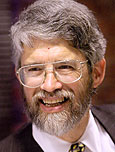 Physicist John Holdren is President Obama’s chief science advisor and director of the White House Office of Science and Technology Policy. Interviewed recently for Yale’s Environment 360 by Elizabeth Kolbert, he stuck to the theme that the administration plans to convert the U.S. “from the laggard that it has been in this domain†into “the leader that the world needs†on global warming. In a lengthy interview his comments on China struck me as particularly significant at this stage of international discussions. He has recently visited China with Todd Stern, the Secretary of State’s Special Envoy on Climate Change. Kolbert asked him to speak about what he heard from the Chinese and what he thought the U.S. can do to persuade countries like China and India to agree to some action that will be politically palatable at the Copenhagen conference. Continue reading “Holdren’s high hopes for China”
 The Government’s new chief scientist, Sir Peter Gluckman, yesterday published an excellent overview of the scientific understanding of climate change and how that impacts on policy in New Zealand. It’s a notably calm and measured piece — about as far from “alarmism” as it’s possible to be. Discussing the consequences of a 3.3ºC increase in global temperature by the 2090’s, Gluckman describes them as “quite scary”:
If the temperature rose by this amount then the scenarios become quite scary in terms of changes in climate, flooding of low-lying areas, new patterns of infectious disease, and reductions in the capacity of many parts of the world to support agriculture and therefore to support our continued existence as we know it. New Zealand would not be immune from these changes.
Others might prefer stronger language… but Sir Peter makes a number of telling points elsewhere. He likens those who oppose the mainstream scientific view on global warming to scientists who argued that AIDS was not a viral disease:
A similar debate occurred about AIDS, where a minority of scientists maintained for a long time that the disease was not caused by a virus. This view was manifestly wrong in the eyes of most scientists, but nevertheless some distinguished scientists, albeit usually not experts in virology, took different views until the science became irrefutable. The political consequences of this denialism had tragic results in some African countries.
Gluckman leaves the obvious corollary unspoken, so I hope he’ll forgive me for putting it into my own words: we can expect tragic results to flow from climate denial.
I’ll quote his final paragraph in full:
There is no easy answer -– the science is solid but absolute certainty will never exist. As part of the global community, New Zealand has to decide what economic costs it will bear and what changes in the way we live will be needed. We must be involved. This is a global challenge, and a country like ours that aspires to be respected as a leading innovative nation cannot afford to appear to be not fully involved. Indeed, such a perception would compromise our reputation and potential markets.
This is the advice John Key is receiving, and it’s good to see that Gluckman, while being measured and careful, is not underplaying the size of the problem or the role we should play. In fact, it might be possible to detect a mild rebuke for the government’s pusillanimous approach to emissions targets in the phrase we “cannot afford to appear to be not fully involved”. 10 – 20% is a long way from “fully involved”, I would argue.
 Amongst the many responses to the 2020 emissions “target range” at Scoop I stumbled upon this cracker from Alasdair Thompson, chief executive of the Employers and Manufacturers Association (Northern). It’s such a blatant misuse of statistics that I can’t let it pass unnoticed. Thompson describes the modest target as…
…a challenge for New Zealand is as big, or bigger than when the UK entered the European Common Market (EU).
And why? Because it’s going to cost a lot.
“At an average 15 per cent reduction, the cost of $30 per week per head amounts to $6.7 billion each and every year, said Alasdair Thompson, EMA’s chief executive. “This is more than the total of all our lamb, beef and other meat exports. It represents about 60 per cent of our total dairy exports. […] It’s the price we are being told in effect we need to pay – nearly five per cent of GDP – to retain access to world markets, mostly for our agricultural products.”
It appears Thompson has used the figures Nick Smith used at the announcement of the targets, then added his own gloss. Why is this misleading? First, the NZIER-Infometrics report [PDF] is useless as a guide to the cost of emissions reductions, as I showed here. Second, Smith’s use of figures from the report is itself suspect, as Keith Ng memorably noted at OnPoint. Thompson presents $30 a week as a “cost”, when in fact it’s a measure of foregone growth (ie the difference between two projections of economic growth). He then presents this in terms of GDP — a full 5% cost. This is a complete misrepresentation of the numbers. The NZIER-Infometrics report suggests that GDP will be reduced by 2.4 to 2.6% in 20202 on a scenario where NZ buys emissions units at $100/tonne to cover emissions that have not been subject to any reductions. In other words, even if you make lots of unrealistically expensive assumptions, the cost will be a lot less than Thompson wants us to think.
As baseless economic scaremongering goes, Thompson’s press release takes a very large biscuit. I’ve no doubt the membership of the EMA will insist that Thompson take a course in basic numeracy, and issue a retraction and clarification (but I won’t be holding my breath).
Bad Behavior has blocked 3169 access attempts in the last 7 days.