 The ETS review committee has published its report [PDF here], and recommends that an all sectors, all gases emissions trading scheme should be the “primary economic mechanism” in the government’s response to climate change. However the report makes very little in the way of substantive recommendations about how the current ETS legislation should be amended. Agriculture should be included, and forestry given legislative certainty, but there’s no detail on how the current ETS timetable could be altered. The report’s main conclusions appear to echo climate change minister Nick Smith’s recent comments on the likely future course of climate policy — but effectively give him a free hand to do what he wants.
The majority report — supported by National and United Future — is accompanied by minority reports from Labour, the Greens, the Maori Party and ACT. Labour, the Greens and the Maori Party want tougher action, while ACT still denies the reality of climate change. The Maori Party and ACT would prefer a carbon tax to an ETS, but are otherwise on different planets. This leaves National trying to drum up support for amending legislation, but unable to rely on anyone other than Peter Dunne. Meanwhile, Labour is still offering an olive branch: they’ll support amending the current ETS, but not if it means huge taxpayer subsidies to big emitters or cripples forest planting.
Here are some of the report’s key findings:
Continue reading “ETS report: wishy-washy and a waste of time”

 Celsias.co.nz has launched in New Zealand. The goal of the site is to help kiwis working in the “sustainability space” to come together, share knowledge, build community, and take action. Whether your passion is organics, climate change, green buildings, or healthy lifestyles, find more cool switched on people on Celsias.
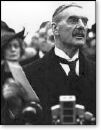 In September 1938 British Prime Minister Neville Chamberlain returned from a conference at which Britain and France had agreed to Hitler’s annexation of the Sudetenland in Czechoslovakia. He spoke to a crowd outside Downing Street: “I believe it is peace for our time…And now I recommend you to go home and sleep quietly in your beds.â€
 Oxfam climate change reports keep coming.Â