
 As a handy follow-up to Bryan’s post yesterday about calls to plan for sea level rise of about two metres over the coming century, a new report, Facing up to rising sea levels [PDF], examines how two British coastal cities, Portsmouth and Hull, might cope. According to the Guardian coverage, Hull could become a “Venice-like waterworld” (which is a considerable challenge to my imagination) and Portsmouth a new Amalfi (ditto). Set aside the hyperbole, however, and the report — a joint effort by the Royal Institute of British Architects and the Institution of Civil Engineers — is an examination of how the cities could respond to sea level rise by building defences, managing a planned retreat, or by building out and over the sea as it rises. The results are a fascinating look at how ingenuity in the face of a severe challenge can create interesting environments — if not, perhaps, a new Venice in northeast England.
Category: Climate politics
Seven feet high and rising
 Plan for two metres sea level rise this century. That’s the message from Rob Young and Orrin Pilkey in a Yale Environment article published today.
“This number is not a prediction. But we believe that seven feet is the most prudent, conservative long-term planning guideline for coastal cities and communities, especially for the siting of major infrastructure; a number of academic studies examining recent ice sheet dynamics have suggested that an increase of seven feet or more is not only possible, but likely. Certainly, no one should be expecting less than a three-foot rise in sea level this century.”
Friedman: China beating US on low carbon energy
 Thomas Friedman is now doubtful that China will follow an American lead towards a greener economy, as he suggested in his book Hot, Flat and Crowded reviewed here. He considers rather that it is more likely to pull ahead of the US. He writes from China in his recent column in the New York Timesthat he’s been astonished to learn of how many projects have got under way in China in just the last year –- wind, solar, nuclear, mass transit and more efficient coal burning.
He quotes Bill Gross, head of a solar-thermal Californian company, eSolar, announcing the biggest solar deal ever, a 2 gigawatt, $5 billion deal to build solar thermal plants in China using California-based technology. Gross comments that China is being more aggressive than the US. His company applied for a US Department of Energy loan for a 92 megawatt project in New Mexico. In less time than it took them to do stage 1 of the application review “China signs, approves, and is ready to begin construction this year on a 20 times bigger project!”
Friedman goes on to instance other developments. Solar panels are one. He says so many new solar panel makers emerged in China in the last year alone that the price of solar power has fallen from roughly 59 cents a kilowatt hour to 16 cents. 50 new nuclear reactors are expected to be built by 2020, while the rest of the world may manage 15. High speed trains are breaking world records. A high speed rail link from Shanghai to Beijing means trains will cover the 700 miles in just five hours, compared with 12 hours today (and 18 hours for a similar distance from New York to Chicago in the US).
China is on the way to making green power technologies cheaper for itself and for everyone else.
“But even Chinese experts will tell you that it will all happen faster and more effectively if China and America work together — with the U.S. specializing in energy research and innovation, at which China is still weak, as well as in venture investing and servicing of new clean technologies, and with China specializing in mass production.”
Friedman concludes with a call to America to put in place a long-term carbon price that stimulates and rewards clean power innovation. “We can’t afford to be asleep with an invigorated China wide awake.”
Meanwhile India has plans to be a world leader in solar power, as announced by the Prime Minister a couple of days ago. He launched the National Solar Mission with a target of 20,000 megawatts of solar generating capacity by 2022. It will be helped along by a regulatory and incentive framework. Manmohan Singh hoped the new laws and incentives will “lead to a rapid scale up of capacity. This will encourage technological innovation and generate economies of scale, thereby leading to a steady lowering of costs. Once parity with conventional power tariff is achieved, there will be no technological or economic constraint to the rapid and large-scale expansion of solar power thereafter”.
He said he was “convinced that solar energy can also be the next scientific and technological frontier in India after atomic energy, space and information technology”. The scheme has pride of place in India’s National Action Plan on Climate Change.
Follow the climate money? Well, they did…
This is a cross-post from Peter Griffin’s blog Griffin’s Gadgets over at Sciblogs. Peter (head of the NZ Science Media Centre), had the chance to explore some of the background to the intense lobbying being carried out on climate action (or inaction) when he met Bill Buzenberg, executive director of the Washington-based Centre for Public Integrity recently…
In the wake of Climategate and especially during the Copenhagen climate talks, much was made by climate sceptics of the “billions” climate scientists have received over the last two decades to undertake research into the claimed impacts of global warming.
This claim from the grand-sounding but climate crank-infested Science and Public Policy Institute typifies the criticisms:
The US Government has spent more than US$79 billion of taxpayers’ money since 1989 on policies related to climate change, including science and technology research, administration, propaganda campaigns, foreign aid, and tax breaks. Most of this spending was unnecessary.
 Well, a group with a well-earned reputation for independent investigative journalism has followed the money trail of the climate change lobby set up to insulate the multibillion dollar industries that have the most to lose from the world’s governments getting serious about tackling climate change.
I had the pleasure of last week catching up with Bill Buzenberg, the executive director of the Washington-based Centre for Public Integrity. Holidaying in New Zealand while visiting his daughter-in-law Dacia Herbulock, my colleague at the Science Media Centre, the Edward R. Murrow Award-winning journalist filled me in on the centre’s latest investigation:
Our team pieced together the story of a far-reaching, multinational backlash by fossil fuel industries and other heavy carbon emitters aimed at slowing progress on control of greenhouse gas emissions. Employing thousands of lobbyists, millions in political contributions, and widespread fear tactics, entrenched interests worldwide are thwarting the steps that scientists say are needed to stave off a looming environmental calamity, the investigation found.
This, from a piece on the oil and coal industries’ lobbying efforts in Copenhagen:
The world’s two largest publicly traded companies, Royal Dutch Shell and ExxonMobil, together earned nearly US$8 billion in the last quarter alone. They are leaders in an industry that employed more than 350 lobbyists in Washington during the first six months of 2009. Shell secured the lobbying expertise of a former U.S. senator. Exxon hired a former staffer for the Energy and Commerce Committee of the U.S. House of Representatives.
The extensive coverage following the global lobbying efforts on climate change makes for fascinating reading. If climate scientists have been riding a gravy train of Government funding, at least there’s transparency in where the money went. The climate change lobbyists, most of them working for energy providers and major polluters, are incentivised to win concessions for their deep-pocketed pay masters. The extent of this industry is hard to judge, as the centre discovered when it delved into the global lobbying industry.
For a taste of the issues that preoccupy these highly-paid lobbyists, read this piece on the jostling for position that was underway on the fringes of the Copenhagen conference:
For carbon-intensive power companies, the ideal outcome for a UN framework would feature major carbon reduction targets by the year 2050 or thereabout — allowing them to outfit their plants with technology to sequester carbon and store it underground. If faced with nearer term targets… many companies would have to turn to natural gas — a technology investment that wouldn’t payoff in the long run.
Sadly for the coal industry and despite the furious lobbying, carbon capture and storage remained off the agenda at Copenhagen and will not be added to the list of technologies that industrial countries can invest in to offset their emissions.
The point here is that for every dollar that goes to a scientist researching climate change, at least the same amount and likely much more is going into the pockets of people paid to maintain the status quo, discredit the scientists, slow progress on climate change. What is worse is that their activities are not transparent.
Follow the money say the sceptics. Well it is interesting, as the Centre for Public Integrity reveals in its investigation, that the aims of the climate change lobby groups and the large industries they represent dovetail quite nicely with the arguments put forward by the sceptics. As this report on Politico from the centre’s reporters notes:
Put the 60 or so venture and investment firm lobbyists together with the 170 alternative energy lobbyists and 160 environmental lobbyists, and they are still outnumbered 5-to-1 by the approximately 2,000 representatives of major sectors that are looking for a slowdown or handout — traditional manufacturers, power companies, oil and gas, transportation and agriculture. The total number of climate lobbyists working for all those interest groups, new and old, stands at about 2,780 — five for every member of Congress. That’s 400 percent more than when lawmakers first considered a nationwide greenhouse gas reduction program six years ago. If they all want a place at the Senate’s table, there had better be plenty of chairs.
[youtube]VZwzG20O4s8[/youtube]
Lester Brown: US falling out of love with cars
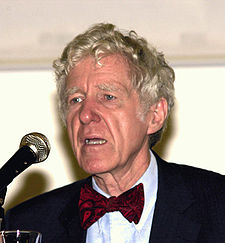 Lester Brown, author of Plan B 4.0, places more hope for climate stabilisation on shifts that he sees taking place in society and the economy than in internationally negotiated agreements. Not that he rejects such agreements, but he regards them as somewhat obsolete, for two reasons: first, since no government wants to concede too much compared with other governments, the negotiated goals for cutting carbon emissions will almost certainly be minimalist, not remotely approaching the bold cuts that are needed; second, since it takes years to negotiate and ratify the agreements, we may simply run out of time.
He’s just issued a Plan B update which illustrates the kind of positive changes he sees taking place without the stimulus of global agreements. He announces that America’s century-old love affair with the automobile may be coming to an end. The U.S. fleet has apparently peaked and started to decline. In 2009, the 14 million cars scrapped exceeded the 10 million new cars sold, shrinking the U.S. fleet by 4 million, or nearly 2 percent in one year. While this is widely associated with the recession, it is in fact caused by several converging forces. He sees no reason why the trend of scrappage exceeding new car sales should not continue through to 2020.
The forces at work?
Market saturation for one. The US has five vehicles for every four drivers. “When is enough enough?” Japan apparently reached car saturation in 1990. Since then its annual car sales have shrunk by 21 percent.
Ongoing urbanisation is having an effect. “The car promised mobility, and in a largely rural United States it delivered. But with four out of five Americans now living in cities, the growth in urban car numbers at some point provides just the opposite: immobility.” Public transport schemes are being expanded and improved in almost every US city, and attention being given to more pedestrian and bicycle-friendly streets. Car use in cities is being discouraged.
Economic uncertainty and reluctance to undertake long-term debt is affecting household choices. “Families are living with two cars instead of three, or one car instead of two. Some are dispensing with the car altogether. In Washington, D.C., with a well-developed transit system, only 63 percent of households own a car.”
A more specific uncertainty is the future price of gasoline. Motorists have seen gas prices climb to $4 a gallon, and they worry that it could go even higher in the future.
Finally, Brown points to a declining interest in cars among young people as perhaps the most fundamental cultural trend affecting the future of the automobile. Half a century ago getting a driver’s license and a car or a pickup was a rite of passage. Getting other teenagers into a car and driving around was a popular pastime.
“In contrast, many of today’s young people living in a more urban society learn to live without cars. They socialize on the Internet and on smart phones, not in cars. Many do not even bother to get a driver’s license. This helps explain why, despite the largest U.S. teenage population ever, the number of teenagers with licenses, which peaked at 12 million in 1978, is now under 10 million. If this trend continues, the number of potential young car-buyers will continue to decline.”
If his expectation of shrinkage of the U.S. car fleet is sustained it also means that there will be little need to build new roads and highways. Fewer cars on the road reduces highway and street maintenance costs and lessens demand for parking lots and parking garages. It also sets the stage for greater investment in public transit and high-speed intercity rail.
“The United States is entering a new era, evolving from a car-dominated transport system to one that is much more diversified.”
Brown is ever the optimist, but he seeks to be well grounded. Has he been too quick to discern a trend, or has close attention to emerging possibilities alerted him to something of real promise?