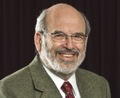
 NZ PM John Key’s Chief Science Advisor, Professor Sir Peter Gluckman, tackled denialism head on in a lecture at Victoria University of Wellington’s Institute of Policy Studies last night. Titled Integrity in Science: Implications from and for the Climate Change Debate [pdfof full text], it’s an interesting and worthwhile overview of the issue from someone steeped in the science. Gluckman’s thesis is that the tactics of those who deny climate change — for whatever reason (he defines three) — are undermining all science:
…in an electronically connected world the tactics of those who reject the consensus, whatever their motives, can undermine confidence in the entire science system. In a world that is increasingly dependent on science in many domains, I cannot regard it as helpful to actively promote distrust and suspicion of the scientific process for political ends.
Gluckman begins by discussing the nature of science and true scepticism, then moves on to define the climate debate thus:
At the heart of the climate change issue are three questions:
- What is the rate of change in global temperature and what will be its local effects?
- What is the level of certainty about these predictions and the assumptions made in reaching these predictions?
- What is the nature of response that the world community must make?
The bulk of climate science and indeed the IPCC consensus approach has been an effort to deal with the first two questions.
Finding answers to the third question is the hard bit, because that’s where what science tells us feeds into policy decisions, and special interests and ideologies come into play. Gluckman defines three groups opposed to action on climate change:
…a small group of scientists who sustain a contrary view for a variety of reasons, some scientific and some not, those who have a vested interest in promoting denial and those who for a variety of reasons, largely philosophical, will reject the evidence.
One philosophy he considers in some more detail:
In particular, many with a libertarian ideology do not accept that the state should control how they live their lives, particularly when the actions required will not impact for a generation or so. The economic libertarian believes growth is paramount and if there is a problem then technology will eventually solve it. There seems to be some irony in accepting that science may solve a problem but that it cannot correctly identify the problem.
That might ruffle a few feathers. I suspect a pop-gun broadside will be on its way from Barry Brill in the near future. In reality, Gluckman is being rather cautious. I find it a little disappointing (if entirely understandable, given his position) that he doesn’t go on to describe how these groups have become intertwined, to the extent that climate denial is now almost a required position for anyone with strong right wing views. It’s also clear that the melange has been encouraged, planned and funded through a clever campaign by special interests. Gluckman notes the parallel with tobacco denial, but doesn’t draw the obvious conclusion: that the tactics and tools for delaying action were first developed there, and then transferred on to climate and other issues. If he hasn’t already got a copy of Merchants of Doubt or Climate Cover-Up, perhaps we should club together to send him copies…
The media plays an important part in all this, and Gluckman is pretty direct about the responsibility they carry:
The issue here that concerns me is that of how to communicate complex science. The public has a right to understand these issues and in the end they determine how society will respond. However without responsible media it is not clear how this can be achieved. Publishers, editors and journalists all have a role in ensuring quality in the information exchange.
He underlines his point by quoting from a recent essay and book review (pdf) by Philip Kitcher in Science (which is well worth a read in its own right):
“It is an absurd fantasy to believe that citizens who have scant backgrounds in the pertinent field can make responsible decisions about complex technical matters on the basis of a few five minute exchanges amongst more or less articulate speakers…”
He goes on a few sentences later to say:
“Those covering the questions in the media, have the duty to convey the results so that citizens can cast their votes as an enlightened expression of freedom, justifiably aimed at the outcomes for which they hope. Staging a brief disagreement between speakers with supposedly equal credentials, especially when it is not disclosed that one of them is answering to the economic aspirations of a very small segment of society, is a cynical abnegation of that duty“.
Clearly, communicating science in those circumstances is a difficult task, and Gluckman notes how difficult and frustrating that can be for working scientists. Naomi Oreskes (reported in a Revkin tweet) goes further:
Scientists and academic institutions need to expand definition of what their “real work” is: “The work is not done, in my opinion, until it’s communicated in a way that citizens understand.”
It’s just as difficult and frustrating for communicators who aren’t working scientists, forever playing whack-a-mole with arguments and ideas that have been repeatedly debunked, dealing every day with the deluge of denialist propaganda. And I can’t help but have sympathy for the under-resourced and hard-pressed non-specialist journalists who have to deal with the issue in New Zealand’s media. The easy option may sometimes be the only feasible option.
Gluckman’s key point, however, is that the encouragement of confusion and mistrust of climate science has wider implications:
There is a growing concern among those of us who have some role in marrying science and policy that the way the debate is being framed is undermining confidence in the science system.
I would put it more strongly. The tactics being used to delay and undermine action climate change are quite deliberately poisoning the interface between science and policy-making. It has become almost standard corporate practise to deny, delay and defer action. Policy-makers are left in an invidious position — especially when those corporates and their shareholders play a significant role in funding politicians and parties. John Key’s appointment of Gluckman was a step in the direction of a solution. One can only hope that the PM is following his advice.

 Naomi Oreskes and Erik Conway have an interesting article in Yale Environment developing ideas from their book Merchants of Doubt. Some of it summarises the findings of the book concerning the organised campaigns of denial of science, but there are some new expressions of anxiety which are deserving of notice.
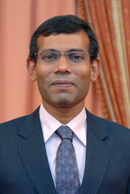 I well remember a meeting of the Hamilton group of Amnesty International back in the 1990s, when a visitor who lived in the Maldives turned up, wanting to find out more about how AI worked. It wasn’t long before we found out why he was interested, as he told us the story of repression and out-of-sight political prisoners in his country.
 As a former English teacher I naturally take pleasure from the presence of literary people in the battle for action on climate change. Andy Revkin’s DotEarth blog