
Defending the future: scientists take the stand

Perhaps serving as defence witnesses will prove a new opportunity for climate scientists to make the clear public statement that the confused processes of the media often muddy.  In 2008 James Hansen famously defended the UK protestors, the Kingsnorth Six, who were charged with criminal damage when they climbed to the top of the smokestack at Kingsnorth coal-fired power station in Kent. His role was to provide expert opinion about the dangers of climate change and the part played by coal as the fossil fuel most responsible for increasing CO2 levels. He was an hour and a half on the stand, much of the time given to explaining the consequences of continuing to increase the CO2in the atmosphere. The concluding paragraph of his written statement related his material to the trial:

Recognition of these basic facts by the defendants, realization that the facts were also known by the government, utility, and fossil fuel industry, and realization that the actions needed to protect life and property of the present and future generations were not being taken undoubtedly played a role in the decision of the defendants to act as they did.

The six were acquitted.

Now another climate scientist has given evidence for the defence in the trial of nine members of the Plane Stupid protest group facing breach of the peace charges for occupying Aberdeen airport and disrupting flights in March last year. They plead not guilty, on the grounds that their actions were justified as they assembled peacefully to prevent a greater crime to future generations through climate change. The vandalism charges they also faced have been dropped.

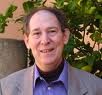
Alice Bows (pictured) from the Tyndall centre for climate change research is the climate scientist who has testified as an expert witness. Yesterday she said in court that the Scottish government’s climate change programme, which seeks to cut emissions by up to 40% by 2020 and 80% by 2050, was “welcome” but not enough. (Reports from Climate9 and the Guardian.)

“The UK Government’s Committee on Climate Change policy of 80% reduction in emissions by 2050 only gives us a 50:50 chance of avoiding dangerous climate change. You wouldn’t go to sleep in a house that had a 50:50 chance of burning down in the night, so we need even tougher targets. In fact we need a complete de-carbonisation of the economy in the next few decades. Because we need to tackle emissions right now, the actions of both governments and individuals are important.”

Bows added that the aviation industry was of particular concern.

“Condensation trails, or the white trails, are also causing climate warming. On a UK basis, air travel contributes 6% of carbon dioxide emissions. If you compare that to other sectors, it’s quite a significant contribution.”

There’s nothing new in what Bows, and Hansen before her, have to say.  But the theatre in which it is said means that it gains sustained public attention. The fact that scientists are willing to emerge from their world of research and speak in the defence of activists is also in itself a sign to the public of how important they hold their message to be.

In August 2008 Alice Bows and Kevin Andersen published a paper, Reframing the climate change challenge in light of post-2000 emission trends, in the Philosophical Transactions of the Royal Society.  The abstract opened with these sentences:

The 2007 Bali conference heard repeated calls for reductions in global greenhouse gas emissions of 50 per cent by 2050 to avoid exceeding the 2°C threshold. While such endpoint targets dominate the policy agenda, they do not, in isolation, have a scientific basis and are likely to lead to dangerously misguided policies.

It’s a fair bet that Bows’ court appearance has achieved more public notice than the carefully argued paper in the Royal Society publication. Not that the paper didn’t therefore matter, but it’s also crucially important that such messages are heard loudly and clearly by the lay public. The action of the Dundee Nine has enabled that as a bonus.

Incidentally, the judge is noted in the Climate9 report as having referred to a BBC radio report of the study discussed in the recent Hot Topic post demonstrating that 98% of climate scientists agree that climate change is anthropogenic.
Sceptics face yawning credibility gap

We know that the vast majority of climate scientists support the explanation of anthropogenic climate change set out by the Intergovernmental Panel of Climate Change. That majority is now quantified in the first study of its kind published yesterday in the Proceedings of the National Academy of Sciences, Expert credibility in climate change.

“Here, we use an extensive dataset of 1,372 climate researchers and their publication and citation data to show that (i) 97–98% of the climate researchers most actively publishing in the field support the tenets of anthropogenic climate change (ACC) outlined by the Intergovernmental Panel on Climate Change, and (ii) the relative climate expertise and scientific prominence of the researchers unconvinced of anthropogenic climate change are substantially below that of the convinced researchers.”

The study explains the criteria by which these conclusions were reached, paying particular attention to the question of expertise, where weight was given to the number of climate publications of researchers and to their citation levels.

“We show that the expertise and prominence, two integral components of overall expert credibility, of climate researchers convinced by the evidence of ACC vastly overshadows that of the climate change skeptics and contrarians. This divide is even starker when considering the top researchers in each group.”

The team of four has obviously put a good deal of time into the study which was contributed for publication by Stephen Schneider (pictured). Why bother, one might ask.  Surely it’s all too apparent. It may be to readers of Hot Topic but the study notes that considerable and even growing public doubt remains about the anthropogenic cause and the level of scientific agreement about the role of anthropogenic greenhouse gases in climate change. The vocal minority of researchers and other critics who contest the conclusions of the mainstream scientific assessment has received large amounts of media attention and wields significant influence in the societal debate about climate change impacts and policy.

An analysis such as the study offers has not been conducted before, and the writers observe that it can help inform future ACC discussions. Translated into common parlance I guess that means they hope this will put paid to the idea still abroad, in at least the American media, that denial of anthropogenic climate change retains a respectable level of scientific credibility.

That may be optimistic. Journalism in general still has difficulty getting its head around the reality of mainstream climate science. The idea that there is a realistic alternative shows remarkable persistence. When I was writing occasional columns for my local paper, the Waikato Times, I discovered that my attempts to explain aspects of the current science eventually came up against an anxiety that the paper was not presenting a balanced picture. There was finally talk of pairing my column with another which would meet the paper’s obligation to offer its readers more than one opinion. I protested that I was representing mainstream science and asked why the paper should feel that needed to be balanced. I made that my last contribution and escaped the indignity of a balancing viewpoint. It seemed fairly clear that the East Anglia emails and the baseless attacks on the IPCC report by the likes of Jonathan Leake were enough to unsettle the journalists with whom I was dealing and bring back to life concerns which I thought had long been laid to rest.

One nevertheless hopes that  surveys and appraisals such as this one in a highly regarded journal will make a difference to media perception and help establish in the public mind the seriousness of the scientific understanding and predictions. It seems inconceivable that we should continue much longer refusing to face the reality.  But I’ve been thinking that for four years now.

Sunday Times apologises for “Amazongate” misinformation

Three months after Simon Lewis laid a complaint with the UK’s Press Complaints Commission, which I reported here, the Sunday Timeshas retracted Jonathan Leake’s disgraceful Amazongate article and apologised to Dr Lewis. The article has been removed from their website. Here’s the apology:

The article “UN climate panel shamed by bogus rainforest claim” (News, Jan 31) stated that the 2007 Intergovernmental Panel on Climate Change (IPCC) report had included an “unsubstantiated claim” that up to 40% of the Amazon rainforest could be sensitive to future changes in rainfall. The IPCC had referenced the claim to a report prepared for WWF by Andrew Rowell and Peter Moore, whom the article described as “green campaigners” with “little scientific expertise.” The article also stated that the authors’ research had been based on a scientific paper that dealt with the impact of human activity rather than climate change.


In fact, the IPCC’s Amazon statement is supported by peer-reviewed scientific evidence. In the case of the WWF report, the figure had, in error, not been referenced, but was based on research by the respected Amazon Environmental Research Institute (IPAM) which did relate to the impact of climate change. We also understand and accept that Mr Rowell is an experienced environmental journalist and that Dr Moore is an expert in forest management, and apologise for any suggestion to the contrary.

The article also quoted criticism of the IPCC’s use of the WWF report by Dr Simon Lewis, a Royal Society research fellow at the University of Leeds and leading specialist in tropical forest ecology. We accept that, in his quoted remarks, Dr Lewis was making the general point that both the IPCC and WWF should have cited the appropriate peer-reviewed scientific research literature. As he made clear to us at the time, including by sending us some of the research literature, Dr Lewis does not dispute the scientific basis for both the IPCC and the WWF reports’ statements on the potential vulnerability of the Amazon rainforest to droughts caused by climate change.

In addition, the article stated that Dr Lewis’ concern at the IPCC’s use of reports by environmental campaign groups related to the prospect of those reports being biased in their conclusions. We accept that Dr Lewis holds no such view – rather, he was concerned that the use of non-peer-reviewed sources risks creating the perception of bias and unnecessary controversy, which is unhelpful in advancing the public’s understanding of the science of climate change. A version of our article that had been checked with Dr Lewis underwent significant late editing and so did not give a fair or accurate account of his views on these points. We apologise for this.

Leake’s article was not only celebrated ad nauseam in the denialist community but also taken up by mainstream media in many countries.  Here in New Zealand the Dominion Post used it in an editorial claiming that the ethics and integrity of climate scientists is being called into question. I wrote about that here. The editorial accepted that human activity is contributing to global warming, but drew this appalling conclusion about the IPCC:

“Why trust a panel that confuses opinion and fact, wrongly attributes that opinion, tries to shout down critics and displays a determination to make the facts fit the theory rather than the other way around.

“The IPCC should leave the spin to the politicians and get on with its real job – establishing the facts. By glossing over inconvenient truths and misrepresenting opinion as scientific fact, it has undermined its credibility.

“It now has a great deal of work to do if it is to persuade peoples and governments that its findings should be taken seriously.”

Jonathan Leake and the Sunday Times have a lot to answer for, but so do journalists in many places who allow themselves to be so easily misinformed. The credulity with which they have received accusations of malpractice by the East Anglia scientists, and alleged IPCC errors (beyond the acknowledged and regretted error relating to the Himalayan glaciers) is astonishing. Where on earth did the Dominion Post find the confidence to make such a declaration about the IPCC?  Not by reading the science, that’s for sure.  And that’s the nub of the matter: the media generally gives the impression that it has not ensured that enough of its journalists are informed about climate science. That’s why the mischief wrought by disinformers, especially when they’re backed by seemingly reputable papers, can reach global media proportions overnight.

Perhaps any of our readers who see the Dominion Post might consider writing to the editor and inviting them to retract their editorial, or at least to write another acknowledging that they have reason to reconsider their verdict on the IPCC.

The Sunday Times correction has been published on their website here, but be warned that you have to go through a full registration procedure to view it.

Still talkin’ (open thread #2)

Here’s another open thread, for discussion of anything not covered in recent posts. In response to a few requests, I have ditched the Intense Debate comment service, and reverted to the WordPress built-in system. I’ve installed a couple of plug-ins to allow comment editing and rating (which caused some weirdness with the blog theme and a late night for me until I worked out a temporary fix). I’ve also switched off comment nesting/threading, so your comments will appear in the order they’re posted. If you’re replying to a particular comment, please use the comment number or link to it (the link is under the number). As before, you’ll need to register and log-in to make a comment. If anyone has any problems with their log-ins contact me (gareth@ the site domain) and I’ll see what can be done.

A note on the comment rating scheme: four positive votes or three negative votes, or more than eight votes in total will give comments distinctive styles. Please try it out — I want to see what they look like! I could change this to make unpopular comments invisible, but only with tweaking. Let me know if it’s something you really want. Feedback on other aspects of the blog would also be welcome.

The King will come

Sir David King, former chief scientific adviser to the UK government, has not retired into quiet obscurity since leaving that position. He co-authored the book The Hot Topic (reviewed here) in 2008 and works as director of the Smith School of Enterprise and the Environment at Oxford, which addresses the major environmental threats and opportunities facing the world. He’s written two articles in recent days which seemed to me worthy of mention. Yesterday in New Scientisthe urged readers not to despair despite the apparent lack of progress at the recent Bonn talks.

He acknowledges that there’s reason for gloom at the failure of December’s Copenhagen summit to come up with a successor to Kyoto — failure which he puts down to a combination of serious organisational issues and glaring, often naïve, political errors. He describes the end result as “the victory of unambitious realpolitik over correct, but wishful, thinking.” But some positives resulted.

First,  climate change now has the full attention of the world. “The anger of poorer nations is a powerful and lucid expression of their full appreciation of the scale of the problem.” Second, we realise that a single collective leap won’t bring a successor to Kyoto. Third, we now have global agreement to avoid a dangerous 2 degree temperature rise and deforestation is now part of agreements.

However, the main reason for his optimism is that he sees alternative ways to regulate carbon through national and regional commitments to emissions trading.

He points to the European Union whose Emission Trading System is the largest of its kind in the world. If the US introduces its own version, Mexico’s president is keen to join and wants to see Canada sign up too, forming a North American trading group. Another emissions trading market may emerge among the Association of Southeast Asian Nations.

Harmonising such parallel markets would be a challenge, especially for international trade policy, but co-ordinating across a small number of commodity markets is likely to be easier than across a large number of sovereign states. There is the issue of regional schemes initially leading to industries in different parts of the world paying different prices for emitting carbon and thus giving an advantage to manufacturers in regions where the price of polluting is low. King’s reply is that high-price countries would impose tariffs on imports from low-price regions to level things up. He has said elsewhere that if this causes trouble with the WTO it also presents an opportunity for the WTO to step in and “persuade nations to get their act together”.

He is sceptical about attempts to create multibillion-dollar funds to help poorer nations adapt to climate change, since he’s not sure that the pledges of the developed world are credible. A better approach in his view would be to extend existing trading schemes to these nations.

“This would encourage them to develop lower-carbon economies and generate income through taxes on high-carbon imports. It would also unify emissions trading, overtaking troubled efforts to devise a global trading scheme with a single carbon dioxide price. Regardless of the details of the mechanism, it is plain that one of the central challenges for climate policy is to find a credible way to meet the concerns of the poorest countries while offering the right development incentives.”

Add to these factors the increasing confidence of the growing economies of Brazil, Russia, India and China, and King sees hope ahead by the time of the meeting in Rio de Janeiro, Brazil, in 2012, the 20th anniversary of the Earth Summit in the same city that started the Kyoto process.

“We are all custodians of a global commons, and we have moral responsibility to future generations to curb our greenhouse emissions. I am optimistic that Rio can deliver.”

On Sunday, King wrote in the Observer about the different but closely related question of oil supply and demand, under the heading We must abandon oil before it’s too late. In the context of the Gulf of Mexico oil disaster he presses the point that demand for oil may outstrip supply sooner than people realise. Analysis undertaken at Oxford suggests that the IEA is overestimating the reserves in fields yet to be developed by some 30%. He expects oil prices to rise very considerably soon to be more than $100 a barrel, peaking at $130 a barrel by 2015.

The effect of this on importing countries will be harsh, especially on developing countries.  King is scientific adviser to the Rwandan president, Paul Kagame, and has recommended that the country do all it can to decouple its currently rapidly growing economy from oil.

Kicking the oil habit is increasingly necessary for economic reasons, but when added to the imperative to reduce carbon emissions and prevent dangerous climate change he considers the case for change is overwhelming.

He briefly sketches the kind of measures that will need to be taken. The efficiency of transport will need to be increased by reducing air friction, improving engines and running smaller, lighter vehicles. Alternative fuels will be important, moving from petrol to new generations of biofuels, hydrogen fuel cells and electric vehicles. We will also need to go beyond the designs of the vehicles and fuels and look at changing urban design, at building and improving mass transportation systems, and changing the ways that people drive.

His organisation is holding a World Forum on Enterprise and the Environment between 27-29 June in Oxford on the theme of low carbon mobility. There’s an interesting short video clip launching the forum here.

[Wishbone Ash]