“She took me half the way there…”

Bill McKibben has come up with a striking metaphor for the US stance in climate change negotiations. In a Huffington Post article he describes it as a tease – “it shows some leg, but it never ends up in your arms.

Twice before US negotiators have persuaded the world into a watered-down agreement – the Kyoto pact and the Copenhagen accord – and in both cases the Senate didn’t come through – it didn’t ratify Kyoto, and it didn’t pass the climate legislation last summer. “All the watering down was for nought – you might as well have done the right thing.”

Now, says McKibben, we’re into Climate Tease Part III.


“This time the U.S. is demanding that the poor countries of the world stop thinking of themselves as poor. Before there can be any agreement on stopping deforestation, or on aid to help poor countries cope with climate change, Mr. Stern said last week, those nations have to agree to start cutting carbon more or less as if they were the U.S.”

It isn’t fair, but McKibben acknowledges that there’s a logic to it, in that the developing world’s emissions will need to be reined in like everyone’s if we’re to slow down climate change. It would make sense if the developed world sent them the aid that lets them move past coal.

“But since we’ve seen this movie twice already, we know how it ends. The rest of the world gives in, and then the Senate doesn’t come through with the money — indeed, just yesterday four GOP solons offered a preview of coming attractions. They sent a letter to Secretary of State Clinton demanding that she freeze the relatively small sum of climate aid we’d already pledged — less than $2 billion next year. They were, they said, opposed to the deal Obama struck last year which would ‘transfer billions of US taxpayer dollars to developing nations in the name of climate change’. In other words, even the small sums we’ve promised are unlikely to be forthcoming.”

Don’t be deceived, he says. Washington is “playing the world for suckers”. In conclusion he reiterates his consistent theme.  “If we actually want to stop global warming, then we have to build a movement big enough to force change. Otherwise we’re suckers too.”

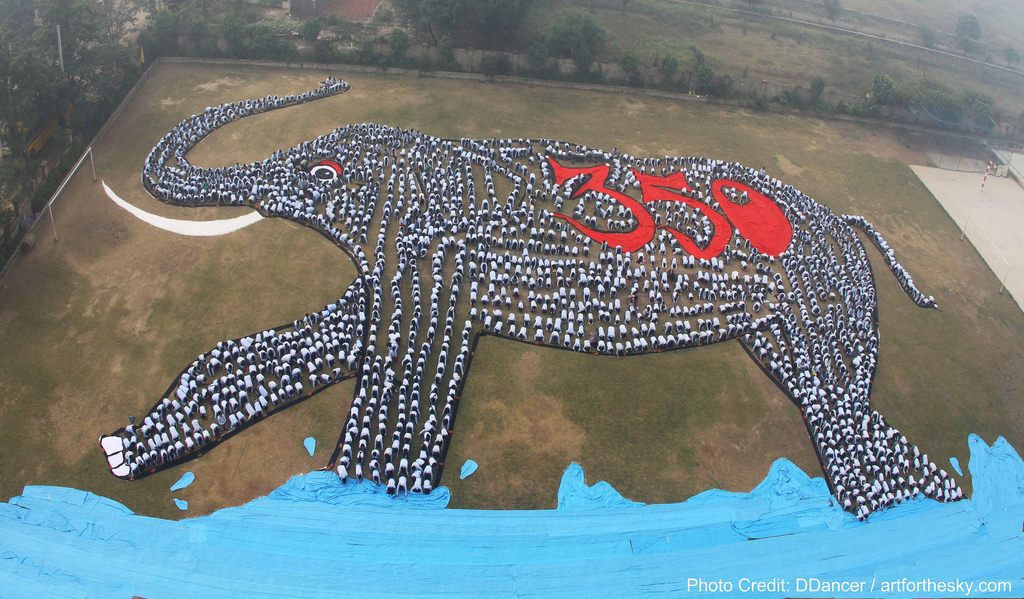
McKibben is no cynic. Although he can write light heartedly and with humour he’s very much in earnest. Indeed the idealism of the 350.org movement he co-founded is about as far from cynicism as you can get.   “Our theory of change is simple: if an international grassroots movement holds our leaders accountable to the latest climate science, we can start the global transformation we so desperately need.”  Their latest effort is an exhibition of art (an Indian one pictured) large enough to be seen from space.

Another humorous look at the intransigence of US lawmakers was provided by Thomas Friedman in his New York Times column a week ago. He imagined a Chinese WikiLeaker publishing a cable from the Chinese Embassy in Washington.

“Americans just had what they call an ‘election’. Best we could tell it involved one congressman trying to raise more money than the other (all from businesses they are supposed to be regulating) so he could tell bigger lies on TV more often about the other guy before the other guy could do it to him.”

Among the results:

“Most of the Republicans just elected to Congress do not believe what their scientists tell them about man-made climate change. America’s politicians are mostly lawyers — not engineers or scientists like ours — so they’ll just say crazy things about science and nobody calls them on it. It’s good. It means they will not support any bill to spur clean energy innovation, which is central to our next five-year plan.”

Friedman’s no cynic either, as is apparent from his climate change book Hot, Flat and Crowded. But like McKibben he’s exasperated by the seeming inability of the American political system, at least on the federal level, to even acknowledge the seriousness of the problem let alone address it. It’s certainly difficult to see the US leading us anywhere promising while they’re stuck with their current mix of legislators. Any meaningful agreements at Cancún, which Barry Coates’s latest blog considers possible, will still have to survive the bluster and bombast which substitute for science back home.

[The Fabs]
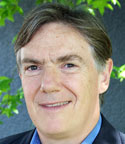
Coates in Cancún: we have no more time

Oxfam NZ’s Barry Coates continues his series of on the spot reports from Cancún: in this episode, he looks at the way international negotiations work…

Negotiations have picked up pace in Cancún. But it is impossible not to feel frustrated with how long it has taken to get to this point. The problem is not just about the past few days in Cancun. Much of the past three years of negotiations has been wasted since the Ministerial meeting in Bali in 2007 that kicked off these negotiations. Government negotiators stated their positions early on, and then in meeting after meeting over the past three years, repeated these positions. Too much of the time and energy of negotiators has been spent trying to score points off each other.


In previous years, the rich nations were very good at doing this and used un-transparent and biased processes to get their own way. This is particularly the case in venues such as the World Trade Organisation. The last time I was in Cancún was for the WTO talks in 2003. After huge protests and the tragic death of a Korean farmer, the talks collapsed in spectacular fashion. The African group walked out of the Cancun WTO negotiations after an unfair negotiations process (eg. a small group of nations were picked to steer the outcome – the “Green Room” named after the office in Geneva where the practice started) and after rich nations tried to force their own issues (notably the deregulation of international business) onto an agenda that was meant to be about development (the ‘Doha Development Agenda’). Since then the WTO talks have limped along, in perpetual deadlock.

There have been some similar tactics tried in past climate change talks, although the common aims in negotiations on climate change are more obvious than on trade (or should be). This was one of the reasons that the Copenhagen talks last year were so ill-tempered and disappointing.

The world has changed and these unfair negotiating tactics are being challenged. Developing countries have gained negotiating skill and economic power. The tectonic plates of global governance have shifted with the rise in economic and political power of the major developing countries. As a result, developing countries will no longer accept the agendas imposed by the rich nations. And they negotiate skilfully and collectively in groups – including the large and powerful BASIC countries (Brazil, South Africa, India and China), Africa and other regional groups, the radical ALBA group (Bolivia, Venezuela, Cuba, Ecuador, Nicaragua and some Caribbean countries), the low income Least Developed Countries and the moral conscience of the negotiations, the Alliance of Small Island States.

So the good news from this re-alignment is that developed nations will not get away lightly with their attempts to renege on their obligations to reduce greenhouse gas emissions. When Japan earlier in the week said they would not agree to a second commitment period of the Kyoto Protocol, the response from negotiators was sharp and strong. Japan was heavily criticised. Civil society groups have also played an important role – Japan’s announcement was met with campaign actions here in Cancún from NGOs in the Global Campaign for Climate Action, and by campaigners in many countries. It appears that Japan has been surprised by the reaction (I don’t know why they didn’t anticipate it). They are still here, and still negotiating and they may be showing more flexibility than their harsh statement implied (“we will never inscribe our target in the Annex B to the Kyoto Protocol under any circumstances and conditions”).

But in other ways this greater balance of power poses challenges to global governance. In climate change negotiations, as in most UN negotiations, there are two main blocs – developed and developing countries – under the rather outdated UN definitions (developing countries include relatively rich nations like South Korea and Singapore). The two blocs can grind each other into stalemate, as they seek to gain advantage, often through unproductive points scoring. Even the most obvious decisions, such as defining a base year for emissions reductions, take years to agree. The answer to the question was always going to be 1990, as it was under the Kyoto Protocol, but Canada and Croatia resisted because it doesn’t suit their pattern of greenhouse gas emissions. Yesterday, after three years, it appeared that this issue had finally been agreed. Glacial progress.

The United Nations is often blamed for these problems, but really the blame lies in the approach of governments. Despite the attempts of the United States and others to find a new place to negotiate, only the UN can generate the full participation and buy-in that is essential for a global agreement.

This means that negotiations are taking years, and we are running out of time. Rising greenhouse gas emissions are causing damage and suffering. The World Meteorological Organisation came out with its most recent data earlier this week. It shows that the past decade has been the hottest ever. Temperatures this month will determine whether 2010 is the hottest year since records began. But millions of people around the world know this already. Farmers know that the seasons are changing, that droughts or intense rainfall are destroying their crops and storms are more frequent and intense. Climate change is deadly serious and extremely urgent, particularly to millions of poor and vulnerable people whose lives and livelihoods are at risk.

The good news from Cancún is that there is a real possibility that there will be some meaningful agreement here.

The good news from Cancún is that, despite the glacial progress over the past three years, Japan’s unhelpful announcement, and a myriad of other obstacles, there is a real possibility that there will be some meaningful agreement here. The Mexican government has been fair and transparent in chairing the negotiations, but they have also been insistent that negotiations will not take place on a line-by-line basis, with arguments over every word. They are steering progress forward through informal meetings, the involvement of Ministers (including New Zealand’s Minister of Climate Change Negotiations, Tim Groser), and strong directions by the chairs of working groups. A lot of the real progress in the negotiations is therefore happening outside the formal process, but it is being managed in an open and transparent way. At last, the negotiations are starting in earnest and compromises are getting made.

The agreement will not include everything we want. But it will include some elements that are important for tackling climate change and helping those at risk. In particular, Cancún might agree the basic structure of a fair Climate Fund. Oxfam has been lobbying negotiators to make sure the structure is equitable and effective in getting funding to those who desperately need it. Some of the other issues will need more work to get to a decision, particularly the level of ambitions on emissions reductions. There has been little progress on that so far, but at least Japan and others are still around the table negotiating. We are pushing hard for a clearly defined process beyond Cancun to raise the level of ambition for emissions reductions.

The 2003 collapse of the WTO trade negotiations was a disappointment for the developing countries that were pushing for fairer trade rules, but it had the silver lining of getting issues like investment out of the trade talks. It also sent a strong message that the rich nations could no longer bully their way to get what they want. But we haven’t got time for a collapse of these climate change negotiations. A collapse would mean even more delay and more suffering. As a T-shirt in Cancun worn by youth delegates here says: “You have been negotiating all my life. You cannot tell me you need more time.

We need a global agreement – a fair, ambitious and binding agreement. It is clear that an agreement won’t be signed here. But if we get the right result from Cancun, signing the deal in Durban next year becomes a real possibility. We have no more time.

We want to survive

We are facing the end of history. We don’t want to be the sacrificed countries of the 21st century. We want to survive.” These were the words of Antonio Lima, ambassador of Cape Verde to the UN, speaking at the start of the Cancún conference, where he is one of the delegates representing the 43 members of the Alliance of Small Island States (AOSIS).

They’re heartfelt words. They’re also knowing. The realities of climate change at this early stage are much closer to some countries than to others. Small island states are among them. Hot Topic has drawn attention to some of the most threatened such as Kiribati, the Maldives, and Tuvalu. To them can be added most of the Cook Islands and the Marshall Islands as nations which Lima said will be washed away by sea level rise (SLR).


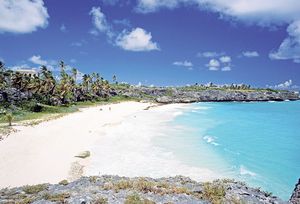
The effect of SLR on Caribbean islands will be less total but a new report nevertheless reveals highly alarming prospects. Commissioned by the United Nations Development Programme, the UK’s Department for International Development and the Organisation of Eastern Caribbean States, the report has been produced by Caribsave, a partnership between the Caribbean Community Climate Change Centre and the University of Oxford. There’s an excellent survey in this week’s Independent, written by the environment editor Michael McCarthy. The report itself is accompanied by a convenient publication which provides the key points and a summary for policy makers.

It carefully analyses the impacts of a one metre SLR this century. They include the loss of nearly 1300 km2 of land, the displacement of over 110,000 people, damage to or loss of at least 149 multi-million dollar tourism resorts, beach assets lost or greatly degraded at many more resorts, and the severe disruption of transportation networks. Severe storms would exacerbate these effects, as would the coastal erosion which will accompany SLR. The study also details the even worse impacts of a 2 metre SLR, which many scientists now consider cannot be ruled out.

The likely costs of adaptation are detailed in the report. Suffice to say here that they rise to very large percentages of GDP by the end of the century. The figures are staggering for developing countries.

AOSIS makes two pleas to the developed world. The first is not to accept a 2 degree rise in global temperature as safe for humanity. 1.5 degrees is the maximum we should settle for.  They are not on their own with such a claim. Indeed where the science is concerned it is becoming increasingly clear that 2 degrees cannot be considered a safe limit. As Kevin Anderson and Alice Bows put it in their recent paper published in the Philosophical Transactions of the Royal Society, “the impacts associated with 2◦C have been revised upwards, sufficiently so that 2◦C now more appropriately represents the threshold between ‘dangerous’ and ‘extremely dangerous’ climate change.

I’ll briefly detour to note that Anderson’s and Bow’s paper, Beyond ‘dangerous’ climate change: emission scenarios for a new world, is one in a series in a Theme Issue of the Philosophical Transactions which considers the probability and consequences of a warming of 4 degrees or higher, as a not unlikely result if the present trajectory of emissions is not reversed more drastically than so far indicated. Their article speaks of a “pivotal disjuncture between high level aspirations and the policy reality”.

So if there’s little as yet to suggest that even the 2 degree guardrail is likely to be achieved, how much less likely is the 1.5 degrees that AOSIS pleads for?  One can almost hear the “get real” response from the big guys. But AOSIS are dealing in a physical reality:  ”The difference between 1.5 degrees and 2 degrees is the difference between survival and collapse,” said Lima. It may not be a political reality, but it’s hardly their task to trim the science to fit what negotiators consider politically possible.

The second plea from AOSIS is for assistance in coping with the future effects of climate change. The Telegraph reports that they are calling for a global insurance fund to be set up.

“Poor nations at risk of sea level rise would pay an annual premium, but a large chunk of the money would come from climate change aid provided by rich nations. Like a normal insurance fund, the money would be invested privately so that there are hundreds of billions of pounds available in the event of a crisis.

“The fund would pay out according to damage, as it is impossible to prove weather is directly caused by climate change. However the insurance would only be available to nations that are affected by global warming and do not have the capacity to protect themselves. Also they would have to first take reasonable preventative measures, such as building coastal defences, so that the money is only used for extreme events.

“The insurance pay-outs could help whole nations pay for a new ‘homeland’ if sea level rise means it becomes impossible to live on their own island. It could also be used to repair airports, roads and hotels.”

The plea for assistance should not fall on such deaf ears as the plea for mitigation action is likely to. The Copenhagen Accord agreed that developed countries will support the implementation of adaptation action in developing countries, and that such funding “will be prioritized for the most vulnerable developing countries, such as the least developed countries, small island developing States and Africa.”

The closer we draw to the unfolding effects of global warming the more apparent it becomes that the costs of adapting to it will stretch our economic capacity. Beyond breaking point in the case of some developing countries if they do not receive assistance. Reports such as that on the Caribbean will be invaluable in identifying with more precision the adaptation needs in specific regions and prompting the preparations which simple prudence demands. They may also serve to jolt us into more serious endeavours to cut emissions. We don’t have to construct such a dangerous future.

Coates in Cancun: tequila time on hold

BarryJapanese.jpg

Oxfam NZ’s Barry Coates with climate activists from Japan.

The climate change talks have gotten really busy over the past two days. No midday siesta. No runs along the beach. Definitely no tequila. Only earnest conversations with government officials rushing from meeting to meeting. And lots of confusion.

This is partly because of the complexity of negotiating a huge range of interrelated issues. And these are issues about economics, business and jobs, as well as the climate, polar bears and vulnerable people. The stakes are high.

There are a number of draft documents being discussed in nine parallel sets of negotiations, plus many other informal groupings. Out of all of this is meant to come an agreement acceptable to all 192 countries.

Continue reading “Coates in Cancun: tequila time on hold”

The Climate Show #3: Cancun and cooling

[youtube]dEo95E_hXvo[/youtube]

Climate talks heat up in Mexico, snow blankets Britain and much of Europe, and The Climate Show is at the heart of the action. Glenn and Gareth set the scene for COP16 in Cancun and then interview Oxfam NZ’s Barry Coates at the conference to find out how things are shaping up. Gareth explores the link between Arctic climate change and cold winter weather in Western Europe, John Cook debunks that favourite sceptic myth — that the world’s cooling — and we look at the potential for nuclear power to provide part of the solution to decarbonising the power economy.

Watch The Climate Show on our Youtube channel, subscribe to the podcast via iTunes, or listen direct/download here:

The Climate Show

Follow The Climate Show on Facebook and Twitter, and soon at The Climate Show web site.

Show notes below the fold.

Continue reading “The Climate Show #3: Cancun and cooling”