Coates in Cancún: Down to the wire

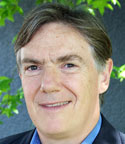
This is Barry Coates of Oxfam NZ’s fifth report from COP16 in Cancún: deadline time…

Last night was very tense here at the climate change talks in Cancun. There is a certain rhythm when the deadline approaches. Some countries refuse to negotiate until they get their own way, playing Russian roulette and pushing the talks to the brink of collapse. This is particularly the case with the US at this summit. Their obstructionist behaviour is getting in the way of progress and putting people’s lives at risk.

I am writing this during heated parallel meetings, one chaired by NZ Climate Change Negotiations Minister, Tim Groser. The prospects of real progress in Cancun are on the edge. Here is the state of play:

The positive and constructive spirit that was evident last week is being put to the test. The real negotiations have finally begun, and parties are working late into the night. So far there has been too much posturing and not enough searching for solutions.

As expected, the issues of mitigation (reducing climate change pollution) and the future of the second commitment period of the Kyoto Protocol are crucial. There is a proposal from the facilitators – UK, Brazil, Indonesia and NZ – which would see the Copenhagen Accord pledges listed in “Information documents” and taken note of in the decision text. This is not a strong enough solution for many developing countries and NGOs. Venezuela and others suggested this would signify a rolling back even from the commitments made under the Copenhagen Accord. Merely “taking note” of the numbers is very weak, and does not entail any legal obligations whatsoever on parties with regard to the pledges. That’s a lowest common denominator approach, and parties must do better. We need progress towards an agreement, not just a noting of what was agreed in the last hours of Copenhagen.

On a range of other issues, the US continues to block progress. They are unconstructively insisting that the issue of concern to them (MRV, or Measurement, Reporting and Verification) is resolved to their satisfaction before they allow anything else to move. They are refusing to agree issues such as the establishment of an adaptation committee, agreement to the proposed technology transfer mechanism and, crucially, the establishment of a global Climate Fund.

Last night in the finance negotiations, developing countries pushed for agreement on a decision that would establish a new Climate Fund, refusing to discuss the modalities of such a fund until this was clear. The US was unprepared to do that without further progress on the issue of MRV.

These blocking tactics in all night negotiating sessions are particularly hard to bear for the smaller delegations of many developing countries – those who have most at stake in a successful deal in Cancun. Their few delegates are expected to work into the morning hours, a workload that is more manageable for the larger delegations from the industrialised countries.

The Climate Fund is essential as an agreement from Cancun. This is a key to unlocking the potential for developing countries to strengthen their action on climate change, as well as to provide funding for countries and communities around the world suffering the harshest impacts. The US must not be allowed to hold the lives of poor and vulnerable people hostage to their political needs.

With one day left to strike a deal which delivers for poor countries already facing worsening droughts, stronger storms and eroding shorelines, it is time for Ministers to lead in our common interests, not to pursue their own political agendas.
NZYD in Cancun: hope remains

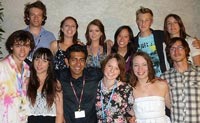
This is a guest post from Cancun by Paul Young (bottom right in the pic – click to put names to faces) of the New Zealand Youth Delegation.

It tells you a lot about the nature of the COP16 climate conference in Cancun that I’m only writing this now. Gareth approached us – the New Zealand Youth Delegation – back near the beginning of the conference, offering a guest blog spot. “Fantastico!” we said. I set to work planning what I’d say, jotting down a few notes to finish over the next day or so.

That didn’t quite end up happening… I was unprepared for the full on assault on the brain, senses, heart, and email inbox that this has been. I wasn’t even an “insider” during the first week (to limit numbers, the UNFCCC Secretariat only gave us eight spots per week to share amongst twelve people), but that didn’t make much difference. For a start, there’s a fair bit going on outside with alternative events such as Klimaforum, and demonstrations like the La Via Campesina one on Tuesday. There’s a huge constituency of youth NGOs (under the banner YOUNGO) we’ve been (net)working with on policy, media campaigns, and actions. There’s plenty of work to be done trying to figure out what the hell is actually happening in the negotiations, and really getting to grips with the policy issues. Then there’s the battle of trying to garner any mainstream media interest in what’s going on over here.


You end up being in “go” mode around the clock, with little time to stop and think. You end up having to squeeze intense group meetings in late at night or in the early hours of the morning. You end up spending hours sitting on busses between the two main conference venues. You end up wasting hours in a bureaucratic ordeal trying to get approval for a very tame action inside the conference centre, only to have it shot down at the final hurdle. You end up losing your laptop power cable because you were in such a hurry packing up to get to the next event, and having to start your half-written blog all over again…

And then when you finally do get a chance to sit down and do some writing, your brain is often too tired and overloaded with information you are struggling to make sense of that the words just won’t come.

Anyway, I don’t mean for this whole blog to be a “dog ate my homework” exercise. I’m trying to express how the twelve of us in NZYD are feeling as these talks reach the hectic final stages before coming to a close, with it looking like the outcomes may not even succeed in meeting the depressingly low expectations.

For me personally, the last fortnight is a blur. It’s going to take a heck of a lot of reflection to process all that has happened and all that I’ve learned. I came here with one question in the forefront of my mind: does this UNFCCC process have a chance of delivering us the deal that we so desperately need? Right now, I’m not sure if I’ve come any closer to an answer. Will a consensus be reached on all the fine details, such as forestry rules, before it really is too late? Are the insufficient pledges on the table worth the effort in the first place? How much should we hold out for something stronger? Is it more important to get something in place, no matter how weak? If the talks were to collapse, would an alternative path emerge?

Hope remains, though. I have recognised the genuine desire in the politicians and negotiators to deliver a deal. The wise words of Bill McKibben, in his speech at the three-day Conference of the Youth that preceded the COP, have stuck with me. Paraphrasing from my sporadic notes, it went something like this:

In some sense, what goes on here inside the COP16 is the side-show. We are the centre. What happens inside is only a reflection of the work we are all doing back home in building the movement for action.

The battle against climate change is different from most other problems the world has faced; there is no guarantee we’re ultimately going to win. But there’s one thing you can guarantee: there are people like you all around the world who will keep fighting until the very end.

We’ve met many amazing people over the last fortnight, and what Bill says is true.

Clear and present danger: Lonnie Thompson on the message in the ice

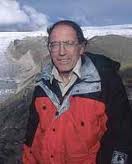
Paleoclimatologist Lonnie Thompson, distinguished university professor in the School of Earth Sciences at The Ohio State University, is well known and widely respected for his decades of work on ice caps and glaciers, especially in tropical and sub-tropical regions. In the past Thompson has let his research data and conclusions speak for him but he has this week caused something of a stir by voicing in a journal for social scientists and behaviour experts his concern at the grave risks we run in ignoring the evidence of climate change. Climate Change: The Evidence and Our Options is the title of his paper (available here) and it’s published in a special climate-change edition of The Behavior Analyst.

One hopes the paper has many readers. Its eighteen pages, a model of clarity, are highly accessible for the lay person.

Thompson opens by acknowledging that climatologists, like other scientists, tend to be a stolid group.

“We are not given to theatrical rantings about falling skies. Most of us are far more comfortable in our laboratories or gathering data in the field than we are giving interviews to journalists or speaking before Congressional committees.”

Why then, he asks, are climatologists speaking out about the dangers of global warming? Because virtually all of them are now convinced that global warming poses a clear and present danger to civilisation.

“There’s a clear pattern in the scientific evidence documenting that the earth is warming, that warming is due largely to human activity, that warming is causing important changes in climate, and that rapid and potentially catastrophic changes in the near future are very possible. This pattern emerges not, as is so often suggested, simply from computer simulations, but from the weight and balance of the empirical evidence as well.”

He explains the evidence from diverse data sources that points to relative stability in temperatures over the past 1000 years until the late twentieth century. Acknowledging that regional, seasonal and altitudinal variability can nevertheless make it difficult to convince the public and even scientists in other fields that global warming is occurring, he adds from his own area of expertise the evidence of melting ice.

The retreat of mountain glaciers is an early warning of climate change. He details the ice fields on the highest crater of Kilimanjaro which have lost 85% of their coverage since 1812. The Quelccaya ice cap in Peru, the largest tropical ice field on Earth, has lost 25% of its cover since 1978. Ice fields in the Himalayas that have long shown traces of the radioactive bomb tests in the 1950s and 1960s have since lost that signal as surface melting has removed the upper layers and thereby reduced the thickness of these glaciers. All of the glaciers in Alaska’s vast Brooks Range are retreating, as are 98 percent of those in southeastern Alaska.  And 99 percent of glaciers in the Alps, 100 percent of those in Peru and 92 percent in the Andes of Chile are likewise retreating. Some telling photographic sequences illustrate the findings. It’s a pattern repeated around the world. To glacier retreat Thompson adds the loss of polar ice and sees global warming as the only plausible explanation.

From there he moves to consideration of the natural forcers of climate change and the consensus among climatologists that the warming trend we have been experiencing for the past 100 years or so cannot be accounted for by any of the known natural forcers.

“The evidence is overwhelming that human activity is responsible for the rise in CO2, methane, and other greenhouse gas levels, and that the increase in these gases is fueling the rise in mean global temperature.”

The effects include sea level rise. He points out that if the Earth were to lose just 8% of its ice, the consequences for some coastal regions would be dramatic. The lower part of the Florida peninsula and much of Louisiana, including New Orleans, would be submerged, and low-lying cities, including London, New York, and Shanghai, would be endangered. Low-lying continental countries such as the Netherlands and Bangladesh are already battling flooding as never before and several small island states are facing imminent destruction. Other effects of warming Thompson touches on include the threats to glacier-fed fresh water sources on which populations in parts of the world depend and the increase in arid regions as the Hadley Cell expands.

Many of the models predicting future rises in temperature assume a linear rise in temperature. But in fact the rate of global temperature rise is accelerating, which is reflected in increases in the rate of ice melt, and in turn an increase in the rate of sea level rise.

“This [acceleration] means that our future may not be a steady, gradual change in the world’s climate, but an abrupt and devastating deterioration from which we cannot recover.”

At this point he discusses positive feedbacks, instancing forest fires, more dark areas opened through ice melt, and the release of CO2 and methane from melting tundra permafrost. He explains the possibility of tipping points as a result, with their ominous implications. But tipping points apart, if, as predicted, global temperature rises by another 3 degrees by the end of the century, the earth will be warmer than it has been in about 3 million years. Oceans were then about 25 metres higher than they are today.

What are our options for dealing with the crisis?  Not prevention, for global warming is already with us. We are left with three: mitigate, adapt, suffer. Mitigation is the best option, but so far the US and other large emitters have done little more than talk about its importance. Many Americans don’t even accept the reality of global warming. Disinformation campaigns have been amazingly successful. Unless appropriate steps are taken we will be left with only adaptation and suffering. And the longer the delay the more unpleasant the adaptation and the greater the suffering will be. Those with the fewest resources for adaptation will suffer most.

It’s a grim picture. The information is not new.  But it gains impetus when a leading scientist steps into the public arena and weaves his specialist contribution into the overall account in a way which leaves the reader with absolutely no doubt that the writer is convinced by the science and deeply alarmed at what it means for humanity. Like John Veron, whom I wrote about earlier this week, Thompson doesn’t allow scientific reticence to mute his message.

“Sooner or later, we will all deal with global warming. The only question is how much we will mitigate, adapt, and suffer.”

Coates in Cancún: ministers on the job

T

This is Barry Coates of Oxfam NZ’s fourth report from COP16 in Cancún: now we’re getting down to the nitty gritty…

Things are starting to move here in Cancun. Most of the Ministers arrived today, joining around 30 who have been around since the weekend. Some were shoulder-tapped to do consultations on key issues, including the New Zealand Minister Tim Groser, who has been paired with the Indonesian Minister to consult on mitigation and MRV – which is how to go about Measuring, Reporting and Verifying emissions cuts – one of the really tough nuts to crack.

The arrival of politicians can help unlock these talks. In the past three years there has been some progress but at this rate we may be negotiating for the next decade. A major problem has been that the political mandate has never been clearly defined for the negotiators – this was obvious when the current round was kicked off in Bali in 2007. The subsequent summit in Poland failed to make important political decisions, leaving a log-jam for Copenhagen in 2009.


There is some interesting re-thinking of what Copenhagen achieved or not. Certainly it was badly chaired by Denmark (not the fault of the Environment Minister who is now with the EU) and it damaged trust between countries. But, as Michael Jacobs, former climate adviser to Gordon Brown (and old friend from my UK days) has written, the Copenhagen Accord was never officially adopted but countries accounting for around 85 per cent of global emissions have put in pledges under it. The Copenhagen Accord, for all its failings and bad process, has provided some of the political direction that has been lacking.

So in preparation for Ministers starting the “high level segment”, the pace of negotiations accelerated today. It’s been a juggling act, with my time divided between analysing the last draft of the section on finance (the “text”) to understand what changes are being made, who is making them and where there is scope for the points Oxfam wants to see included; lobbying delegations; writing articles; coordinating Oxfam’s policy team work; tracking the flow of information on email and Skype chats; networking with allies, generally through the coordinating group, Climate Action Network; and doing media interviews (from Al-Jazeera to USA Today!)

In all of this, I did not get a chance to join a march involving the international farmer’s movement, Via Campesina, the indigenous people’s networks and of a host of social movements and NGOs from Mexico and across Latin America (Flickr photoset).

Evenings are the time for meetings. Tonight was the New Zealand delegation reception, with the Minister, Nick Smith and the NZ negotiating team (but not Tim Groser who was tied up in consultations). The highlight was the presentation of an amazing fern mounted on a long sheet, containing hundreds of signatures (I couldn’t even see where mine was) and messages for the negotiations. The fantastic NZ Youth Delegation, who made the fern, gave a speech about the importance of the talks, especially for their future. They have been doing some great campaigning on the accounting rules for forests (called LULUCF for all you policy wonks). I will include some photos in the next blog.

But in amongst all of this, has been the opportunity to discuss strategy for climate change campaigning with allies in the Global Campaign for Climate Action – the tcktcktck campaign. Key people from Oxfam, Greenpeace, WWF, Avaaz and 350.org talked about where to next for the campaign. I also had a chance to meet with Martin Khor, formerly head of Third World Network and now head of the South Centre. I have worked with Martin on trade issues for many years and on climate issues more recently. I have huge respect for his incredible power of analysis, confirmed by his really interesting insights into the dynamics of the negotiations.

I have not yet mentioned much about the Pacific negotiators and NGOs here in Cancun. Pacific people have acted as the moral conscience of these negotiations with skill and determination, generally working with other island countries in the Alliance of Small Island States (AOSIS). It has been great catching up with Oxfam partners Pelenise Alofa from Kiribati and the amazing Ursula Rakova from Bougainville. She is an inspiration.

Another AOSIS representative made a memorable comment today in response to British Minister Chris Huhne, who pointed out that if you had a 95 per cent chance of your house burning down, and it would only cost 2 per cent of your income to insure it, you’d kick yourself if you didn’t do something. The AOSIS negotiator pointed out that it is more like there are 192 houses in these negotiations and the developing country houses are on fire. This was in support of the proposal from AOSIS to introduce a form of insurance for loss and damage from climate change, an innovative and important idea.

There are now three days to go. Oxfam is calling on ministers to elevate the level of vision and ambition for these negotiations, and ensure that the key political direction is provided. This must include the agreement to set up a new fair Climate Fund and clarity about the legally binding outcome of the UNFCCC negotiations. Success in securing agreement on these issues is essential to mark Cancun as a milestone that accelerates the pace of negotiations towards an agreement in Durban next year.

Tomorrow morning, the Ministers get down to work. They carry the expectations and hopes of millions of people. We will encourage them to be bold, but also hold them to account for the decisions they make.

Monckton goes bananas

Scrotum is laying low it seems, so (as yet) I have no inside information on the doings of the the good Lord Monckton in Mexico beyond his own words, but they are extraordinary enough to demand a post. Monckton is in Cancun with Roy Spencer (satellite temperatures a speciality), the pair acting as emissaries for the Committee for a Constructive Tomorrow (CFACT), a Scaife-funded organisation devoted to the usual denial. Monckton is helpfully providing regular updates on his doings via another of his fossil-funded US sponsors, the SPPI blog. It appears he’s gone bananas


Dr. Spencer and I decided to try banana daiquiris instead. After a good 20 minutes – well, this is the Mañana Republic – the head waiter hovered along to our table and told us our daiquiris would be along in a minute. He had hardly made this ambitious promise when the wine waiter shimmered in and explained that there would be no banana daiquiris because – yes, you guessed it – “we have no bananas”.

Lacking the necessary fruit, the sceptical pair settled for frozen margaritas. My experience with said drink usually involves two headaches — one on the way in, as the cold explodes in my sinuses, and one the morning after — but in the noble lord’s case it seems to have caused a major episode of sceptical revisionism. Apparently, poor old Dick Lindzen is suffering because his papers are not impressing his peers:

Within months, a savagely-phrased and deliberately-wounding rebuttal was published by one of the most prominent of the Climategate emailers. It was one of those tiresome papers that pointed out one or two supposed defects in Professor Lindzen’s analysis, but without being honest enough to conclude that these defects could not and did not alter the Professor’s conclusion.

Monckton rather glosses over the serious methodological problems with Lindzen’s paper that meant his conclusions could not be supported by the evidence he provided. But let’s not let the facts stand in the way of a good tale. It appears that Douglass and McKitrick have suffered equally badly, and it’s nothing to do with any “supposed defects” in their work, it’s all the fault of that mean old IPCC.

Perhaps it was the lack of bananas, or an excess of tequila, that drove the Viscount Brenchley to liven up the “sombre” proceedings at Cancun by gatecrashing a green business luncheon attended by Nick Stern, Richard Branson and assorted Mexican billionaires. John Vidal of the Guardian was there:

Holding forth in the centre of the UN climate conference lunch party, he claimed that man-made climate change was not happening and businesses should hesitate before investing in green energy.

Most people steered clear, but Monckton had no hesitation in barging in on conversations, reeling off statistics and arguments that, he said, proved not only that the world was not warming but that “certain newspapers” were not reporting the reality.

Eventually the patience of the organisers wore thin, and he was asked to leave — but not before Vidal had recorded a short exchange with the potty peer. It’s well worth a listen.

Monckton appears to concede that 2010 was a year of record setting warmth, blaming it on El Niño, but then later claims there’s been no warming since 2001. The rest of his patter is a glib Gish Gallop of standard Monckton nonsense. But there’s more… The CFACT crew have been conducting more merry japes — here’s Monckton introducing a short Youtube video nominating the CFACT “Kook of the Week” (an unlucky NZr). I leave it to the reader to decide who might be the real “kook”.

[PS: In his latest Mexican missive, he reveals he’s working on a dramatic new piece of scholarship:

I have recently been preparing a learned paper for the Econometrics Journal on the so-far-unaddressed but surely not-unimportant question of how to determine the amount of “global warming” that might actually be prevented by any proposed strategy to mitigate future “global warming” by taxing or regulating carbon dioxide emissions, or by adopting alternative technologies.

I expect it will pass peer review, because he’s the only peer who will read it.

[Harry Belafonte (& friends)]