
Two year old turkey for Thanksgiving: CRU emails part deux

In an apparent attempt to repeat the pre-Copenhagen impact of the release of emails stolen from the University of East Anglia’s Climatic Research Unit in 2009, another batch of private correspondence between climate scientists has been made public via links left at sceptic blogs. UEA has confirmed that the emails appear to be genuine, and to be from the previous theft:

While we have had only a limited opportunity to look at this latest post of 5,000 emails, we have no evidence of a recent breach of our systems.

If genuine, (the sheer volume of material makes it impossible to confirm at present that they are all genuine) these emails have the appearance of having been held back after the theft of data and emails in 2009 to be released at a time designed to cause maximum disruption to the imminent international climate talks.

As you might expect, the usual suspects are out in force, desperately trying to spin these mails into a new scandal, but initial responses from the scientists featuring in the correspondence are that the contents are just the warmed-up leftovers of 2009’s PR beat-up. Michael Mann commented:

“The last time this happened, it turned out to be a hoax, a manufactured scandal. This has all the makings of a yet another fraud, perpetrated once again on the eve of a major climate change summit with the intention of distracting the public and policymakers about the very real threat of human-caused climate change”

Leo Hickman in the Guardian reports that the Norfolk Police — who have been investigating the original server hack for two years with no apparent success — have said that the new release of emails is “of interest” to them. Other reactions here:

For Hot Topic‘s coverage of the original email theft, start here, then go here, where I discuss the framing of the non-scandal. See also Skeptical Science’s excellent overview of 2009’s events and the fallout.
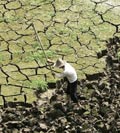
Stormy weather: we’re making it worse, and there’s more on the way

The IPCC released the summary for policymakers of its Special Report on Managing the Risks of Extreme Events and Disasters to Advance Climate Change Adaptation (SREX) in Kampala, Uganda, on Friday (SPM, SREX site, launch presentation slides). The report concludes that globally there has been a significant decrease in cold days and nights and an overall increase in warm days and nights, that it’s likely that “anthropogenic influences” have led to warming of extreme daily minimum and maximum temperatures, and that heavy rainfall events are increasing in many areas. There has also been an increase in extreme coastal high water events.

The report also projects that it is “virtually certain” that increases in the frequency and magnitude of warm daily temperature extremes will continue through this century, and that there will be corresponding decreases in cold extremes. It’s also very likely that heat waves and warm spells will become more frequent and warmer. Heavy rainfall events are also expected to increase, and the proportion of rain falling in those events is likely to increase. There are also likely to be more problems from storm surges and sea level rises, an increase in droughts, and landslides in mountainous regions.

Continue reading “Stormy weather: we’re making it worse, and there’s more on the way”

Australia’s carbon price mechanism in six dot points

Rosemary Lyster, Professor of Climate and Environmental Law at the University of Sydney explains the most important features of Australia’s new emissions law. It’s interesting to compare and contrast the framework with the current ETS legislation in NZ, and what may happen to our framework if National form the next government. [Republished from The Conversation]

Australia’s carbon price mechanism has become law. But how does it work? There are six key points:

1. Australia’s emissions trajectory

By 2020, Australia will reduce all of its greenhouse gas emissions by 5% compared with 2000 levels. By 2050, emissions will be reduced by 80% compared with 2000 levels.

Continue reading “Australia’s carbon price mechanism in six dot points”

The Climate Show #21: carbon, coal and Cook on BEST

[youtube]AuMJ0teoBAo[/youtube]

Bad news on carbon emissions balanced by good news on solar photovoltaics, a Medicane bringing dramatic flash flooding to Italy and France, a scientist who thinks the Arctic could be effectively ice free in late summer in only four years, and the inside story on what the New Zealand election might mean for climate policy down under. John Cook joins us to talk about the new BEST temperature record (great gifs, Dana!), and in the solutions section Gareth and Glenn talk about solar powered airships, China’s plans to ban incandescent light bulbs, and a continent spanning €400bn solar thermal power plan for North Africa, Europe and the Middle East. All this and more as The Climate Show comes of age with its 21st show…

Watch The Climate Show on our Youtube channel, subscribe to the podcast via iTunes, listen to us via Stitcher on your smartphone or listen direct/download from the link below the fold…

Follow The Climate Show at The Climate Show web site, and on Facebook and Twitter.

Continue reading “The Climate Show #21: carbon, coal and Cook on BEST”

Three years of “very serious” climate policy failure

A damning review of the climate policy of the current government by three leading academics finds that it has made “little substantive progress” on reducing greenhouse gas emissions, that work on adapting to climate change impacts has been “even more deficient”, and that current policies are likely to be “economically wasteful”. End-of-term review of the New Zealand Government’s response to climate change: a public health perspective by Nick Wilson, Ralph Chapman, and Philippa Howden-Chapman, published in last week’s NZ Medical Journal ((NZMJ 4 November 2011, Vol 124 No 1345, http://journal.nzma.org.nz/journal/124-1345/4949/ (behind a paywall))), looked at five main policy areas — NZ’s contribution to international action, giving carbon price signals to the market, supporting domestic R&D (for example, into renewable energy), supportive regulation and policy development, and supportive infrastructure investment. In each area, the National-led government’s actions were found wanting. Here’s an excerpt from the paper:

In summary, in this last electoral term there appears to have been little substantive progress by the current government on reducing greenhouse gas emissions (via work internationally or domestically), despite government targets (2020 and 2050) requiring material action. Government responses towards adapting to climate change impacts seem to be even more deficient (hardly more than some guidance documents). This lack of attention may be considered to be very serious given the potential size of the climate change threat — to public health and for the whole of society. It can also be considered economically wasteful in that the New Zealand economy is placed at increased risk of having to make a more abrupt and disorderly transition in the future. Also if other nations react to this lack of response by imposing carbon tariffs on New Zealand exports, this could also have serious economic consequences given the economy’s dependence on trade.

Lead author associate professor Nick Wilson of the Department of Public Health at the University of Otago commented:

“Action on climate change needs to be considered as an urgently required form of catastrophe insurance, but we are clearly not seeing this with minimal government action in recent years.”

Full paper available here. See also: Scoop (press release), No Right Turn, TV3News.