You done my brain in

catbrain.jpg Opposing the ETS is easy for those politicians who remain sceptical of the reality of global warming. Heather Roy, the other ACT MP, showed her true colours in a press release at the end of last week. After the now ritual swipe at Winston Peters (and it is hard to resist, I must confess), she feels the need to explain the “greenhouse effect”:

By day the Earth is warmed by the sun’s rays, with some of that energy radiating back into space as infra-red radiation at night and being captured by ‘ Greenhouse’ gases. Unfortunately, the ‘ Greenhouse’ effect has been given a bad name – without it the Earth would be bitterly cold. The most effective greenhouse gas is water vapour – more commonly known as cloud. As most people know, there is seldom a frost after a cloudy night as the cloud traps the ground’s heat.

Not too bad, except for the fact that she confuses water vapour with cloud, which doesn’t bode well for her understanding of the big picture. But things rapidly get worse:

The second most important greenhouse gas is carbon dioxide. Although naturally-occurring, CO2 concentration in the atmosphere has risen over the past 200 years – which is blamed on human activity, especially burning coal and oil. These rising CO2 levels are blamed for global warming – which, it is widely purported, will cause more storms and a rising sea level. Other scientists argue that the CO2 variation is largely a result of natural factors. Therefore, our very expensive efforts to reduce CO2 emissions are wasted. I do not fully subscribe to the mainstream view, for which the science is inconclusive … but there can be no doubt about its political consequences.

“Other scientists” argue that CO2 rise is due to “natural factors”? That’s utter nonsense. No credible “scientist” argues any such thing. Some of the wilder shores of wingnuttery might – step forward EG Beck – but nobody that any responsible politician should be listening to. I wonder if Heather gets her health policy advice from a crystal healer? ACT is clearly parliament’s right wing sceptic rump. I can only hope they get nowhere near climate policy in any future government, and that their other policies are rather more evidence-based.

[Hat tip for lolcat to Jules’ Klimaatblog]
In the (rural) ghetto

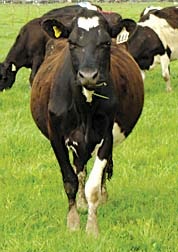
cow.jpg It’s no secret that Federated Farmers doesn’t like the proposed Emissions Trading Scheme. But their latest press release (which almost slipped under my radar over the weekend) sets a whole new standard for ridiculous hyperbole. According to Feds president, Don Nicolson, the ETS will be so damaging that it will create “rural ghettos”. Here’s Don in full flow:

“If we want to try and remain a first world country, rather than a third world country, the simple fact is, we need agriculture to prosper and grow. We can’t afford to kill New Zealand’s golden goose. If we do, we will have rural ghettos and a lower standard of living for all New Zealanders. Here’s hoping we don’t kill the golden goose and develop rural ghettos.”

Let’s ignore the fact that agriculture is excluded from the ETS until 2013, and will be treated with kid gloves thereafter. Let’s not mention that it amounts to a subsidy from the nation’s taxpayers to the agricultural sector. Let’s pretend that farmers are going to forced into penury by the ETS, that we can somehow afford to ignore the global move to put a price on carbon. Let’s just have a loud and ludicrous public whinge.

Thanks for the cogent policy advice and intelligent lobbying Don. Don’t give up the day job.

You ain’t seen nothing yet

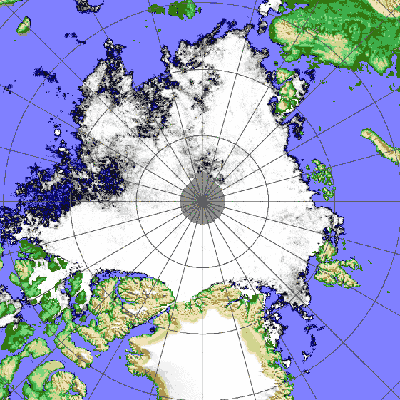
arctic_AMSRE_29808.png This year’s Arctic sea ice minimum is now officially the second lowest in the record according to the National Snow & Ice Data Center in the US. On August 26, the ice extent stood at 5.26m km2, dropping below 2005’s 5.32m km2. The melt season still has several weeks left to run, and there are now suggestions that this year’s final minimum could be close to – perhaps even beat – last year’s record.

The NSIDC announcement has attracted a flurry of attention, and the media has been out trawling the usual suspects for quotes. The BBC reports:

Researchers say the Arctic is now at a climatic “tipping point”. “We could very well be in that quick slide downwards in terms of passing a tipping point,” said Mark Serreze, a senior scientist at the Colorado-based NSIDC. “It’s tipping now. We’re seeing it happen now,” he told the Associated Press news agency.

Adding to the interest, the European Space Agency released some interesting Envisat images of the state of the sea ice, and warned:

Following last summer’s record minimum ice cover in the Arctic, current observations from ESA’s Envisat satellite suggest that the extent of polar sea-ice may again shrink to a level very close to that of last year.

Meanwhile, Scientific American notes that the northwest passage is now open, and the Environment News Service does an admirable job of pulling all the info together – including recent work on possible rapid climate change around the Arctic. Earlier this month I was prepared to accept that I was going to lose my two bets on a new record minimum this year, so what’s been going on up north to change the outlook so dramatically?

Continue reading “You ain’t seen nothing yet”

Willin’

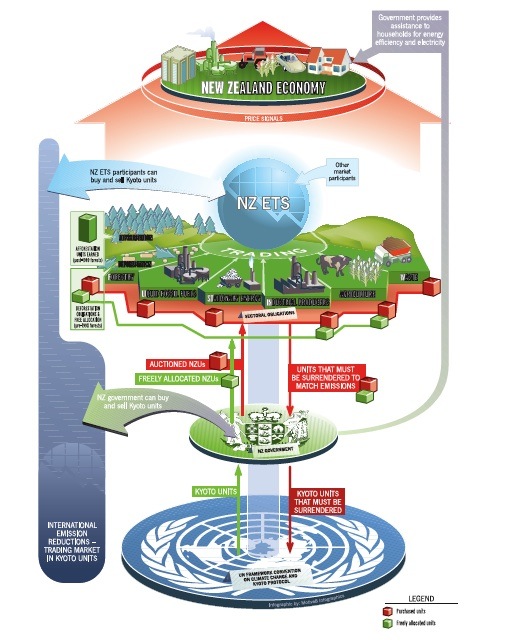
NZETS.jpg The Green Party has just announced that it will support the government’s proposed emissions trading scheme, because “the substantial changes we have won to the ETS justify voting for it”, according to leader Jeanette Fitzsimons. The changes include a “billion dollar” fund from ETS revenues to improve home insulation and heating, new rules on credits for firms established to use new low-carbon technologies, and some improvements on agriculture and biodiversity protection.

“A target for agricultural emissions reduction before 2013 will be gazetted along with other targets for emission reductions. Government has also agreed that there will be investment in a range of technologies and practices which can reduce agricultural emissions, particularly nitrous oxide. These will include not just nitrification inhibitors but also low input farming which can be just as profitable; biogas plants to convert manure to energy; and methods to control soil damage in wet conditions such as herd homes and stand off pads.”

No news yet from NZ First, but Greenpeace were (predictably) pleased with the decision.

[Update 27/8: NZ First has announced that it will support the ETS legislation.]

[Update 29/8: The ETS has begun its passage through Parliament.]

I scare myself

arcticmethane.jpg More news from the Arctic. While the German research vessel Polarstern is cruising through the Northwest Passage, the Russian Yakov Smirnitsky is touring the Siberian seas measuring methane – and the news from scientists on board is not good. Igor Semiletov of the Pacific Oceanology Institute of the Far Eastern Branch of the Russian Academy of Sciences told the Itar-Tass news agency (via Bernama):

“Yet another POI expedition is currently at work in the Arctic, along with ours. The expedition members are exploring the Lena River mouth, where we discovered abnormally high concentrations of methane last year. POI researchers have already carried out 47 studies and confirmed as follows: the concentration of methane in water and the atmosphere increases at a rapid pace, which is indicative of the break-up of permafrost on the shelf of Arctic seas.”

Refer to my last post on the subject and the comments here for some discussion of what that might mean. It’s not good news.

[Update 28/7: I love the internet. This morning I stumbled on a link to a Swedish team working on the Yakov Smirnitsky. Their blog is well worth a visit, if only for the amusing Google translations of the Swedish originals… Hat tip to a commenter at Eli’s warren.]

[Update 31/7: Magnus at Eli’s place links to a news item on the Swedish team’s gas measurements – Google translation here

This year’s Swedish-Russian expedition has found three new areas in western and eastern Laptev Sea where the concentration of methane is clearly increased, both in water and in the air. In addition, the scientists could measure up significantly elevated in the vicinity of Lenaflodens outflow, which Semiletov past have made similar observations.

The news gets worse.]