
And now the bad news…

methaneSpits.gifActive methane plumes over the West Spitsbergen shelf discovered last summer are being driven by warming of an ocean current over the last 30 years, a new study(*) reports. The team on the British research vessel the James Clark Ross from the National Oceanography Centre Southampton (working with scientists from the University of Birmingham, Royal Holloway London and IFM-Geomar in Germany) found more than 250 plumes of bubbles of methane gas rising from the seabed of the West Spitsbergen continental margin at depths of 150 to 400 metres. From the press release:

Graham Westbrook Professor of Geophysics at the University of Birmingham, warns: “If this process becomes widespread along Arctic continental margins, tens of megatonnes of methane per year – equivalent to 5-10% of the total amount released globally by natural sources, could be released into the ocean.”

New Scientist expands the story somewhat, and looks at the total potential methane release in the region:

The methane being released from hydrate in the 600-square-kilometre area studied probably adds up to 27 kilotonnes a year, which suggests that the entire hydrate deposit around Svalbard could be releasing 20 megatonnes a year.

With global methane emissions of the order of 500 – 600 megatonnes per year, that’s a substantial potential addition to the global budget — and there’s a lot more methane hydrate on the East Siberian Shelf that is already showing signs of breaking down.

(*) Westbrook, G.K. et al. Escape of methane gas from the seabed along the West Spitsbergen continental margin. Geophysical Research Letters, 2009; DOI: 10.1029/2009GL039191 (preprint here: well worth a read)
The PIG is flying

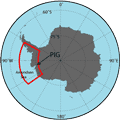
PIGmap.gif The Pine Island Glacier in West Antarctica is thinning four times faster than 10 years ago, a new study(*) of satellite measurements shows. Since 1994, the central portion of the glacier has thinned by as much as 90 metres, and the ice surface is currently lowering by 16 metres a year. At this rate of thinning, the glacier could disappear in 100 years, instead of the 600 years earlier estimates had suggested. The BBC report includes an excellent video, and focuses on the implications for sea level rise:

One of the authors, Professor Andrew Shepherd of Leeds University, said that the melting from the centre of the glacier would add about 3cm to global sea level.
“But the ice trapped behind it is about 20-30cm of sea level rise and as soon as we destabilise or remove the middle of the glacier we don’t know really know what’s going to happen to the ice behind it,” he told BBC News. “This is unprecedented in this area of Antarctica. We’ve known that it’s been out of balance for some time, but nothing in the natural world is lost at an accelerating exponential rate like this glacier.”

Unlike Greenland, where surface melting adds to losses caused by warming oceans, in West Antarctica it’s thought that warm ocean currents (specifically the Upper Circumpolar Deep Water, which is 3ºC warmer than surface water in the region) are being channelled in under the PIG ice shelf, helped by the large trough the glacier carved in the sea floor during previous glacial maxima. Given concerns about the stability of the West Antarctic ice sheet as the world warms and sea level rises, the words “exponential rate” sound particularly ominous…


(*) Wingham, D.J., D.W. Wallis, and A. Shepherd (2009), Spatial and temporal evolution of Pine Island Glacier thinning, 1995-2006, Geophys. Res. Lett., doi:10.1029/2009GL039126, in press.

Holdren’s high hopes for China

Holdren.jpgPhysicist John Holdren is President Obama’s chief science advisor and director of the White House Office of Science and Technology Policy.  Interviewed recently for Yale’s Environment 360 by Elizabeth Kolbert, he stuck to the theme that the administration plans to convert the U.S. “from the laggard that it has been in this domain” into “the leader that the world needs” on global warming. In a lengthy interview his comments on China struck me as particularly significant at this stage of international discussions.  He has recently visited China with Todd Stern, the Secretary of State’s Special Envoy on Climate Change. Kolbert asked him to speak about what he heard from the Chinese and what he thought the U.S. can do to persuade countries like China and India to agree to some action that will be politically palatable at the Copenhagen conference. Continue reading “Holdren’s high hopes for China”

Science advice to Key: NZ “must be fully involved”

gluckman.jpgThe Government’s new chief scientist, Sir Peter Gluckman, yesterday published an excellent overview of the scientific understanding of climate change and how that impacts on policy in New Zealand. It’s a notably calm and measured piece — about as far from “alarmism” as it’s possible to be. Discussing the consequences of a 3.3ºC increase in global temperature by the 2090’s, Gluckman describes them as “quite scary”:

If the temperature rose by this amount then the scenarios become quite scary in terms of changes in climate, flooding of low-lying areas, new patterns of infectious disease, and reductions in the capacity of many parts of the world to support agriculture and therefore to support our continued existence as we know it. New Zealand would not be immune from these changes.

Others might prefer stronger language… but Sir Peter makes a number of telling points elsewhere. He likens those who oppose the mainstream scientific view on global warming to scientists who argued that AIDS was not a viral disease:

A similar debate occurred about AIDS, where a minority of scientists maintained for a long time that the disease was not caused by a virus. This view was manifestly wrong in the eyes of most scientists, but nevertheless some distinguished scientists, albeit usually not experts in virology, took different views until the science became irrefutable. The political consequences of this denialism had tragic results in some African countries.

Gluckman leaves the obvious corollary unspoken, so I hope he’ll forgive me for putting it into my own words: we can expect tragic results to flow from climate denial.

I’ll quote his final paragraph in full:

There is no easy answer -– the science is solid but absolute certainty will never exist. As part of the global community, New Zealand has to decide what economic costs it will bear and what changes in the way we live will be needed. We must be involved. This is a global challenge, and a country like ours that aspires to be respected as a leading innovative nation cannot afford to appear to be not fully involved. Indeed, such a perception would compromise our reputation and potential markets.

This is the advice John Key is receiving, and it’s good to see that Gluckman, while being measured and careful, is not underplaying the size of the problem or the role we should play. In fact, it might be possible to detect a mild rebuke for the government’s pusillanimous approach to emissions targets in the phrase we “cannot afford to appear to be not fully involved”. 10 – 20% is a long way from “fully involved”, I would argue.

Aquaflow’s Aussie adventure

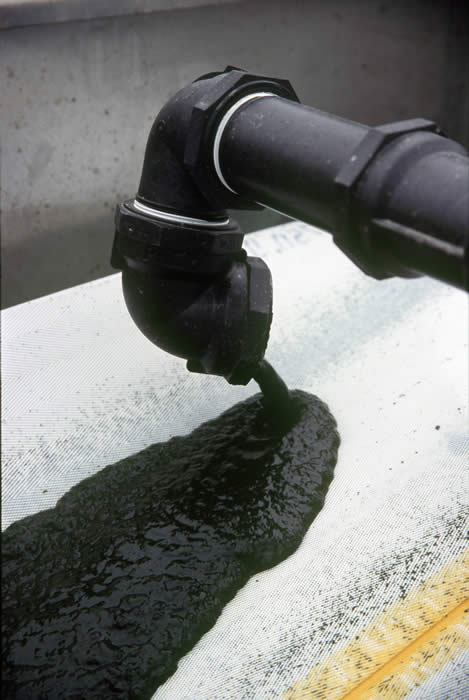
algaeBlenheim company Aquaflow, appropriately, is not standing still. BusinessGreen reports it has embarked on a fund-raising programme in Australia to attract financing for the first of up to 16 pilot plants to demonstrate its algae fuel technology. For those who aren’t familiar with the enterprise, it extracts wild algae at the point of discharge from the Marlborough sewage ponds as a feedstock for biofuels, and in the process produces a much-improved water quality to the extent that it meets standards for irrigation use. By comparison with some of the overseas ventures which select and contain the algae it’s low tech, with a low capital requirement, albeit with a lower fuel yield. And it’s authentically renewable, which cannot be said of some processes which are using CO2 from fossil fuel burning to enhance the growth of the algae. (Hot Topic has carried reports of the company’s activity here and here and here.)

Continue reading “Aquaflow’s Aussie adventure”