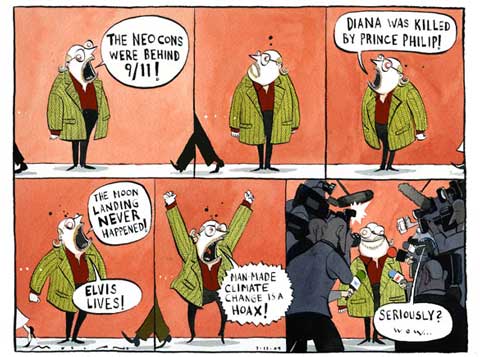
Morten Morland, TimesOnline: click the image for a gallery of fine cartoons. Meanwhile: I wonder who provided the model for this fine example of a “sceptic”? [H/T Ian]
Global warming and the future of New Zealand

Morten Morland, TimesOnline: click the image for a gallery of fine cartoons. Meanwhile: I wonder who provided the model for this fine example of a “sceptic”? [H/T Ian]
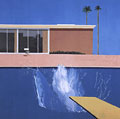 Plimer’s bronzed body arced through the brutal Brisbane air and knifed into the pool with a barely perceptible splash — no belly flops for the silver-haired Adonis of climate scepticism. Monckton, in solar topee and camouflage Army & Navy shorts, clutched his glass of gin & tonic and tried to repress boarding school thoughts. He glanced over at Lady Monckton, deep in her Jilly Cooper and even deeper into a bottle of Queensland chardonnay, oblivious. It was a Hockney scene, the Laird thought, bar the gaudy birds screeching loudly in the trees. Or was that the other guests? He shuddered. Australia really was a fatal shore.
Old Scrotum, Monckton’s wrinkled retainer, sat under an umbrella with a drinks trolley at his side, ready to deliver refills and ice as required. After the first hectic days of the Laird’s great Australian adventure a little peace and quiet was welcome. Plimer was cavorting in the sun, demonstrating that Australian knack for healthy activity that had bred a nation of Shane Warnes. As his august head popped out of the water, Plimer shook his lengthy silver locks, scattering water like a labrador in a paddling pool, his large brown eyes focussed firmly on the Laird. Scrotum was watching the dynamic developing between the two new stars of the denialist southern cross. On stage they were undeniably effective, Plimer galloping Gish-like through a hundred objections to climate science, while Monckton invented polar bear statistics, miscalculated climate sensitivity, and preened in the adoring attention of the elderly audiences. Was there something emerging from the laird’s past, something Scrotum had never seen? He scratched his ear, sipped at his water, and furrowed his brow.
“G’day, you bastards!” Peace fled up towards the cockatoos in the trees, who objected loudly as Carter strode across the hot tiles, a six pack of XXXX clutched under one arm, the other waving a cork-fringed hat. On stage and in public Carter was a mild-mannered, well spoken man, but in private and when he let his hair down (which he did with great vigour and frequency), he adopted a demeanour reminiscent of Crocodile Dundee.
“Chris, this hat’s for you. I know how much you like a hat. This’ll keep the flies at bay,” Carter boomed. The cockatoos hushed respectfully, but a fruit bat lolloped away in disgust. Lady Monckton pulled her hat down over her eyes.
The Laird lifted his aviator sunglasses (with leather blinkers), and smiled faintly. “Bob, good to see you. How was the drilling?”
“Great. Got a bloody long core — world record, somebody said. Should allow us to track sea level changes off New Zealand for the last 35 million years. That’ll show them there’s nothing to worry about this century — it’s all happened before, so it can’t be our fault.” Scrotum noted the glint in Carter’s eyes, a fanatical flash of pinhole pupil that would have worried anyone not familiar with the inner circles of climate inactivism.
Carter stretched out on the lounger next to the Laird, and Plimer pranced over to join them. The gentle susurration of tinnies being cracked filled the air. Scrotum went over to the barbie and lit the gas. It would soon be time for jumbo prawns.
****
The flight to Adelaide was a nightmare. The Laird’s insistence on carrying his childhood talisman in hand luggage — a stuffed champion racing guinea pig left him by his father — had caused more than raised eyebrows at airport security. They’d had to x-ray it twice, and remove its underpants before it was allowed on board. Then the Aussie academic they’d debated in Brisbane, the one with the shiny pate and fixation on nuclear power had been seated right behind the Laird. As soon as the plane was in the air, he’d started picking away at Monckton, questioning his calculations on climate. He even had the bad taste to mention Curry and Clow. Plimer — a colleague at the University of Woolloomooloo — had to intervene to prevent fisticuffs. For the remainder of the flight, the Moncktons had to dodge peanuts the Aussie was flicking over the seat backs. Scrotum, deep in a tape of Michael Mann’s greatest hits on his ancient Sony Walkman, could only smile.
****
Plimer insisted they stay at his country estate, only an hour or two from Adelaide by light aircraft. The Laird had not been keen, but Plimer had been insistent, and the good Lady M didn’t object, so they went. Scrotum wasn’t pleased. There was no room for the Laird’s eleven battered suitcases in the Cessna, so he had been instructed to ensure their safe arrival. Ten hours overland in an ancient Landrover without air conditioning was not Scrotum’s idea of an Australian holiday, still less when the driver looked like Dame Edna’s effeminate brother but lacked the great woman’s charm.
Scrotum seldom swore, but as the short wheelbase Defender bounced over yet another fallen gum branch, the wrinkled retainer’s equilibrium was finally disturbed. “Stop this bloody thing, will you!”
The driver spat out of the window and did as he was told. Scrotum opened the door, jumped out onto the dusty track and started stretching. After a moment of stationary bliss, he lowered his eyes from the great blue sky overhead and noticed he was being watched. Several large kangaroos were approaching the Landrover. One was licking its lips, and its long tail was beating the ground with obvious intent. On the other side of the track, a group of koalas were clambering slowly down out of the eucalypts. He looked down at his feet, and jumped backwards. A very large lizard was flicking its tongue at his shoes. A kookaburra laughed to see such fun, but Scrotum was back in the car before Matilda could have taken a single waltz step.
****
Dundiggin’ lacked the crenellations of Tannochbrae Manor, but was undeniably well-situated. A small hobby mine in the back garden produced gems of sufficient quality to keep Plimer in tailored shirts and shiraz. The view of the dusty hills towards the interior of the great dry continent was stunning, but the swimming pool was empty and the air-conditioning restricted to large fans that creaked alarmingly over the beds. Monckton had nearly fainted when, during a break in the long and drunken welcome barbie, he’d relieved in himself in the dunnie and found he was being watched from the bowl by a little green frog. He insisted that Scrotum take the sheets off his bed to ensure there were no nasty surprises for his good Lady. There was a rather long centipede, but nothing poisonous.
In the small tin shed under the water tank at the side of the main house, Scrotum stared at the ceiling and gave the geckos names. Mycroft had warned him it would be warm, but this was ridiculous. It was going to be a long night.
****
The early morning heat was breathtaking. Plimer insisted this was normal for summer, but the radio was warning of extreme heatwave conditions and catastrophic fire danger for most of South Australia. Monckton thanked the lord (the other one, obviously) for his solar topee and tucked into his breakfast with vigour. Lady M misted herself with lavender water and stayed in the shade. They had a day to kill before getting the show back on the road in Adelaide with three Probus Club sessions and an evening debate at the Retired Cricketer’s Association club rooms in McLaren Vale. Plimer wanted to take the Laird out into the bush “to get a feel for the place”.
“Do we have to, Ian? It’s bloody hot, y’know. Not at all the sort of thing I’m used to. Scotch mist, yes. Occasional snow, of course, but this is a different planet.” Monckton didn’t sound keen.
“Don’t be a wowser, Chris. You can bring old Scrote along to carry the water, make lunch and frighten the flies.” Scrotum shuddered.
****
Plimer drove a slightly newer Landrover than Scrotum had ridden in the day before, but it was just as crusted in dust and scarred by hard use on rough roads. The back was full of the tools of a geologist: hammers of all sizes, two shovels, and an esky full of beer. Plimer swung himself up into the driver’s seat, but Monckton was nowhere to be seen. “Chris!” he yelled. “Get your arse in gear.”
“Won’t be long.” Monckton’s muffled voice was coming from the house. In the guest bedroom he was struggling with his new body armour. He’d tested it with the razor-sharp koala claws he kept in the library at Tannochbrae for defacing Nature, and it was definitely better than the stuff he’d had in Copenhagen. He had no intention of ending up naked wrapped around a statue of a mermaid again.
In the tin shed, Scrotum stuffed the satellite phone back into his rucksack, strapped Mycroft’s GPS watch to his wrist, and headed for the kitchen to pick up the Laird’s picnic lunch — cucumber and potted shrimp sandwiches. Plimer was planning to barbecue sausages on the bonnet of the Landrover, but Scrotum doubted that Monckton would go for that.
****
Plimer drove like a man possessed, but it wasn’t entirely clear what was possessing him. Monckton feared it was some terrible antipodean madness, a consequence of too much sun, breathing dust from birth, and compulsory leg spin lessons at kindergarten, but Scrotum suspected something rather more schoolboy — a desperate desire to convince his new best friend that he was really a man’s man. As that man’s man’s friend’s man, Scrotum feared he’d seen something like it before, when the Laird had tried a similar tactic with Dennis Thatcher. Quite why he had thought he could drink Margaret’s consort under the Number Ten table, and why he had thought it might be a good idea in the first place remained a mystery, but the redoubtable liver of Mr Thatcher had been more than a match for the young Laird. It had taken Scrotum the best part of a day to get the diced carrots out of the deep blue shagpile.
****
They took lunch in the dappled shade provided by a grove of coolibah trees. The only birdlife they’d seen for miles had been an occasional cockatoo. Monckton asked rather nervously about birds of prey, but Plimer laughed. “Still worried about eagles, eh Chris? We’ve got a few hawks, but nothing that would dent your hat. Relax, out here nothing can go wrong.”
The two gentlemen scientists reclined on the picnic rug sharing a bottle of chilled Adelaide Entre Deux Legs and fell to discussing the weighty matter of climate sensitivity. Monckton, moved by the heat and the intensely alcoholic golden brew, began a lengthy peroration. Scrotum excused himself, and went for a walk. Once on the far side of the trees, he tapped a button on his watch and switched on the satellite phone.
“Scrotum to Wollumboola Base. Come in Wollumboola Base.” Flannery was obviously sleeping off a long lunch, because it took him a minute or two to answer. Once awake, though, the great Australian was brisk and business-like. “You’ll need to keep the bastards there for 15 minutes, Scrotum, can you manage that?”
“I believe I can, sir, I believe I can.” He trotted back to the car and unloaded another bottle of wine and a box of chocolate-dipped yabbies. The Laird had become deeply enamoured of the strange confection. “As great a contribution to the world as Clarrie Grimmett’s flipper” he told Plimer as he chomped.
****
“What’s this place called, Ian?”
“The local people call it Hanging Sock. No idea why. Some kind of Christmas cargo cult perhaps?”
The air was still, the heat oppressive, the silence absolute until an unearthly throbbing ululation began in the trees. Monckton sat bolt upright, a yabbie clinging tenaciously to his lip. Plimer’s sang froid seemed to desert him. Scrotum retreated to the Landrover and watched as a small band of the local people emerged from the scrub, their faces painted in strange pointilliste patterns, spears pointing at the two men on the rug. They halted and stood motionless as the didgeridoo chorus grew louder. A cloud of dust appeared on the low ridge in front of the car, and it seemed to be approaching at great pace.
Monckton was shivering. Plimer tried to assert himself. “Look mate, it’s just the local people giving us a cultural welcome. Strange lot, but there’s not a bad bone in their bodies. Just don’t flinch. That’s an insult.”
By now, it was obvious that the dust was being raised by a mob of large grey kangaroos. Scrotum thought the one in front looked familiar, only this time it was wearing boxing gloves. Several large lizards scampered along in the marsupial vanguard, and out of the coolibah trees a crack squad of hit and run koalas were making a flanking movement. Scrotum locked the car doors and pretended to be deep in a book.
Plimer stood up and walked towards the tribesmen. They stared impassively at him, showing no sign of listening to his cheery greetings and offers of beer. Monckton tried to stay close, but the lead kangaroo got in the way and biffed him on the head.
“You rotter! You scoundrel! You cad!” Monckton was incandescent with rage, and there being no eagles in sight, he tried a secret move his father had shown him during the hamster hunts of his childhood. If he could only clap both hands over the kangaroos ears at the same instant, the bugger’s eardrums would explode and that would be that. He missed. The kangaroo didn’t. Monckton went down in a flail of leathery tails and flying fists. The last thing Scrotum saw was a bunch of evil-looking koalas trussing both men.
The didgeridoos fell silent, and the dust began to settle. All signs of activity disappeared along with the men. Hanging Sock was deserted, Scrotum alone in the car with his thoughts. What would would Lady M say when he returned alone? Would she even notice? Would the Laird make his first Probus gig in the morning?
Perhaps not.
[Some translation may be necessary for those not familiar with the cultural and linguistic histories of Australia and its former colonial masters, hints available here. No marsupials were harmed in the telling of this story. Clarrie Grimmett is just one more in a long line of New Zealanders who were adopted as Australian because they were good at something. For connoisseurs of spin bowling, I recommend following the link under Shane Warne.]
This is the fourth Monckton tale.
Previous episodes:
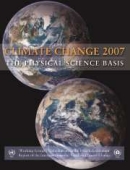
In the current open journalistic season on IPCC sniping the NZ Herald has joined in with an editorial taking up new accusations made by the UK’s Sunday Telegraph and Sunday Times.
The editorial begins with the Himalayan glacier error, which the IPCC itself has accepted and expressed regret for. But the Herald has the scent of blood and moves on to take up the claims of the UK newspapers with uncritical enthusiasm.
“If the Himalayan debacle was bad enough, the panel references to disappearing ice in the Andes, the European Alps and Africa are even more embarrassing.
They turn out to have been based on a student dissertation and an article in a climbing magazine.”
This absurd accusation probably originates with a Sunday Telegraph article, though it is not cited. Let’s look at what is involved. In chapter 1 of Working Group II’s report there is a section on observed changes in the cryosphere. In the course of the section a short table (page 86) of selected observed effects is provided. Included among them is the loss of ice climbs in the Andes, the Alps and Africa. It is in relation to this minor observation that the student dissertation and climbing magazine article are cited by the IPCC. But somehow the Herald manages to imply that the IPPCC references to disappearing ice are based on these two sources.
The reality is that the Working Group I report in chapter 4 (pages 356-360) deals with observed changes glaciers in a section densely packed with scientific information, whereas the Working Group II report in which this report is found describes the observed effects on the environment and on human activities due to these recent cryospheric changes. And the loss of ice climbs is a tiny part of those effects.
But, says the Herald, the articles fall some way short of scientific evidence. Admittedly they are anecdotal, but I imagine the IPCC authors regarded that as not unreasonable in a matter more likely to be noticed by climbers than researched in scientific papers. The author of one of the articles commented: “I am surprised that they have cited an article from a climbing magazine, but there is no reason why anecdotal evidence from climbers should be disregarded as they are spending a great deal of time in places that other people rarely go and so notice the changes.” Worth noting too that the magazine article was written by Mark Bowen, a keen climber and author of Thin Ice, the excellent story of Lonnie Thompson’s efforts to drill cores in high altitude tropical glaciers. Bowen went with Thompson on a number of expeditions, so knows his stuff. IPCC authors are not, as is commonly thought, entirely restricted to peer-reviewed literature. Their instructions include the following:
“The authors will work on the basis of peer reviewed and internationally available literature, including manuscripts that can be made available for IPCC review and selected non-peer reviewed literature. Source, quality and validity of non-peer reviewed literature, such as private sector information need to be critically assessed by the authors and copies will have to be made available to reviewers who request them. Disparate views for which there is significant scientific or technical support should be clearly identified in IPCC reports, together with relevant arguments. Expert meetings and workshops may be used to support the preparation of a report.”
Maybe their judgement can be faulted in this particular case. Not by me, I hasten to say. But it is hardly a matter of any great substance. Indeed it is tiny. The Herald editorial grossly exaggerates its significance.
And there is more, says the Herald. There has been a critical examination of the IPCC’s ”attempts to link natural disasters to global warming”. The Herald doesn’t mention that this ”critical examination” was conducted by the UK Sunday Times.
“ [The IPCC’s] claim in 2007 that the world had ‘suffered rapidly rising costs due to extreme weather-related events since the 1970s’ turns out to have been based on a paper that had not been peer-reviewed or published at that time.”
The words in quotes look as if they are from the IPCC report. They’re not. They’re from the Sunday Times article. The IPCC report is restrained and cautious. The Sunday Times article is sloppy and wildly inaccurate. You can read what I wrote about it on Hot Topic here. I won’t repeat myself. I described it as simply untrue. But it has evidently entered the journalistic canon.
I guess we should be relieved that the Herald shows no inclination to join the denialist community as a result of its uncritical acceptance of the Sunday Telegraph and Sunday Times articles, but it should think again about the strictures which it was lavish with. The IPCC reports are massive in size and massive in value. It may be asking a bit much that editorial writers should spend time acquainting themselves with them, but if they are not going to do that they should at least treat with great caution the ”revelations” of its failures in scientific rigour. There will no doubt be more of those, since I suspect the denialist community is going through the IPCC references with a fine comb. If they prove correct the IPCC will again acknowledge error and express regret, as it did over the Himalayan glaciers. But the Herald should make sure it is dealing with matters of reasonable substance before it rushes to judgement.
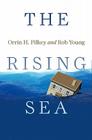
“All indications are that we should be alarmed about the future of sea level rise and should be doing something about it now.” Orrin Pilkey and Rob Young, eminent coastal scientists, wrote their book The Rising Sea to provide substance for that alarm and to offer suggestions as to how we can plan ahead to reduce the severity of the impact of the rising sea.
The authors begin by reminding us that it’s not a distant prospect. They describe what is happening to Alaskan shoreline villages such as Kivalina and Shishmaref, atoll nations such as Kiribati, the Maldives, the Marshall Islands, Tokelau and Tuvalu, and the city of Venice, places already grappling with rising sea level.
Rising tide gauge data and an increase in coastal erosion along many of the planet’s shorelines provide clear evidence of the rising sea and of the warming of the planet. Not that the authors are simplistic about this. They recognise and discuss the function of tectonic changes and additions to or subtractions from the weight of the crust. But there is plenty of evidence of an increase in the volume of water in the oceans, accelerating in response to global warming. Easier evidence to assemble, they note, than the measurement of global temperature trends.
Predictions of rise in the 21st century are dependent on what happens in the Greenland and West Antarctic ice sheets, an area which the IPCC 2007 report felt unable to take into its compass, other than by commenting that the contribution from both of these ice sheets may be much larger than previously assumed. Pilkey and Young do not offer predictions, but they note that some organisations in the US have begun to make their own, quoting for example a committee in one of Florida’s counties which speaks of a minimum of 1 to 1.5 metres. They further note the work of University of Colorado scientist Tad Pfeffer and colleagues who argued in a 2008 paper in Science for a range between 0.9 and 2.0 metres, and they describe Hansen’s understanding that the non-linear response of the ice sheets could mean a level higher than that, possibly even as much as 5 metres. Shoreline retreat, of great importance to human society, is difficult to predict. It’s not a simple or uniform matter and they discuss some of the variable regional factors which have to be taken into consideration in any assessments. Their conclusion is that coastal management and planning should assume ice sheet disintegration will continue and a 2 metre sea level rise by 2100 should be reckoned with. They describe this as a cautious and conservative approach. All rubbish, of course, to the noisy minority of opinion they address in a chapter on what they call the sea of denial.
The later sections of the book are concerned with the impacts of rising sea level. First on natural ecosystems. The coastal wetlands and coral reef ecosystems have long migrated back and forth along with changing sea level and attendant shoreline movement. But they haven’t before had to simultaneously cope with massive changes in the physical environment cause by human activities. Their future is unprecedented. The biggest global obstacle to salt marsh movement, for instance, is shoreline development and agriculture. There is often little room for them to expand inland. Many will disappear, a loss both environmental and economic as yet recognised by few governments. Mangrove areas have already been significantly reduced globally, most recently by clearing for agriculture and aquaculture. Poverty in the developing world leveraged by greed in the developed world is the driver of their destruction. Coral reefs are threatened by more factors than sea level rise, but their need for sunlight means that they must either grow upwards or migrate to shallower water to survive rising seas.
The authors then turn to the impact of sea level rise on humans. The principal nation-scale impacts are likely to include loss of land, flooding, increased storm surge vulnerability, accelerated erosion, increased salinization, loss of biodiversity, loss of aquaculture and fishery, damage to marine infrastructure, and tourist decline. The countries with the biggest problems are the atoll nations; deltaic countries such as Egypt, the Nethlerlands, Bangladesh, Vietnam and Myanmar; and countries with large low-lying, heavily developed coastal plains such as the US, Brazil and China. (As an aside I note that the severe effects of climate change on the US and China may be our best hope that they will act decisively to reduce emissions, once, that is, denialism loses its remaining traction among their lawmakers.) The book details the specifics faced by some of those countries. In Vietnam, for example, a one metre sea level rise will displace more than a tenth of the nation’s people, gobble up 12 percent of its land area, and reduce food output by 12 percent. Turning to cities the book notes an OECD study ranking the most vulnerable cities in the world as measured by susceptibility of property to flooding. Half of the top ten are American, headed by Miami.
A closer look at the Mississippi delta forms the substance of a chapter. The authors describe various proposals to restore and protect the Louisiana coast and are sympathetic to some of them, such as wetland restoration. But the vast and costly restoration effort now being sold to the residents of Louisiana and the rest of the US they consider misleading and dangerous. Conditions in southern Louisiana are likely only to get worse no matter how much money is spent. Global sea level rise is coming. Coastal managers need to begin developing a plan to relocate towns in the lower delta, in ways which will keep the communities together. The delta culture may be preserved, but not in place.
The final chapter is titled Sounding Retreat. It focuses on how Western countries need to respond to the landward movement of the shoreline. The authors identify three responses: abandonment of the beachfront and relocation of all buildings and infrastructure away from the retreating shoreline; protection of the shoreline with seawalls, groins, and suchlike; formation of an artificial beach by bringing in new sand. All are expensive, but the latter two are temporary and suitable only for small rises in sea level. (No problem for Bjorn Lomborg who estimates a 30 centimetre rise.) The implications of each of these approaches are discussed in some detail with reference to specific examples. Opposition to relocation often comes from those with vested interests, and Florida extraordinarily still permits the construction of high rise shoreline buildings, taking over the financial obligation since insurance companies have backed away from insuring coastal properties. But the authors consider that in many cases relocation of beachfront communities will be the most effective solution, especially in view of the tremendous effort that will be needed to protect exposed cities.
We’re for it, the authors warn. Reduction of emissions will not halt sea level rise in the short term. If we’re wise we’ll plan ahead. The constructive discussions and examples in their easily understood book will assist those who want to get an initial understanding both of the possible magnitude of what faces us and of the kind of measures we will need to take to manage it with the least distress. The book is well worth attention.
 At risk of further accusation of being over-impressed by politicians’ words I welcome what Ed Miliband is reported as saying in today’s leading articlein the Observer. He declared a “battle” against the “siren voices” who denied global warming was real or caused by humans, or that there was a need to cut carbon emissions to tackle it.
His interview with the Observer is described as his first response to University of East Anglia scientists being accused of witholding information and to the IPCC Himalayan glacier error. He said it would be wrong to use a mistake to somehow undermine the overwhelming picture that’s there. He described in broad terms the basic physics and the observed effects that point to the existence of human-made climate change, pointing out that “that’s what the vast majority of scientists tell us”. He cited the thousands of pages of evidence in the IPCC report and was adamant that the IPCC was on the right track.
The danger of climate scepticism was that it would undermine public support for unpopular decisions needed to curb carbon emissions, including the likelihood of higher energy bills for households, and issues such as the visual impact of wind turbines. Miliband is energy secretary as well as climate secretary.
“There are a whole variety of people who are sceptical, but who they are is less important than what they are saying, and what they are saying is profoundly dangerous… to take what the sceptics say seriously would be a profound risk.”
That strikes me as plain speaking from a politician. It would surprise the New Zealand populace if s senior minister here spoke in such terms.
Miliband also went on to acknowledge the “disappointment” of Copenhagen, though noting that there were also achievements including the agreement by countries responsible for 80% of emissions to set domestic carbon targets by today. I liked what he added: “There’s a message for people who take these things seriously: don’t mourn, organise.” He has previously called for a Make Poverty History-style mass public campaign to pressure politicians into cutting emissions.
Meanwhile back here in New Zealand yesterday’s Herald provided an example of how readily wild accusations levelled at IPCC scientists can make it into the journalistic canon. I wrote a few days ago about the UK Sunday Times’ untruthful article on the IPCC and predicted it would be reported uncritically by other newspapers. Right on cue a Herald writer, reporting on the NIWA decision to put its temperature data on the web, at the end of her report listed the Sunday Times article as one of three items under the heading “IPCC’s Intemperate Year in the Headlines”.
Bad Behavior has blocked 4651 access attempts in the last 7 days.