
The Carbon Challenge

The Carbon Challenge: New Zealand's Emissions Trading Scheme

Empty rhetoric.  That’s the verdict on the Emissions Trading Scheme (ETS ) from Geoff Bertram of the Institute of Policy Studies and Simon Terry, Executive Director of the Sustainability Council, in their searching book The Carbon Challenge: New Zealand’s Emissions Trading Scheme.

They present a picture of governmental processes captured by powerful groups pursuing their own interests at the expense of the rest of the community. Large industry and agriculture have won for themselves exemptions and delays of such an order as to make significant emissions reduction impossible in the first commitment period (CP1) of the Kyoto Protocol. At the same time the costs have been loaded disproportionately on to households and small industry. Those responsible for 30% of emissions will carry 90% of the cost. Agriculture with 49% of emissions will pay 3% of the costs.

The authors don’t accept the claim of the agricultural sector that there are few options open to them to reduce emissions. In fact they claim agriculture offers by far the biggest set of low-cost abatement opportunities. There are a number of options that are not only commercially available but profitable to undertake. They instance means for reducing nitrous oxide emissions – nitrification inhibitors, stand-off pads, new grasses, supplementary maize feed, improved soil drainage.  Selective breeding offers the possibility in due course of some reduction of methane as does the supplementary feeding of various plant matter. The processing of casual effluent from milking sheds through bio-digesters cuts both carbon dioxide and methane. Improved carbon storage in soils through pasture management appears possible as does sequestration through biochar burial. Meanwhile agriculture’s exemption from the ETS bolsters higher land prices. Nice for landowners, but subsidised by the community at large.

In the longer run the ETS exemption is against farmers’ own best interests. It is shielding them from likely winds of change in world markets. The authors instance large companies in other countries seeking low-emissions milk, as Cadbury is doing in the UK,  and point to the likelihood that New Zealand will surrender first-mover advantage to such countries if we continue with our present dogged denial.

There is self-defeat for large industry, also, in the favoured position they have gained for themselves. The ETS opens the possibility of production subsidies for high-emission industries by focusing on the intensity rather than the overall quantity of emissions. It is likely, for example, that Solid Energy would be entitled to subsidies for the manufacture of urea from South Island lignite, even though it would be the country’s biggest single industrial emitter of greenhouse gases after the Huntly power station. By this provision New Zealand could provide a welcoming environment for industries relocating from other Annex I countries, via ‘carbon leakage’ from those economies. Such production subsidies will invite tariff retaliation from other countries and could shut New Zealand exports out of key markets.

New Zealand will emerge from CP1 with a level of emissions considerably higher than the 1990 benchmark to which we are expected to have returned. The role of forestry as a carbon sink to offset the country’s emissions is the subject of close investigation in the book, which warns of the reckoning which must be faced when the trees are cut down. Potentially enormous costs could be faced by the next generation when the final accounting is made. Indeed, the costs may be so high as to raise questions about the country’s ability to meet them. This prospect may see other nations disallowing the plantation forest offsetting practice in successor arrangements after CP1. Permanent forests are a different matter, and the authors see these as a real key to balancing the country’s future carbon budgets. They lament the uncertainties and potential retrospective taxation the forestry sector faces by comparison with the government response to demands from large industrial operations.

The book’s discussion of forestry, as of many other aspects of the ETS, is complex and demanding for the general reader. But the ETS itself is highly complex and often difficult to follow. I can well understand the authors’ claim that it’s a reasonable guess that no more than a handful of MPs understood the detail of what they were voting on in 2008 and 2009. I often found myself struggling to get a proper hold on the ramifications of the various processes the book explores, even though the authors have been exemplary in the patience and thoroughness of their explanations.

It is the exhaustive care they bring to their task which makes the reader respectful of the summary statements which emerge from time to time in the course of their discussion, such as this one:

“The ETS has not been designed to promote economically efficient abatement.  It has been designed firstly to protect and promote the position of vested interests that are unwilling to shoulder asset write-downs required to recognise a price on carbon, and secondly to transfer the costs of this to future generations.”

However there are countervailing forces at work against the formidable clout wielded by agricultural and other major emitter lobbies. The authors nominate three domestic factors which could upset the current political equilibrium. One is the possibility that the lack of trust in the forestry regulatory regime may deter new planting in general and permanent afforestation in particular; this would increase pressure for reform of the ETS.  The second is that sections of the population and the economy will become more concerned about climate change and the lack of any effective action at home to reduce emissions. The third is that the recognition of the size of the carbon debt we are passing to future generations by using forest credits to cover excess emissions may become a moral issue.

They also point to international factors which will put our ETS under pressure. One is the pressure we will come under if international emissions targets move towards being set more on a per capita basis. It would be very risky for us to go forward with gross emissions far above any we could hope to defend in a global commons debate.  Another is the possibility mentioned above of changes to the rules relating to forestry in a CP2 period. A third is the risk of border taxes and other adjustments we could well face from other governments and from private-sector firms if our climate change policy is shown to be incapable of matching the climate change objectives it espouses.

In the ETS we have shied away from the present costs involved in serious action to reduce emissions. But in doing so we have laid up for ourselves the far greater costs which will be the result of doing nothing now. That is the basic warning of the book. New Zealand is part of the developed world and will not be able to escape its fair share of responsibilities as we appear set on trying to do.
Technology advances, politicians hold back

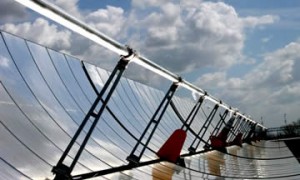
In the face of the utterly depressing final confirmation that the proposed energy bill has been abandoned in the US Senate in the face of Republican opposition, and the realisation that Obama has let the opportunity die without a fight, as Joe Romm puts it, I cast around for something cheering this morning.  I found it in an interesting article on Chris Goodall’swebsite Carbon Commentary. The article describes the world’s first molten salts Concentrating Solar Power (CSP) plant. It’s not the first to use molten salts, in that many of the newer CSP plants use molten salts storage to extend the plant’s daily operating hours, but it is the first to use molten salts not just to store heat but also to collect it from the sun in the first place. Normally, pressurised oil which heats up to around 390 degrees is used to collect the heat.

Molten salts can operate at higher temperatures than oils, up to 550 degrees, thus increasing the efficiency and power output of a plant. With the higher-temperature heat storage allowed by the direct use of salts, the plant can also extend its operating hours longer than an oil-operated CSP plant with molten salt storage, working, the article claims, 24 hours a day for several days even in the absence of sun or during rainy days.

This feature also enables a simplified plant design, as it avoids the need for oil-to-salts heat exchangers, and eliminates the safety and environmental concerns related to the use of oils.

Significantly, the higher temperatures reached by the molten salts enable the use of steam turbines at the standard pressure/temperature parameters as used in most common gas-cycle fossil power plants. This means that conventional power plants can be integrated – or, in perspective, replaced – with this technology without expensive retrofits to the existing assets. The first plant, a small one of 5 MW, located in Priolo Gargallo (Sicily), is fully integrated to an existing combined-cycle gas power plant.

A small comfort, perhaps. However the writer describes it as a top-notch world’s first, expensive at around 60 million euros but with overwhelming scope for a massive roll-out of the new technology at utility scale in sunny regions like Northern Africa, the Middle East, Australia, the US.

Solar power is certain to play a large part globally in a future of renewable energy, if we don’t destroy that future before it arrives, and the constant improvements in harnessing the power of the sun are highly encouraging.

Meanwhile back in New Zealand the government has today released a draft of its proposed new energy strategy, which Gerry Brownlee announced the need for shortly after becoming Minister of Energy because the previous one  was just “an idealistic vision document for carbon neutrality”.  I’ve only had a cursory look so far, but it certainly looks like the great step backwards that he signalled. In the section headed Areas of Focus the leading item is “Develop petroleum and mineral fuel resources.” This is what it means:

“The country already benefits substantially from the revenue gathered from the development and sale of petroleum and coal resources, and both are significant export earners.

“Further commercialisation of petroleum and mineral fuel resources has the potential to produce a step change in economic growth for the country.”

The document does move on to renewables:

“The Government retains the aspirational, but achievable, target that 90 percent of electricity generation be from renewable sources by 2025 (in an average hydrological year) providing this does not affect security of supply.”

But we’re not going to get carried away with aspiration:

“Achieving this target must not be at the expense of the security and reliability of our electricity supply. For the foreseeable future some fossil fuel generation will be required to support supply security.”

There is some useful stuff on renewables and on new technologies, but the minister is obviously unwilling to face the reality of what continuing to produce and burn petroleum and coal actually means for the climate. It means hell and high water, to use Joe Romm’s words in his book of that title. In that book Romm also said that the global warming problem is a now only a problem of politics and political will. Technologies advance, but politicians lag.

Four seasons in three days

Changes in climate extremes — the heavy weather — are where society will take “the big hits” of climate change, as I discussed last month. I will therefore need to arrange to be in Wellington (no stranger to weather extremes, it has to be said) for the joint MetSoc (Meteorological Society of NZ) and AMOS (Australian Meteorological and Oceanographic Society) conference, Extreme Weather 2011 at Te Papa from February 9 – 11. The meeting will include six special sessions each with a keynote address:

  • Extreme weather in the Australasian region – from floods to droughts
  • Impact and meteorology of the main climate drivers (ENSO, SAM, Monsoon)
  • Using high resolution models to understand local meteorology
  • Oceanography of the Australasian region
  • Climate change in the Australasian region
  • Riskscape – Impact of weather on disaster planning in the Australasian region

A good excuse to visit the capital in summer, perhaps? It’ll be windy…

[Disclosure: I’m the least-qualified member of the MetSoc committee.]

[Any excuse for the House]

Climate Conflict

Climate Conflict: How Global Warming Threatens Security and What to Do About it (Adelphi Series)

How long can these people go on talking about the future as if climate change isn’t going to be part of it, let alone a determining factor?“  That is a question I often enough exasperatedly mutter to myself when listening to politicians or a variety of policy experts discussing the shape of the future with never a mention of the impacts of climate change.

Behind the scenes it may not be as bad as it looks. Gwynne Dyer wrote his book Climate Wars partly because he discovered that climate-change scenarios were playing a large and increasing role in military planning processes.  Chatham House associate fellow Cleo Paskal discussed the need for forward planning for the geopolitical impacts of climate change in her recent book Global Warring. Now the International Institute for Strategic Studies has produced a book by research fellow Jeffrey Mazo, Climate Conflict: How global warming threatens security and what to do about it. I notice incidentally that in his acknowledgements he thanks Cleo Paskal for discussions on climate and security.

He also thanks climatologist Michael Mann for comments on his first chapter. It included an up-to-date summary of the science, depending on the IPCC AR4 reports but also acknowledging that, if anything, their projections underestimated the amount, rate and impact of anthropogenic climate change. Although the book is largely directed to the likely impacts of climate change in the medium term, Mazo has no doubt that, without early and severe reductions in emissions, climate change will be disastrous for the global community in the second half of this century. Such a recognition strikes me as a necessary basis for serious engagement with policy questions.

However, although he hopes effective mitigation policies will be undertaken quickly, it is on the unavoidable effects in the next two to four decades that Mazo’s discussion centres.  In particular he focuses on state failure and internal conflict.

A brief historical survey looks at how climate has been implicated in the collapse of many previous cultures. It’s a complex matter isolating the relative effects of climate change from other stresses undergone by societies in danger of collapse, but he detects it as a common contributing factor in many cases. He includes interesting reflections on the way in which adaptation can be part of the cultural toolkit of societies which value mobility and flexibility. On the other hand some cultural values can work to make societies reluctant to abandon unsustainable lifestyles and prevail against rationality. He also notes that increased complexity in societies means increased fragility when systems finally fail, as in Easter Island and the Mayans, among others. In our own time the wealthier industrial nations are much more resilient to climate shocks than less developed countries, but he posits that if they do reach the breaking point the collapse will be further and faster.

Darfur provides the first modern climate-change conflict. Mazo examines this proposition carefully, paying attention to the variety of analyses that have been offered. He does not think it can be said that the conflict was caused by climate change, if ‘cause’ is meant as both a necessary and sufficient condition. His approach is rather to ask whether climate change has acted as an exacerbating factor or threat multiplier. Following through the various threads contributing to the conflict, many of them environmental, but also economic and governmental, he concludes that if one doesn’t take  a simplistic, reductionist view of causality it becomes apparent that anthropogenic climate change is a critical factor underlying the violence in Darfur.

From the Darfur model the book moves to a wider range of countries where climate change has the potential to affect stability and contribute to state failure. Sub-Saharan Africa, and the Sahel region in particular, is where the greatest number of already fragile states are also among the most vulnerable to climate change. Many other less fragile African countries are highly vulnerable but better placed for adaptation measures. The prospect is for increased volatility as a result of climate change for the most fragile states, and increased risk for more stable ones. Mazo also nominates and discusses some countries outside Africa which are particularly vulnerable to climate change and the deleterious effects it might have on the stability of the state, among them North Korea, Myanmar, Iran, Iraq, and Afghanistan. He notes the efforts Bangladesh has already made to reduce its vulnerability through a policy of deliberate protection of coastal mangrove forests, bucking the global trend of deforestation. Selected for closer attention are two less fragile states which have emerged from instability in recent years but are likely to be challenged again by climate change effects.  Colombia faces a high probability of the disappearance of its glaciers by 2035. Projected temperature increases and changes in precipitation could disrupt water and power supplies to large segments of the population, reversing the country’s progress and making a return to violence more likely. Indonesia’s food security is at risk, with agricultural production under threat from likely increased flooding and drought. If the country remains relatively stable it should, with support, be able to adapt to climate change over the medium term. But other stresses within the nation may be heightened by the effects of climate change and lead to a reversal of Indonesia’s progress.

Climate change presents policymakers in the developed world with two different questions. One is how to respond  to acute crises with new or increased military or humanitarian interventions. The other is how to prevent chronic problems caused or exacerbated by climate change through adaptation funds and other forms of aid or support.

The strategic implications are difficult to assess. Climate change is a threat multiplier, but not necessarily more so than the other causes or contributors to instability. However Mazo is clear that it is a new variable which must be taken into account in strategic assessments. And it is a very significant variable – strongly directional, accelerating and  irreversible on the time scales that current planning deals with. Among the points he discusses is the likely part to be played by militaries, not in fighting but in responding to humanitarian crises. He observes that militaries are often the only institutions with the capacity to deploy rapidly in such responses and sees them facing increased demands as such crises intensify and multiply with the increase in frequency and severity of extreme weather events, aggravated by sea level rise. He warns that cutbacks in this role will not only increase humanitarian problems but also result in a loss of prestige and soft power and even a negative reaction to a perceived uncaring West.

The book issues no clarion calls. But there’s no mistaking the underlying message of its careful and seemingly rather abstract low-key discussion. In effect it says to policymakers “You must take climate change seriously and integrate it fully into your understanding of what is happening in the world and into your planning to address global problems.”  About time too, one might add.

[Buy via Fishpond (NZ), Amazon.com (US), Book Depository (UK) and help cover Hot Topic’s costs.]

Stephen Schneider 1945-2010

Stephen Schneider, one of the world’s most highly regarded and influential climate scientists, died today aged 65. The climate science community has responded with some heartfelt tributes. Real Climate carries a eulogyfrom Ben Santer which expresses the feelings of Schneider’s colleagues and the recognition he deserves for his understanding, his courage and his concern for our life on this planet. NZ’s Jim Salinger, at present in Brazil, forwarded his personal response to me earlier today:

My friendship with a great human being Stephen Schneider goes back to 1979. Others have written very eloquently and with feeling about him. As I write this I am numb at this loss of this friend of science, people and life on this planet. Steve was an extremely caring person to his friends as well to all life on earth. We both shared the ‘same page’ about the planet way back in 1979 when we first met. Since then, and as his friend Paul Ehrlich said even then he needed younger folk to follow him to keep reminding politicians and people about our responsibilities to people and the planet. Steve certainly did this and more. As a friend he was always there to help you, as a scientist he had a huge intellect but took pains to explain details on climate science in appropriate language, by using analogies suited to the audience and people he was addressing. He will be sorely missed by all of us, and planet earth has been a better place for his life on this world. My soulmate Carolyn and I had the pleasure of spending time with him only last month, on one evening singing Bob Dylan and other songs as he strummed his 12-string guitar. It was a privilege to know and share time with such a great man. And as Steve and I say in our culture at this time we wish Terry, Becca, Adam and family ‘Long Life’.


Here’s Schneider in 1979, when Jim first met him. 30 years on, Schneider’s careful presentation of the facts looks remarkably apropos [h/t Michael Tobis]:

[youtube]pB2ugPM0cRM[/youtube]

Bryan Walker adds: It’s worth recalling some of the things he wrote in Science as a Contact Sport, which I recently reviewed for Hot Topic. Tim Flannery provided the introduction, in which he recalled first meeting Schneider at a conference in Japan a decade ago.

“His words on the danger of a changing climate to biodiversity hit like a thunderbolt, and from then on I was convinced of the truly dire nature of the threat that climate change is to our planet. His presentation was clear, packed with information, and funny. It was the last thing I expected from a great man addressing a serious topic, but I soon learned that one of Steve’s greatest assets is to bring humour to overly serious debates.”

On modelling, of which he was an early exponent:

“If you don’t model, you don’t know anything about the future.”

On the IPCC, in which he was a leading figure:

“IPCC represented the culture of community. We can’t asses complex systems science individually, nor can we solve the global policy problem without coalitions and communities with a common concern.”

In response to Senator James Inhofe when around 2007 he read a statement into the Congressional Record saying Schneider was the father of the greatest environmental hoax:

“I recall sending some email to his office thanking the senator for the honour, but respectfully declining as I have a thousand equally deserving colleagues.”

On the impact of climate change on indigenous peoples:

“No community should be forced from their home or their culture – whether a tropical reef island or a once frozen tundra.”

In response to a NZ reporter on the sacking of Jim Salinger from NIWA:

“Managers are a dime a dozen, world-class scientists very rare. Maybe the wrong guy at NIWA got sacked.”

On the attempts his students sometimes make to comfort him:

“You can at least say ‘I told you so’!”  “Nah,” I reply, “an ‘I told you so’ is really an ‘I failed you so’ – we just didn’t get it done.”

He worried over how many decent people are still taken in by the political chicanery of ideologists and special interests:

“What keeps me awake at night is a disquieting thought; ‘Can democracy survive complexity?’”

His concluding paragraph:

“But most important, for me, as grandparent, parent, and teacher, is to hum in your head often the lines of the Crosby, Stills, and Nash song from decades ago.  The advice is still the most important thing any of us can do as individuals: ‘Teach your children well.’”

Schneider continued actively engaged right up to the time of his death.  It’s only a few weeks since we reported publication of the article he co-authored which investigated the relative credibility of climate researchers and contrarians.  Climate Science Watch interviewed him about the article.  A video clip of some of the interview, well worth watching, is included along with a full transcript.

He felt the full force of American right-wing fringe fury in recent times. He reported recently that he had received hundreds of violently abusive emails since last November, with the number picking up again following publication of  the recent article. He said he had observed an immediate, noticeable rise in emails whenever climate scientists were attacked by prominent right-wing US commentators, such as Glenn Beck and Rush Limbaugh.

Earlier this year his name appeared on a “death list” on a neo-Nazi website alongside other climate scientists with apparent Jewish ancestry.

“The effect on me has been tremendous,” he said. “Some of these people are mentally imbalanced. They are invariably gun-toting rightwingers…I have now had extra alarms fitted at my home and my address is unlisted. I get scared that we’re now in a new Weimar republic where people are prepared to listen to what amounts to Hitlerian lies about climate scientists.”

Sadly climate scientists have to endure many such attacks. But Schneider didn’t shrink from representing fairly and squarely the risks of climate change and the urgency of our need to face up to them. Vilified by a few, he will be honoured by many.

[youtube]az9Az6S1nus[/youtube]