Island life

The small Pacific Island states are doing their best to keep the developed world aware of what is happening to them and other vulnerable states under the impacts of climate change. Kiribati this week hosted the second session of the Climate Vulnerable Forum, a forum initiated by the Republic of the Maldives in 2009 to bring together countries that were particularly susceptible to the adverse impacts of climate change.

Nineteen nations, both small island states and larger economies, attended this week’s Tarawa Conference and after what sounded like tough negotiation agreed on the Ambo Declaration, named after the village in Kiribati where parliament sits. It’s not a legally binding agreement, but is intended for presentation at the upcoming Cancun conference.


The text of the Declaration has not at the time of writing been published. It will appear on the climate change website of the Office of the President of Kiribati but in the meantime the news report provided there summarises it:

“The declaration covers the urgency of addressing the immediate effects of climate change, the need for fast funding to combat these concerns in vulnerable nations, and agrees upon an aim to make concrete decisions at the meeting in Mexico kicking off late this month.”

It doesn’t sound startling. Kiribati President, Anote Tong, said the meeting tried to focus on where delegates would find agreement “rather than fight and debate over our different positions”. The Maldives Minister for Foreign Affairs, Ahmed Naseem, facilitated the meeting and spoke of the need to negotiate when a clause gives even marginal reference to a sensitive issue.  He instanced the sensitivity of such questions as how emissions are limited and how they are monitored without infringing a country’s sovereignty.

One has to feel for the predicament of the vulnerable states. What they most need, and must strongly call for, is a legally binding international agreement which will drastically reduce greenhouse gas emissions. But they also need help from the countries most responsible for emissions to enable them to cope with the changes they have begun to experience and are set to get worse.

This double bind is reflected in the somewhat convoluted comments of President Tong to reporters at the conference:

Tong told reporters he was still pushing for a legally binding agreement treaty to promote long-term action to reduce greenhouse gas emissions – a bid that was snubbed at last year’s summit in Mexico in favour of the Copenhagen Accord.

However, he knows this is a big call and would settle on short-term solutions and dedicated funding boosts.

“It’s unrealistic to think that we can resolve these issues in a couple of sessions; it’s going to take the next few decades,” Tong said.

“There are certain issues which must not take that long.

“The longer we wait the more costly it’s going to be.”

However there was more to the conference than the Declaration. The President said in a Radio Australia interview before the conference opened:

“I think this will be the first opportunity for the large countries to actually see first hand what it is we have to contend with. To actually experience the high tides and the very marginal rise in elevation and land when the tide is coming in at the very highest level. And so this is an experience which not many people truly understand, and hopefully this will be an opportunity for, particularly the countries which are making the largest contributions to greenhouse gas emissions to truly appreciate what it is we are talking about.”

Asked by the interviewer to enlarge on the differences which he was hoping the conference might find a way round he replied:

“Well we continue to argue, vulnerable countries, about our survival. The developing countries, the large developed countries continue to argue about economic growth, the poverty and what have you. I think we must believe that there are common grounds, we must believe that there is a way forward.”

The interviewer noted that in Kiribati people are having to move further and further inland because of the inundation of water on their produce gardens. She asked how much further inland they can keep going before there’s nowhere else for them to go. Tong replied:

“Well that’s precisely the point, there is no inland for us. But I think this is also something that we want to demonstrate, that in some parts of the island you throw a stone and you actually hit the other side of the island. So there is no inland. And these are the issues and these are things that we want people to be able to appreciate.”

The interviewer asked whether this means there’s now is a need for more talk about environmental refugees, suggesting that what he’s saying is that the people on Kiribati will have to move eventually.

“Well I always make the point that I reject the notion of environmental refugees. I think what we want to be able to be prepared for is all possible eventualities, one of which may be the need to relocate our people. And in order to relocate we must begin to address these issues now, and part of the process of addressing them is referring for that process. And so it requires a very well planned and a long-term process. If we know it’s going to happen, we have the time to plan it, then there is no reason why we should not begin planning it now.”

That’s the ultimate in adaptation. But if we won’t listen to the call for no more than a 1.5 degree global temperature rise or 350 ppm carbon dioxide in the atmosphere justice will demand that we at least enable such relocation as proves necessary.

[youtube]GDMpmRjCIQE[/youtube]
[Divine Comedy]

NZ glaciers holding their own (just)

NIWAParkPass2010.jpg

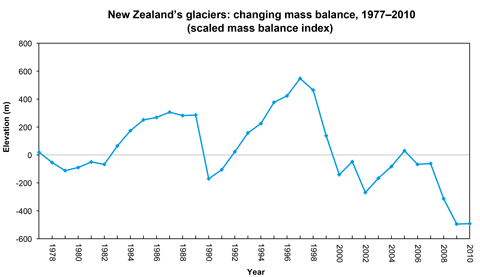
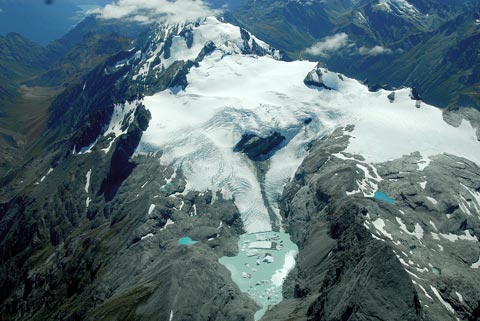
New Zealand’s glaciers just about held their own over last summer, showing a very slight gain in mass on average according to NIWA’s annual end of summer snowline survey, released today. The Park Pass glacier (above) in the Mt Aspiring National Park between the Hollyford Valley and the head of Lake Wakatipu (map) is one of the 50 index glaciers in the NIWA survey. From the press release:

“A moderate El Niño developed in the tropical Pacific in spring last year. This brought more southwesterlies, with normal to below normal temperatures through last summer and into autumn this year. The overall effect was to hold snowlines in a near steady state this year,” says [NIWA scientist] Dr Hendrikx. The previous two years (2007–08 and 2008–09) had seen end-of-summer snowlines rise significantly as not enough snow fell to compensate for melting.

The impact of the El Niño shows as a (very) small uptick at the end of the ice mass graph, but the overall trend remains strongly downwards.

NIWAglaciermassbalance2010.gif

The full report (with lots of pictures from the aerial survey) can be downloaded from the NIWA web site. The Park Pass photo above was taken on March 6th this year on the fourth leg of NIWA’s alpine flight, and shows some spectacular icebergs in the proglacial lake. The extent of the glacier’s retreat can be seen in the Google Earth imagery at Mauri Pelto’s From A Glacier’s Perspective blog post on the nearby Donne Glacier. With a strong La Niña now influencing weather patterns in NZ, it’ll be interesting to see how the glaciers fare. I wonder if I can blag a seat on the 2011 flight? ;-)

We’ve trashed the earth, so let’s go party…

[youtube]oY6aHd_ZDAI[/youtube]

Put a little funk in your day with Scottish jazz musician Phil Bancroft‘s message from the future — a “pre-apocalyptic ironic dance number” entitled Too Late Now, So Party On. Phil says it’s a video “response” to the 10:10 red button video, but I think it’s a fantastic film with amazing production values and possibly the best tinfoil spaceship I’ve ever seen. The song’s first line says it all:

We’ve done it, we’ve trashed the earth, it’s too late now, so let’s go party…

Join Phil, wife Jude, Jazzer the cat and Jenny the dog as they escape the planet we trashed, and shake your funky thang. If that’s at all possible on a Tuesday during office hours. (More about Phil and his current project, Home Small As The World, here).

Tell it like it is

Whether denial of climate science was what the Americans thought they were voting for when they cast their ballots for many of the Republican candidates in the mid-term election, or whether they had other things on their mind, the end result is that the US now has an apparent majority of legislators who flatly deny climate change, or, if they don’t go that far, certainly deny the need to address it. It’s an extraordinary spectacle. The science is utterly clear, more so by the day. But the clearer it gets the more sure the denial becomes in that sadly mixed-up country. Their own government scientific institutions are to the forefront in the reporting of climate change.  Their National Academies of Science produce regular accessible reports affirming the science and urging appropriate responses. Their universities provide a large number of scientists working productively on many aspects of the issue. Yet a substantial sector of their politicians are now confidently announcing that they don’t believe it’s happening. Suzanne Goldberg in the Guardian reports an investigation by a website run by the Centre for American Progress think tank which found 50% of the more than 100 Republican newcomers deny the existence of man-made climate change. An overwhelming majority, 86%, oppose legislation that would raise taxes on polluting industries.


“Climate is gone,” was Karl Rove’s comforting message to the attendees of a shale-gas conference in Philadelphia, Brad Johnson reports. Rove told them that the incoming Republican House of Representatives “sure as heck” won’t pass legislation to limit greenhouse pollution from fossil fuels.

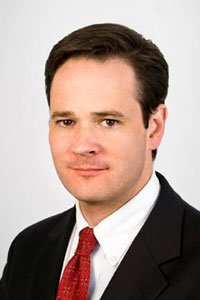
In an op-ed in the Washington Post on Sunday Bracken Hendricks (pictured) put his finger on the radical nature of the conservatism which informs the Republican denial of climate science. It is conservatism at odds with itself.

“…far from being conservative, the Republican stance on global warming shows a stunning appetite for risk.

“…they are recklessly betting the farm on a single, best-case scenario: That the scientific consensus about global warming will turn out to be wrong. This is bad risk management and an irresponsible way to run anything, whether a business, an economy or a planet.”

It’s a very high risk, as he reminds readers:

“The best science available suggests that without taking action to fundamentally change how we produce and use energy, we could see temperatures rise 9 to 11 degrees Fahrenheit over much of the United States by 2090. These estimates have sometimes been called high-end predictions, but the corresponding low-end forecasts assume we will rally as a country to shift course. That hasn’t happened, so the worst case must become our best guess.”

The irony, he points out, is that the result would be not the rolled-back government that Republicans are currently espousing but a greatly expanded role for government:

“With temperature increases in this range, studies predict a permanent drought throughout the Southwest, much like the Dust Bowl of the 1930s, but this time stretching from Kansas to California. If you hate bailouts or want to end farm subsidies, this is a problem. Rising ocean acidity, meanwhile, will bring collapsing fisheries, catch restrictions – and unemployment checks. And rising sea levels will mean big bills as cash-strapped cities set about rebuilding infrastructure and repairing storm damage. With Americans in pain, the government will have to respond. And who will shoulder these new burdens? Future taxpayers.”

The sheer recklessness of denying climate change or the need for action to address it is breathtaking. It’s unfathomable considered alongside the caution with which the US guards itself against terrorism, for example.  It’s so deeply irrational that one wonders if anything can shift it. Yet the deniers won enough of the votes. Small wonder that Stephen Schneider feared democracy couldn’t cope with the confusion in which the issue of climate change has been wrapped.

The Administration, which doesn’t deny climate science, appears to have lost its nerve or not know how to speak to the public about the matter. However there are encouraging indications that American scientists are ready to enter the bruising public arena to challenge the confident denial that is echoing in political circles. The LA Times reports today that there is rising support  among climate scientists to establish a broad campaign to push back against the congressional conservatives who have vowed to kill regulations on greenhouse gas emissions.

“The still-evolving efforts reveal a shift among climate scientists, many of whom have traditionally stayed out of politics and avoided the news media. Many now say they are willing to go toe-to-toe with their critics…”

The American Geophysical Union plans to announce today that 700 researchers have agreed to speak out on the issue.

Another announced pushback intention comes from John Abraham of St Thomas University in Minnesota whom Hot Topic readers will recall received enormous support here when attacked by Christopher Monckton. He is pulling together a “Climate Rapid Response Team,” which includes scientists prepared to go before what they consider potentially hostile audiences on conservative talk-radio and television shows.

Scott Mandia, professor of physical sciences at Suffolk County Community College in New York explains:

“This group feels strongly that science and politics can’t be divorced and that we need to take bold measures to not only communicate science but also to aggressively engage the denialists and politicians who attack climate science and its scientists.

“We are taking the fight to them because we are … tired of taking the hits. The notion that truth will prevail is not working. The truth has been out there for the past two decades, and nothing has changed.”

If such developments take place on a large enough scale they could be very important. The public would better see just how strong the consensus is amongst those scientists who actually work on the issue. They would also realise the alarm that many of the scientists feel as emissions continue to rise. It’s all too easy for politicians to isolate distinguished figures like James Hansen and portray them as some kind of maverick, but phalanxes of scientists ready to speak out publicly would be a different matter. At least it would make it absolutely clear to the public that if they run with their denialist politicians on this issue they are rejecting mainstream science and exposing themselves to what the science sees as grave risks. I’m not sure that they as yet realise that is what they’re doing.

[Aaron Neville]

Licking lignite

Jeanette Fitzsimons raised the alarm in a recent Herald op-ed over Solid Energy’s plans for Southland lignite. A very justified alarm. She wrote of well-advanced plans to use more than 3 billion tonnes of economically recoverable lignite from three fields in Southland. Big plans, of which New Zealanders are hardly aware. First off is the transformation of lignite, by drying it, into briquettes for Fonterra’s milk-processing plants and for export. Only 100,000 tonnes a year in the pilot plant to be built next year, followed by a full-scale plant many times larger. Next are plans to convert lignite to diesel, with the claim that all New Zealand’s diesel could be produced this way. The third big plan is the conversion of lignite to urea.


It’s the increase in greenhouse gas emissions associated with this vast development that concerns Fitzsimons. Her article rests on the arguments of James Hansen that the use of coal must be phased out over the next couple of decades. And she’s not buying the claim of carbon compliance:

“Solid Energy says all the emissions will be ‘offset’. But increasing the amount of biological carbon that cycles between atmosphere and plants can’t compensate for putting more fossil carbon into the system, even if our ETS scheme pretends it can.

“Paying money is, in the end, not a get-out-of-jail-free card for increasing pollution.

“These huge lignite developments are close – Solid Energy intends to start building next year. Any hope we had of reducing our greenhouse emissions would be lost.”

Her conclusion is robust:

“As citizens, we need to refocus our domestic action to tell Solid Energy and the Government by every means available to us to keep the coal in the hole. Every tonne of lignite New Zealand keeps in the ground is 1.5 tonnes of carbon dioxide that doesn’t get into the atmosphere.”

I agree entirely, and wonder what is going on in the mind of the Minister of Energy and others in government as they contemplate the proposed activity of the government-owned company. It’s not as if there is any requirement for lignite in something essential like our electricity generation, no lingering imperative that we carry on using it until we can replace it with renewables. The only imperative in the proposed lignite exploitation is that we not leave any resource stone unturned in the drive to greater economic wealth.

I don’t know how much thought the Minister gives to the counter imperative that we take every step open to us to prevent the continuing build-up of greenhouse gas emissions in the atmosphere. There is perhaps a cautionary note in the reference to coal in the Draft Energy Strategy, but it’s far from specific:

“New Zealand’s extensive coal resources currently contribute to electricity supply security. Coal is also utilised by industry and is exported. Coal could potentially contribute to the economy in other ways, such as through the production of liquid fossil fuels, methanol or fertiliser such as urea.

“This potential is more likely to be fully realised if an economic way to reduce high levels of greenhouse gas emissions is found. Carbon capture and storage technology (CCS) will potentially be an effective way of utilising resources while reducing CO2 emissions.”

Moreover there’s nothing in Solid Energy’s plans which suggests that the lignite development is going to wait on CCS (if the technology is ever developed successfully). Meeting the slack requirements of the ETS is all they appear to have in mind, and that’s clearly no impediment to proceeding.

The Minister has a wide embrace. He welcomes every renewable energy development that comes along. In the same breath he waxes enthusiastic at the prospect of the discovery and urgent development of fossil fuel resources. If the Draft Energy Strategy is as close to his and the government’s philosophy as we’re going to get it appears the thinking is that we can fully exploit the fossil fuel resources while alternatives are being developed. And we should be getting on with it smartly while it’s profitable. It’s an opportunity which we would be foolish to miss. Indeed according to Chris Baker, CEO of the mining and exploration lobby Straterra, who followed up Jeanette Fitzsimons’ article the very next day, the lignite resource could be worth $3 trillion. He didn’t say to whom, but no doubt there would be trickle down.

How does this wealth stack up against the release of more atmospheric carbon as a result of exploiting the lignite? That’s a rhetorical question. It doesn’t matter how many trillions of dollars we gain if we lose a habitable world for our descendants in doing so.

If the government is serious about tackling climate change it should instruct Solid Energy not to pursue the lignite plans and relieve them of whatever dividend expectations that makes them unable to fulfil. If regulation is necessary it should legislate for it. It should tell the public that unless full carbon capture and storage technology is possible there can be no exploitation of the lignite fields because of the seriousness of the threat of increased greenhouse gases. That threat, it should explain, far outweighs the transient economic gain of fossil fuel development.

We can’t have it both ways. We can’t reduce emissions by increasing them. We can’t say we recognise the threat of global warming and at the same time expect to carry on with all activities which give rise to it. If Gerry Brownlee and the government think we can, they are deceiving themselves and us. Jeanette Fitzsimons is absolutely right. Keep the coal in the hole.

PS. Take a few minutes to send Gerry Brownlee an email to that effect. Remind him that he has a responsibility to the future. I’ve done so.