The Climate Show #3: Cancun and cooling

[youtube]dEo95E_hXvo[/youtube]

Climate talks heat up in Mexico, snow blankets Britain and much of Europe, and The Climate Show is at the heart of the action. Glenn and Gareth set the scene for COP16 in Cancun and then interview Oxfam NZ’s Barry Coates at the conference to find out how things are shaping up. Gareth explores the link between Arctic climate change and cold winter weather in Western Europe, John Cook debunks that favourite sceptic myth — that the world’s cooling — and we look at the potential for nuclear power to provide part of the solution to decarbonising the power economy.

Watch The Climate Show on our Youtube channel, subscribe to the podcast via iTunes, or listen direct/download here:

The Climate Show

Follow The Climate Show on Facebook and Twitter, and soon at The Climate Show web site.

Show notes below the fold.

Continue reading “The Climate Show #3: Cancun and cooling”

Coates in Cancun: the stakes are high

This is the first in a series of guest blogs from the Cancun climate conference by Oxfam NZ’s executive director Barry Coates.

I’m sitting in the warm evening air of Cancun after the first day of the climate change talks. It was quite a trip getting here – I came from Timor Leste and the journey took 60 hours!

It was a great preparation for me to go to Timor Leste first. It is the poorest Asian country, still recovering from a bloody and traumatic struggle for independence. I visited some remote rural agricultural cooperatives with Oxfam’s partner, Movimento Cooperativo Economico Agricola (MCE-A). These were small growers, generally farming a hectare of customary land and working on a larger plot with other members of the cooperative. They have recently increased their income through support from MCE-A. They use a revolving loan scheme to invest in hand-tractors and milling machines, and have dramatically improved yields from sustainable rice intensification using permaculture techniques. It is a really inspiring programme that is driven by the cooperatives themselves. You can read about their work here.


But in a country with high levels of malnutrition and months without enough food, these farmers have just experienced a disaster. This is not one we read about in the papers but one of the many thousands of disasters that happen around the world, affecting farmers such as those in Zumalai in Timor Leste. During the dry season they had unprecedented levels of heavy rainfall that caused floods and damaged their irrigation canals. The communities of Zumalai live a tenuous existence and disasters like this are the difference between them and their children having enough food for their needs – or not.

This is a typical situation faced by farmers around the world. Weather has become more extreme and unpredictable, and seasons have changed significantly over recent years. This is the backdrop for Oxfam’s new report Now More Than Ever: Climate talks that work for those who need them most, which says that 21,000 people died due to weather-related disasters in the first nine months of 2010 – more than twice the number for the whole of 2009. This year is on course to experience more extreme-weather events than the last ten-year average. Many countries have also broken heat records, with Pakistan logging 53.7°C – the highest ever in Asia.

These are the people who did little to cause climate change. But they are the ones suffering most. This is a good reminder of why we are in Cancun.

Behind these numbers are the stories of people’s lives. Not only millions of people suffering from the massive flooding in Pakistan or those affected by heat waves in Russia, but all of those whose destroyed lives and livelihoods never make it into the statistics or the media. It is the flooding affecting people in places like Zumalai in Timor Leste or the low-lying coasts of Bangladesh. It is those suffering from cyclones, king tides and sea swells in small islands across the Pacific. It is people struggling to cope with droughts across the arid zones of sub-Saharan Africa, and even in unexpected places like the Papua New Guinea Highlands. These are the people who did little to cause climate change. But they are the ones suffering most. This is a good reminder of why we are in Cancun.

When I arrived here, I was roped into Oxfam’s campaign launch, featuring a great image on the beach. This giant message in a bottle says “Urgent: Save lives in Cancun” and has featured in newspapers and websites around the world. I also joined in an opening event for the Global Campaign for Climate Action (the TckTckTck campaign). Yesterday, TckTckTck and partners built a ‘Mayan Pyramid of Hope’. Pyramids were built through collective will, and the ‘Pyramid of Hope’ serves as an affirmation of this collective will, showing what can be achieved if we work together. It is a message from tens of thousands of people around the world representing their aspirations for concrete action and real progress in Cancun. The pyramid is covered with photographs of people taking action in their communities to tackle climate change. UNFCCC Executive Secretary Christiana Figueres wrote her hopes on one of the pyramid’s building blocks: “Commitment and compromise”.

The negotiations started today. Not much to report, except for the usual highs and lows of political game-playing. The bad news was that Japan said that they would not, under any conditions, agree to a second commitment period of the Kyoto Protocol (which would mean that they would agree to reductions in greenhouse gas emissions after the end of 2012, when the first commitment period runs out). It is a bit ironic that it is Japan, the home of the Kyoto Protocol that is joining the US in not agreeing to these reduction commitments. The danger is that other countries, notably Canada and Russia, but also Australia and (shamefully) New Zealand, are likely to use this announcement to hide behind Japan and “kill” the Kyoto Protocol. This is a serious setback. The “like-minded countries” already went ahead in 1997 and signed the Kyoto Protocol without the US. But the like-minded group looks a lot smaller without those other countries as well. The EU is unlikely to agree to go it alone. This is a blow to many developing countries that have signalled their willingness to reduce emissions themselves. Even tough negotiators like China are making long-term commitments to reduce their emissions through renewable energy, clean technologies and shutting down polluting factories.

The good news from Day One is that a number of countries have made statements saying how important it is to make progress – to pick up the pieces after Copenhagen and move on. There are real gains that can be made on issues such as establishing a new climate fund that would channel money to the countries bearing the brunt of climate change, particularly the small and vulnerable nations (such as the Pacific islands), and to support emissions reductions in the developing world. And progress is possible on getting an agreement on adaptation and technology transfer. Other agreements that may come from Cancun are potentially more problematic – I will report out on the discussions around forests later this week. So the good news today is ‘mood music’ but a refreshing change after the trauma of Copenhagen.

But now it is late and I’m still in recovery mode, trying to figure out what time zone I’m in. I may miss a day or two of blogging this week while things are a bit slow, but I’ll write daily posts when Environment Ministers and some heads of state roll into Cancun next week.

I’ll leave you with the words of the negotiator from Tuvalu, again toughly defending their right to survive as communities, as a culture and as a nation: “Give life to KP (the Kyoto Protocol) or take the lives of people in vulnerable island countries”. The stakes are high in Cancun.

Warm oceans killing coral

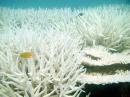
This has not only been a bad year for the Amazon rainforest, it has also been a year in which coral reefs, the rainforests of the ocean as they are sometimes called, have suffered severe bleaching because of raised ocean temperatures. Not a matter likely to strike the public consciousness. A recent Yale University survey found 75 percent of Americans have not heard of coral bleaching. But the reefs are one of the world’s great ecosystems and they matter enormously.

Mark Eakin, who coordinates the National Oceanic and Atmospheric Administration’s Coral Reef Watch and is frequently quoted in reports on this year’s bleaching events, explains that coral bleaching happens when ocean temperatures get too warm and stay warm for too long, and the relationship between the coral and the algae gets stressed. This thermal stress to corals, he said, is the highest it’s been since 1998, when 15% of the world’s coral reefs died.


“When you have high temperatures, in conjunction with normal high light conditions, the photosynthetic apparatus in the algae starts to poison the coral. They’ll spit them out into the water. When they do this, they lose their colour, look white, which is why they’re called bleached. If that persists for a long time, it can cause the corals to die.”

In July an article in the Telegraph on the coral bleaching events becoming apparent quoted Eakin:

“The bleaching is very strong throughout south east Asia and the central Indian Ocean. The reports are that it is the worst since 1997/1998. This is a really huge event and we are going to see a lot of corals dying.”

Indonesian reefs were badly affected. Some detail is provided in a report from the International Coral Reef Initiative which indicated the extent and severity of bleaching in different areas, and commented on the high rate of coral mortality following the bleaching.

In September Pierre Fidenci, president of Endangered Species International, wrote in a Mongabay article of severe wide-scale bleaching in the Philippines. The bleaching has been observed at many sites around the Philippines featuring mass mortality of corals including the coral triangle outside the Philippines. He considers this environmental catastrophe will probably be considered the most damaging bleaching event ever recorded in the Philippines, surpassing the big one of 1998.

“Prior to this year’s bleaching, it was estimated that about 85 percent of the reefs have been damaged or destroyed in the Philippines, now the current estimate is likely to be close to 95 percent.”

The Telegraph article noted scientists in Thailand have reported reefs suffering 90% of their corals being bleached and up to 20% of the corals dead. Olivia Durkin, who is leading the bleaching monitoring at the Centre for Biodiversity in Peninsular Thailand, said: “This year’s severe coral bleaching has the potential to be the worst on record.”

In June The Maldives reported the most serious incidence of coral bleaching since the major 1998 El Niño-event that destroyed most of the country’s shallow reef coral. Since then there has been gradual reef recovery but the 2010 event will be at least a major setback.

Eakin warned in September that this year had the potential to be also one of the worst bleaching seasons for some reefs in the Caribbean. It follows hard on the heels of the 2005 bleaching which caused record losses to Caribbean reefs, according to a collaborative study published a couple of weeks ago.  More than 80 percent of surveyed corals bleached and over 40 percent of the total surveyed died as a result of the 2005 event. It will be a while before the effects of this year’s bleaching can be measured, but it is already apparent that in some locations this year’s event is worse than the event in 2005. Not only are temperatures causing further damage to reefs hit hard during the 2005 event, but new locations have also been impacted.

Eakin’s comment on the release of the study of the 2005 impacts:

“This severe, widespread bleaching and mortality will undoubtedly have long-term consequences for reef ecosystems, and events like this are likely to become more common as the climate warms.”

Bleaching is a consequence of a warming ocean, but it’s not the only adverse effect of global warming on corals. The other major impact is from the increase in ocean acidification as carbon dioxide emissions continue to rise. The double whammy is very clearly explained by Australian scientist and coral reef expert John Veron in his 2009 lecture to the Royal Society. I summarised his content in this post last year, and suggest any readers who’d like a longer explanation of what bleaching and acidification mean for the future of coral reefs take a look at it. The link to the video of the lecture provided in the post is outdated, but this link will get you there if you want to hear him in person. He is sombre about the outlook for coral reefs if greenhouse gas concentrations continue to rise, and nothing that has happened this year suggests he is getting it wrong.

Polar warming, Amazon drought, coral reefs bleaching and dying: I’ve gathered material for posts on all three of them within the past week. They are all sending out danger signals. They all threaten massive effects which cannot but have drastic consequences for humanity if they continue. And they’re only part of what threatens from climate change. They ought to have us scurrying to do what we are still able to do to prevent them developing further. The Cancún conference should be charged with a sense of high urgency.

I found myself applauding our Prime Minister when he said on Sunday that nothing less than the future of underground coal mining in New Zealand rests on the investigation into the Pike River tragedy. “We can’t put people into mines that are dangerous.” I also found myself wondering how that sentiment would go down with some of our economic interests. I thought John Key was absolutely right, and I presume in saying it he was not unaware of the economic implications. I guess I needn’t spell out the obvious parallel with the dangers from climate change and the perspective they put on the protests that economic interests mustn’t be harmed by climate change measures.

Johann Hari, in the eloquent article Gareth has already drawn attention to, wrote, “At Cancún, the real question will be carefully ignored by delegates keen to preserve big business as usual.”  It’s the wrong choice, Hari points out. But as he also says it’s not too late to change.

Can Cancún’s COP deliver?

Another year, another Conference of the Parties to the United Nations Framework Convention on Climate Change, number 16 in a series that looks set to run and run. Mexico is the host, Cancún the seaside resort where thousands of diplomats, negotiators, activists and apparatchiks are gathering to have another go at sorting out a successor to the Kyoto Protocol. High hopes for a comprehensive deal in Copenhagen last year were dashed on the rocks of US inaction, Chinese intransigence and a failure of political will. A weak but face-saving Accord was cobbled together at the last minute, but it satisfied very few — least of all those who’d like to do more than pay lip service to a 2ºC target.

By way of contrast, the build-up to Cancún has seen prospects of a final deal downplayed by just about everyone involved in the process. COP 16 will make progress on the building blocks of a Kyoto follow-up, we are told, but few expect anything substantial to happen before COP17 in Durban next year.

Nature News has a good overview of expectations:

“It’s a question of trying to get some incremental gains,” says Saleemul Huq, a senior fellow at the International Institute for Environment and Development (IIED) in London. “The approach of all-or-nothing that we took in Copenhagen blew up in our faces, and we can’t just sit back and do nothing at all.”

John Vidal in the Guardian reports on the impatience of Latin American and African nations:

“There is deep frustration among the least developed countries”, said Bruno Sikoli, the spokesman for the 54-strong group of mainly African countries. “We feel there has been far too much talking. If the rich countries put nothing new on the table, then it will be very serious. Climate change is affecting our countries hard now. It is most urgent.”

Johann Hari in The Independent takes the bleak view:

The collapse of Copenhagen has not shocked people into action; it has numbed them into passivity. Last year, we were talking – in theory, at least – about the legally binding cap on the world’s carbon emissions, because the world’s scientists say this is the only thing that can preserve the climate that has created and sustained human civilization. What are we talking about this year? What’s on the table at Cancun, other than sand?

Hari’s extended riff on the “great ecological crash” we’re staring in the face is well worth a read — he’s a compelling writer — and he articulates all too well the reality of the huge disconnect between the evidence piling up that we need to act fast and the complacency of the international realpolitik.

The Economist joins the chorus with perhaps the ultimate in negative perspectives. In an editorial the magazine declares:

In the wake of the Copenhagen summit, there is a growing acceptance that the effort to avert serious climate change has run out of steam. Perhaps, after a period of respite and a few climatic disasters, it will get going again. It certainly should. But even if it does, the world is going to go on getting warmer for some time.

The chance of hitting a 2ºC target has passed. It’s now time to focus on adapting to the inevitable:

Though they are unwilling to say it in public, the sheer improbability of such success has led many climate scientists, campaigners and policymakers to conclude that, in the words of Bob Watson, once the head of the IPCC and now the chief scientist at Britain’s Department for Environment, Food and Rural Affairs, “Two degrees is a wishful dream.”

The fight to limit global warming to easily tolerated levels is thus over. Analysts who have long worked on adaptation to climate change—finding ways to live with scarcer water, higher peak temperatures, higher sea levels and weather patterns at odds with those under which today’s settled patterns of farming developed—are starting to see their day in the uncomfortably hot sun.

What’s left is planning to adapt, and The Economist does a characteristically through job of providing an overview. I’d say it was notably optimistic in the face of the climate numbers — particularly those presented in a “theme issue” of the Philosophical Transactions of the Royal Society AFour degrees and beyond: the potential for a global temperature increase of four degrees and its implications. [All the papers in the special issue are available free until Nov 30, and many beyond that date.] The Guardian does a good job of summarising the bad news:

Rachel Warren, at the University of East Anglia, described a 4C world in her research paper: “Drought and desertification would be widespread … There would be a need to shift agricultural cropping to new areas, impinging on [wild] ecosystems. Large-scale adaptation to sea-level rise would be necessary. Human and natural systems would be subject to increasing levels of agricultural pests and diseases, and increases in the frequency and intensity of extreme weather events.”

Warren added: “This world would also rapidly be losing its ecosystem services, owing to large losses in biodiversity, forests, coastal wetlands, mangroves and saltmarshes [and] an acidified and potentially dysfunctional marine ecosystem. In such a 4C world, the limits for human adaptation are likely to be exceeded in many parts of the world.”

Another Met Office study analyses how a 4C rise would differ from a 2C rise, concluding that threats to water supplies are far worse, in particular in southern Europe and north Africa, where regional temperatures would rise 6-8C. The 4C world would also see enhanced warming over most of the US, Canada and northern Asia.

In sub-Saharan Africa (SSA), “the prognosis for agriculture and food security in a 4C world is bleak”, according Philip Thornton, of Kenya’s International Livestock Research Institute, who led another research team. He notes there will be an extra billion people populating Africa by 2050.

Expectations for Cancún are low, but the stakes just keep on getting bigger. The next two weeks will give us an idea which way the chips are falling. Hot Topic will once again be featuring guest posts by Oxfam NZ’s Barry Coates, who is already in Cancún, plus I’ll add comment as news catches my attention. You can also follow the NZ Youth Delegation at their blog.

For more detailed news, there’s the International Institute for Sustainable Development‘s Reporting Services’ coverage, including their Earth Negotiations Bulletin, a daily update of events. iPhone owners can even download a UNFCCC app, Negotiator, designed to keep you up to date with COP 16 news — even read conference papers. Slightly more quixotic is the Twitter newspaper The unfccc-ipcc-cop Daily at paper.li. It’ll be interesting to see how that goes…

And finally: we can expect more comedy gold as the Scaife-funded Committee For A Constructive Tomorrow is flying Christopher, Viscount Monckton of Brenchley into Mexico to bring his unique brand of, er, something or other to proceedings. He’ll even have Roy Spencer to act as his bag man… I confidently expect high jinks.
I wish it would rain

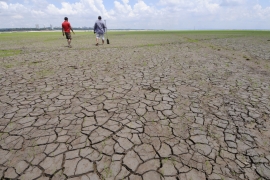
We (or at least some of us) rightly feel apprehension and alarm at the prospect of melting glacial and polar ice. There are new reminders that we should be equally alarmed at the prospect of Amazonian drought. Joe Romm has written a lengthy post on Climate Progress drawing attention to the 2010 drought which may prove more widespread and severe than the 2005 drought, itself identified as a 1-in-100-year type event.  He quotes an email to that effect from forest scientist and Amazon expert Simon Lewis (he of the Sunday Times fightback and subsequently granted apology).

Lewis recommends an article in the Global Post which is well worth reading.  It refers to three scientists. Oliver Phillips, a tropical ecology professor at the University of Leeds, speaks of his concern that parts of the Amazon may be approaching a threshold point beyond which the eco-system can’t go. He led a team of researchers who studied the damage caused by the 2005 drought which caused a massive die-off of trees and led to the forest expelling carbon dioxide rather than absorbing it. He’s worried that another severe drought is following so soon after the last one.  Greg Asner, an ecologist at the Carnegie Institution for Science, points out that some tropical forests in the world now are starting to be exposed to temperatures they’ve never experienced. His studies show that higher temperatures and shifts in rainfall could leave as much as 37 percent of the Amazon so radically altered that the plants and animals living there now would be forced to adapt, move or die. Foster Brown, an environmental scientist at the federal university in the Brazilian state of Acre, comments that drought has made ecosystems so dry that instead of a being a barrier to fire, the forest became kindling.

Nikolas Kozloff’s book No Rain in the Amazon which I reviewed earlier this year refers to much-cited scientist Philip Fearnside of Brazil’s National Institute for Research in the Amazon, who for some years has observed the connection between drought and El Niño-like conditions which are expected to become more frequent with continued global warming. He too is concerned that the Amazon might dry out and be placed in jeopardy as a result of climate change. Kozloff also reports the belief of some researchers that warming sea surface temperatures in the tropical North Atlantic Ocean are linked to Amazon drought.

In an October press release Brazil’s Amazon Environmental Research Institute (IPAM) comments:

“The drought of 2010 still hasn’t ended in the Amazon and could surpass that of 2005 as the region’s worst during the past four decades… Even if this doesn’t occur, the forest will have already experienced three extreme dry spells in just 12 years, two of which occurred during the past five years: 1998, 2005 and 2010. And this is not including the drought of 2007, which affected only the Southeastern Amazon and left 10 thousand sq. km. of forest scorched in the region…`The Amazon that had wet seasons so well-defined that you could set your calendar to them – that Amazon is gone,’ says ecologist Daniel Nepstad of IPAM…”

Deforestation of the Amazon by humans has long been a major international concern, and Simon Lewis’s communication with Jo Romm indicates that there is a degree of good news on that front in that since 2005 deforestation rates have been radically reduced. But the droughts are bad news. They kill trees and promote damaging fires, “potentially leading to a drought-fire-carbon emissions feedback and widespread forest collapse”. Lewis expresses particular concern that while two unusual droughts clearly don’t make a trend, they are consistent with some model projections made well before 2005: “that higher sea surface temperatures increase drought frequency and intensity, leading later this century to substantial Amazon forest die-back.”

Hot Topic commenter Tony on a previous post linked to an Al Jazeera video clip (which I’ve posted below), with the observation that if anything should motivate a sense of urgency in Cancun, what it portrayed should. Simon Lewis also linked what may be happening in the Amazon to the Cancun conference. Not with any great expectation, but with a dry reminder that the risks to which we are exposing humanity don’t diminish because we ignore them. “While little is expected of the climate change talks in Cancun next week, the stakes, in terms of the fate of the Amazon are much higher than they were a year ago in Copenhagen.”

I hope it doesn’t appear as incidental if I note before concluding that the droughts affect not only the forest and through it the welfare of the whole planet but also the local populations whose livelihood and wellbeing is jeopardised. The Global Post article reports the anxiety of village chief Mariazinha Yawanawa. Her people are sustained by the forest. They hunt in the woods, fish the rivers and grow crops in the clearings where they live.  “Everything has changed. We don’t know when we can plant. We plant and then the sun kills everything. If it continues like this, we expect a tragedy

[youtube]eTmAyxY6F7g?fs[/youtube]

[The Temptations]