The odds are much worse than 50-50

Nick Smith, NZ’s climate change minister, told the Bluegreens forum in Akaroa last weekend that the government was considering gazetting their “50 by 50” target for carbon emissions — a 50 percent cut in emissions by 2050. That target has been National Party policy since before the last election, so the only real news is that the government is considering making it “official”, in the terms of the Climate Change Response Act 2002. Smith continues to represent this target as challenging (which is true), and in line with other countries commitments (which is less so), but where it really falls down is by being completely out of line with what is actually required if we are to avoid the worst effects of climate change in the future.

The last time the government considered emissions targets was in the run up to the Copenhagen conference in 2009. At the time, I posted an analysis of global and national emissions targets — The First Cut Is The Deepest. It still remains valid today, made more piquant by the sense of impending changes of climate and the notable extreme weather events that have accumulated since. Here’s my simplified cheat sheet…

Continue reading “The odds are much worse than 50-50”

Singing in the rain

Climate scientists of any public prominence these days are likely to be on the receiving end of hate mail. When they are also activists, as James Hansen acknowledges himself to be, it’s no doubt worse. He has written on his website, under the intriguing title Singing in the Rain, of a recent “deluge of nasty-language messages saying that I should be fired, deported, run over, etc.”  He comments dryly that such a sudden burst of malice seems unlikely to be spontaneous, and wonders whether a couple of pieces of recent writing aimed at him may have provided the stimulation.

One is by Patrick Michaels in the Washington Times. He had caught up with what Hansen had to say about China, something I covered in Hot Topic last November. Michaels talks of anti-democracy rants, presumably referring to this sentence:

“Democracy of the sort intended in 1776 probably could have dealt with climate change, but not the fossil-money-’democracy’ that now rules the roost in Washington.”

Michaels goes on to accuse Hansen of advocating a ruinous boycott of the US economy, and adds for good measure the old and false accusations that Hansen was wrong in his 1988 climate predictions anyway.

The other piece is a blog by Richard S Courtney which includes the following relating to Hansen’s appearance as an expert witness in the Kingsnorth trial in the UK:

“So, as a result of Dr Hansen speaking to that law court, eco-terrorists have a legal right to attack power stations in the UK. And that right will remain unless and until the UK Parliament alters the law.

“Dr Hansen is an employee of US Government and the US is supposed to be an ally of the UK: n.b. he is de facto an agent of the US. Therefore, Dr Hansen’s actions in this UK legal case are tantamount to an act of war by the US on the UK. For this reason, if for no other, he should be sacked.”

Apart from noting that the Courtney statement mischaracterizes his testimony at the trial, Hansen doesn’t address it but instead uses it as an opportunity to elaborate on an issue which is very much on his mind these days: the intergenerational injustice of human-made climate change. He comments that his testimony at both the Kingsnorth trial and later the Ratcliffe-on-Soar trial (which incidentally, contrary to Courtney’s implication, was in his own time at his own expense) was given at the request of young people on trial. That’s a request he finds hard to decline, recognising himself as part of the generation causing the problem that the young people are beginning to recognize and protest against.

He considers the two different verdicts – acquittal of the Kingsnorth defendants, a guilty verdict for the Ratcliffe-on-Soar defendants.

“The Kingsnorth jury, nine women and three (some young) men were intently interested – you could have heard a pin drop during my testimony. I anticipated acquittal. Nottingham had a different feel…No doubt the jury in Nottingham was fair-minded, but they were more severe in their judgment about whether young people were justified in taking actions to draw attention to the urgency of the situation and its intergenerational injustice.”

He notes also that the Ratcliffe jury were older than the defendants, were members of the generation most responsible for creating the climate problem that young people will need to deal with. But that fact didn’t prevent their voting for conviction.

He considers that part of the reason may be change of public perception of this topic between the Kingsnorth and Ratcliffe trials.

“Media and governments allowed science and pseudo-science to have equal weight, ‘fair and balanced’. Relentless repetition of minor flaws in telephone-book-thick IPCC reports created the public impression that the science may be flawed, even while observations of climate change strengthened and the urgency of action increased.”

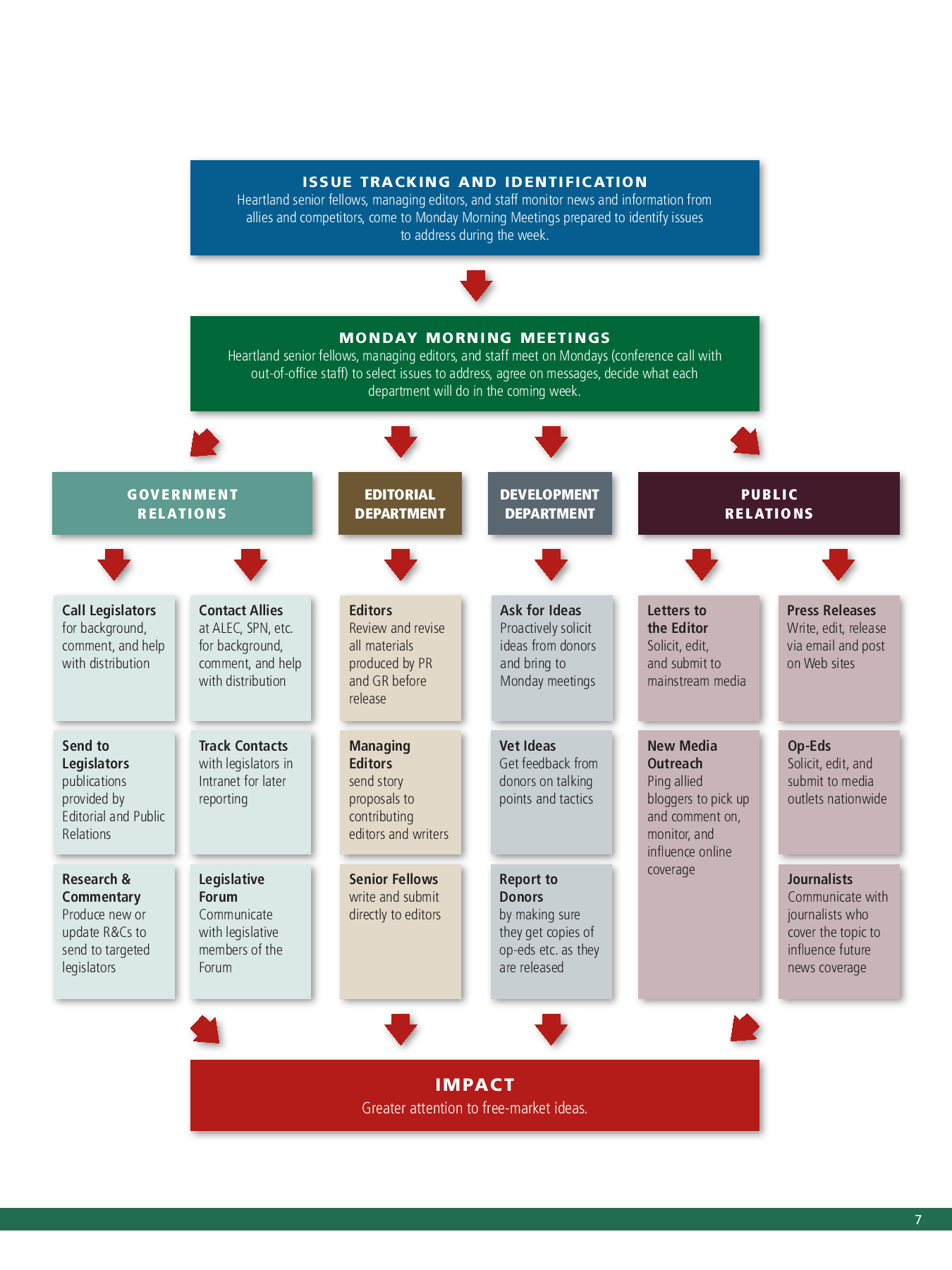
To the argument that young people are free to influence public opinion he offers a striking Heartland chart as an example of what they are up against.

“People carrying out these [Heartland] tasks are professional warriors for special interests, well-funded to make the case that global warming and climate disruption are a hoax. Their message is repeated relentlessly. Note that the ‘free market ideas’ phrase in the Heartland bottom line is Orwellian double-speak. They mean the opposite, they want business-as-usual, with fossil fuels subsidized and not required to pay their costs to society.”

His conclusion is tinged with resignation:

“Dear grandchild, this is a monster that you must face. You will need to figure it out. I am sorry. But it is the shape of our democracy today, which we bequeath to you.”

Nothing so far related to singing, but Hansen goes on to speak of Lester Brown putting him in touch with Canadian singer Raffi Cavoukian, suggesting that Raffi’s work on child honouring and Hansen’s book, Storms of My Grandchildren, share a common theme. Hansen recommends a recent essay Raffi has written, The Right to a Future. A shortened version of the essay has appeared on Huffington Post.

“The young have the strongest moral claim on climate action. It’s their future on the line. And they may hold the key to inspiring an emotional tipping point for critical mass.

“We urgently need to embrace social and economic systems that constitute a culture of respect for children and their planetary habitat.”

To finish, here’s Raffiâ’s global cooling song:

[Youtube]zSn9KrK0peM[/Youtube]

[And Gene Kelly]

Federated Farmers gullibility highest since records began

You may have noticed that New Zealand’s Federated Farmers organisation is capable of military grade climate change denial. I was going to write on the history of farming denial, but while looking for the 2006 and 2007 Federated Farmers presidential addresses from (then president) Charlie Pedersen (can’t find my copies) I found this wee gem (published two weeks ago) by Don Nicolson, the current president.

With deep snow in the USA, parts of Australia awash and mudslides in Brazil, it’s unsurprising we’re seeing professors of climate change pinning this “evidence” on the climate change donkey.

Sticking with mass media (because, as we shall see, Don Nicolson has great faith is them) I recall experts carefully and mildly saying things like:

Continue reading “Federated Farmers gullibility highest since records began”

Paul Nurse: science under attack

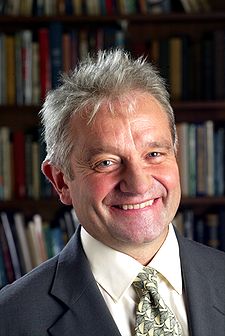
Paul Nurse is the new President of the Royal Society. His predecessor Martin Rees was firm in his insistence on the seriousness of climate science and climate change, and Nurse is equally so. In a striking BBC Horizon documentary Science Under Attack he examines why public trust in scientific theory appears to have diminished, especially in relation to  climate change. The documentary is not available from the BBC for viewers outside the UK, but it has been uploaded to YouTube, broken into six segments. It is well worth an hour of viewing, but I’ll offer some comment on it here for those who don’t have the time.

Nurse is a geneticist and cell biologist, distinguished for his work in the discovery of the control which regulates cell division, for which he shared a Nobel Prize in 2001, and which is relevant to a better understanding of diseases like cancer.  In this documentary he steps outside his lab to investigate how it is that climate science has come under attack and whether scientists are partly to blame.


The documentary opens and closes in the archives of the Royal Society which include among their books the manuscript version of Newton’s Principia Mathematica and the first edition of Darwin’s On the Origin of Species, presented to the Society by the author. Nurse and the librarian pause over these two outstanding examples from the Society’s past of science fundamental to our understanding of the world, a useful backdrop to the programme’s investigation of why a well-established science, as climate science now is, should be leaving many people unconvinced or thinking it is exaggerated.

He visits NASA and talks with Robert Bindschadler, who shows him in visualisation how satellites (16-18 from NASA and a similar number from other agencies) circling the globe are gathering enormous amounts of data related to climate. Three quarters of a degree of warming over the last fifty years will be matched by at least another three quarters of a degree over the next fifty even if we do nothing more to modify the climate. Asked whether this could be a natural fluctuation Bindschadler acknowledges that there have been times in the past when the Earth has been warmer than it is today, with less ice and higher sea level, and times colder than it is today, with much more ice and lower sea level. However in the past climate changed very gradually whereas it’s now changing really fast, and it’s the pace of change that is so important in the climate change that we’re living through right now.

Nurse considers not only the NASA data but also the work of seven decades of research from scientists across the globe and concludes that the extent of the data gives us reason for confidence in the idea that the globe is warming and we are causing the change. Yet this evidence is clearly not convincing a substantial part of the wider public. And those who are sceptical turn to other scientists.  Enter Fred Singer, who meets with Nurse over a cup of tea in a café and explains his theory that solar activity, not CO2, is the cause of warming which he regards as variable.

Nurse talks to viewers about the importance of the wider picture, which Singer ignores in his cherry picking. Things need to make sense together.  Solar activity needs to be looked at in the context of all research.  You cannot ignore the majority of available evidence in favour of something you would prefer to be true. Bindschadler comments that small variations in solar activity today don’t match up with the climate data. There’s no doubt, he says, that the sun is not the primary factor driving the climate change that we’re living through. It has to be the huge amounts of carbon dioxide our fossil fuel burning is putting into the atmosphere. You need to stand back and look at the big picture and there’s really no controversy if you do that.

“Who do you believe?” asks Nurse. If you’re not a scientist then ultimately it’s a question of trust. At this point he goes to the Climatic Research Unit at East Anglia University and talks with Phil Jones, the scientist who was accused in headlines, on the basis of stolen emails, of being at the centre of one of the worst scientific outrages of all time. Nurse points out there was no scientific scandal, as enquiries have established. At worst there was an understandable but perhaps less than wise resistance to meeting obviously engineered requests for information.

Nurse then visits James Delingpole, one of the journalists prominent in proclaiming the climategate email scandal. He is perfectly polite with Delingpole, but his gentle questioning elicits from the interviewee the brash certainties of a man who has no knowledge of the solidity of the scientific consensus on the causes of global warming but is an articulate and bellicose proponent of the theories of the deniers, accepting the few scientists among them as authoritative interpreters of the peer reviewed science which he himself doesn’t read. Nurse is surely right to see an unholy mix of the media and politics as distorting the proper reporting of science.

He acknowledges the problem of uncertainties, particularly in projecting the future and particularly in projecting cloud formation. But a fascinating picturing at NASA displays how the uncertainties are reducing. Bindschadler shows him a screen, along the upper half of which real global cloud data is pictured and in the lower half what the models predict would be happening at the same time. It’s a test of the models, and the level of their accuracy is astonishing to Nurse. Binsdschadler is clear there will always be some uncertainties because there are processes which are not fully understood, but by the measure of reducing uncertainties the science is making extraordinary progress.

There’s much more in the documentary than I have covered here, but hopefully this gives a sense of the thoroughness and reasonableness which marks Nurse’s investigation. He’s a person of intellectual substance who, in his own words has “an idealistic view of science as a liberalising and progressive force for humanity.”

I’ll conclude with a section of quotes I’ve transcribed from the latter part of the documentary, where he sums up what he has been seeking to communicate. First, on the centrality of peer review (irretrievably corrupted according to Delingpole) and the importance of scientific scepticism:

“As a working scientist I’ve learnt that peer review is very important to make science credible   The authority science can claim comes from evidence and experiment and an attitude of mind that seeks to test its theories to destruction…Scepticism is very important…be the worst enemy of your own idea, always challenge it, always test it   I think things are a little different when you have a denialist or an extreme sceptic. They are convinced that they know what’s going on and they only look for data which supports that position and they’re not really engaging in the scientific process. There is a fine line between healthy scepticism which is a fundamental part of the scientific process and denial which can stop the science moving on.  But the difference is crucial.”

On complexity:

“There’s an overwhelming body of evidence that says we are warming our planet but complexity allows for confusion and for alternative theories to develop.  The only solution is to look at all the evidence as a whole.  I think some extreme sceptics decide what to think first and then cherry pick the data to support their case.  We scientists have to acknowledge we now operate in a world where point of view not peer review holds sway.”

That means taking trouble to communicate:

“Scientists have forgotten that we don’t operate in an isolated bubble. We cannot take the public for granted. We have to talk to them. We have to communicate the issues. We have to earn their trust if science really is going to benefit society.”

It matters for the world:

“Over the next few years every country on the globe faces tough decisions over what to do about climate change. I’ve been thinking how scientists can win back the confidence we’re going to need if we’re going to make those choices wisely.”

He turns to the record of the Royal Society:

“350 years of an endeavour which is built on respect for observation, respect for data, respect for experiment. Trust no-one. Trust only what the experiments and the data tell you. We have to continue to use that approach if we are to solve problems such as climate change.”

That brings responsibility with it:

“It’s become clear to me that if we hold to these ideals of trusting evidence then we have a responsibility to publicly argue our case because in this conflicted and volatile debate scientists are not the only voices that are listened to.”

Politics enters the picture but scientists have to keep their focus:

“When a scientific issue has important outcomes for society then the politics becomes increasingly more important. So if we look at this issue of climate change that is particularly significant, because that has effects on how we manage our economy and manage our politics, so this has become a crucially political matter and we can see that by the way the forces are being lined up on both sides. What really is required here is a focus on the science, keeping the politics and keeping the ideology out of the way.”

But that doesn’t mean disengaging:

“Earning trust requires more than just focusing on the science. We have to communicate it effectively too.  Scientists have got to get out there. They have to be open about everything that they do. They do have to talk to the media even if it does sometimes put their reputation at doubt because if we do not do that it will be filled by others who don’t understand the science and who may be driven by politics or ideology. This is far too important to be left to the polemicists and commentators in the media. Scientists have to be there too.”

Paul Nurse has certainly put himself there in undertaking this documentary. Needless to say it cut no ice with the affronted James Delingpole, but surely many viewers will have been impressed with the evidence urgently yet reasonably presented by this distinguished scientist, and equally impressed that he goes to such trouble to make it all accessible to the general public.


Heart of the city

We tend to become riveted on the efforts of national governments to address greenhouse gas reductions, so far with dismal results. But as a valuable new study reminds us, city administrations can play a significant role in mitigation and with more immediate effect. Cities and Greenhouse Gas Emissions: Moving Forward is to be published in the journal Environment and Urbanization in April and has been made available online in advance. The lead author is Daniel Hoornweg, lead urban specialist on Cities and Climate Change at the World Bank.

A large share of global greenhouse gas emissions is attributable to cities. But the study points to cities’ ability to respond to climate change at a local and proximate level; cities usually offer more immediate and effective communication between the public and the decision makers than national governments. Cities, say the authors, are credible laboratories of social change, with sufficient scale to bring about meaningful changes. The potential co-benefits of mitigation and adaptation are largest in cities.

The study proposes a path forward for cities which clearly measure and communicate their emissions. They can identify and tackle the largest issues first. They can get help from citizens, other cities and national governments. The study recognises the pragmatism with which cities have been able to tackle other issues such as waste management and water supply, seeing that as a likely indicator of the way they can address climate change.

Cities vary greatly in their per capita levels of greenhouse gas emissions, and the study includes many interesting analyses and comparisons. It is surprising – and encouraging – to see how much work has been done on the measurement of a large number of cities’ per capita emissions. The study refers to 100 for which peer-reviewed studies are available, discussing some of them in closer detail. In most countries per capita greenhouse gas emissions are lower in cities than the country-wide average, but there are often considerable differences between cities within the same country. For example, the per capita emission level in the USA is 23.59 tonnes of CO2 equivalent (tCO2e) per annum. The average level of emissions for New York residents is considerably less at 10.5 tCO2e, yet Denver’s approaches the national average at 21.5 tCO2e. The difference between the two cities is mainly attributable to New York’s greater density and much lower reliance on the automobile for commuting. A review of Denver’s emissions which includes the embodied emissions of material such as food and concrete coming into the city has emissions rising to 25.3 tCO2e per capita, which is above the national average.

Chinese cities are atypical in that, generally, their GHG emissions are, on average, much higher than per capita national averages. For example, Shanghai’s emissions are 12.6 tCO2e per capita, while national emissions are 3.4 tCO2e per capita. This reflects the high reliance on fossil fuels for electricity production, a significant industrial base within many cities and a relatively poor and large rural population, and hence a lower average per capita value for national emissions.

The study offers interesting material relating to Toronto where researchers have broken down the city into districts. Wealthy neighbourhoods and distant sprawling suburbs had significantly higher emissions, dramatically so by comparison with a dense inner-city neighbourhood with good access to public transportation.

Greenhouse gas inventories are obviously important in giving city government bodies reliable information to work with, to share with their citizens and to determine where best to direct mitigation efforts. The study considers that while the making of inventories is still an evolving process it is robust enough already to be operated by all cities, at least by those with more than a million inhabitants. I thought of Mayor Len Brown’s plans for emission reductions in Auckland over the next fifteen years when I read this, and realised that this important pre-requisite should be within that city’s reach.

A striking feature in the study for me was the table which lists the policy tools available for city-level action on climate change.  Transport figures heavily in the policy goals.  Land use zoning can be used to reduce trip lengths, to encourage transit-oriented development zones and to introduce traffic calming to discourage driving. The quality and linkages of public transport can be improved and its services expanded. Employee transport plans can be facilitated. Driving and parking restrictions can be applied, and softened somewhat for fuel-efficient vehicles. The city fleet can be made up of fuel-efficient vehicles. All these are mitigation measures, some of them regulatory, some service provisions. Unfortunately in New Zealand at present those relating to public transport would come up against the Minister of Transport’s benighted determination to put public transport on short rations and spend the money on new roads, but at least in the case of Auckland there are signs of steel in the new Mayor’s public transport intentions.

Next on the list are policy tools relating to building efficiency. Zoning regulations can promote multi-family and connected residential housing. Energy efficiency requirements can be part of building codes. Public and private retro-fitting programmes can be co-ordinated.

The increase of the local share of renewable and captured energy generation can be obtained by building codes requiring a minimum share of renewable energy, by district heating and cooling projects and by waste-to-energy programmes.

Adaptation appears on the list with measures to reduce vulnerability to flooding and increased storm events and to extreme heat. Tree-planting programmes and green roof requirements figure here.

City officials and elected representatives don’t have to scratch their heads and wonder where they can start in the battle to reduce emissions or adapt to the climate change impacts which can’t be avoided. Nor do they have to join the “after you” brigade of international governmental negotiators. They can get under way immediately, either to lower their emissions substantially or, if they are already low to keep them that way as the city grows or becomes more prosperous. Cities can also work co-operatively in their endeavours. Some of the largest are already doing so. The study remarks on the C40 organisation, a group of large cities committed to tackling climate change, currently chaired by Mayor Michael Bloomberg of New York. Relative to the world’s top nations they are collectively a very big player and anything they prove able to achieve must be significant in global terms.

As we watch what looks like the sad spectacle of implosion in the US attempts to tackle climate change at the national level one is wary of sounding enthusiastic about mitigation prospects, but this paper is nevertheless a positive reminder that not everything depends on a handful of anti-science Republican congressmen. Cities can carry hopes which their countries currently largely deny.

[Nick Lowe]