Uncertainty is not your Friend

This a guest post by Stephan Lewandowsky, the Winthrop Professor and Australian Professorial Fellow at the School of Psychology at the University of Western Australia. The article originally appeared at Shaping Tomorrow’s World.

The Australian Future fund is tasked with delivering high risk-adjusted returns on public funds, such as the Australian Government’s budget surpluses, in order to cover the Government’s unfunded superannuation liability arising from entitlements to public servants and defence personnel.

The chairman of the Future Fund, David Murray, recently suggested on national TV with respect to climate change that “if we’re not certain that the problem’s there, then we don’t – we shouldn’t take actions which have a high severity the other way.”

This attitude towards uncertainty is not atypical: numerous news commentators have cited uncertainty about the severity of climate change in support of their stance against taking any mitigative action.

In a nutshell, the logic of this position can be condensed to “there is so much uncertainty that I am certain there isn’t a problem.” How logical is this position? Can we conclude from the existence of uncertainty that there certainly is no problem?

This conclusion appears inadvisable for a number of reasons that will be examined in this series of three posts. To foreshadow briefly, there are three reasons why uncertainty should not be taken as a reason for inaction on climate change:

  • Uncertainty should make us worry more than certainty, because uncertainty means that things can be worse than our best guess. Today’s post expands on this point below, by showing that in the case of climate change, uncertainty is asymmetrical and things are more likely to be worse, rather than better, than expected.
  • In the second post, I will show that it is a nearly inescapable mathematical constraint that greater uncertainty about the future evolution of the climate necessarily translates into greater expected damage cost.
  • Finally, the presence of uncertainty does not negate the urgency of mitigative action. There may be uncertainty about our carbon budget — that is, the amount of greenhouse gasses we can emit before we are likely to exceed temperature increases that are deemed “safe” — but the implications of there being a budget are that delaying mitigative action will necessarily end up being more costly later.
Continue reading “Uncertainty is not your Friend”

From the trenches: Michael Mann on Wegman and the climate wars

[youtube]NUFGh89bvp0[/youtube]

The latest video from Peter “Climate Crocks” Sinclair in his new series at The Yale Forum on Climate Change and the Media is an extended interview with Michael Mann about his new book (reviewed by Bryan here), and gives an excellent overview of the hockey stick issue — including the Mashey/Deep Climate discovery of plagiarism in the Wegman Report. Michael Mann, the Hockey Stick … and the Climate Wars is well worth watching, if only for the frankly incredible way that Wegman answers a question about carbon dioxide.

Unstoppable waves of innovation in the Waikato?

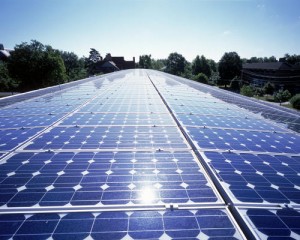
A pleasant surprise this morning to see across the front page of the Waikato Times the headline “Waikato’s plan to harvest sunlight”.  The article reports that lines company WEL Networks has been evaluating photovoltaic cells and is now investigating the feasibility of solar power production in the Waikato region.
Commercial viability is the determining factor. It’s the dramatic fall in the cost of photovoltaic cells which has caused WEL Network’s investigation. CEO Julian Elder said that the low price of the cells, compared with where they were a few months ago, made solar power stations affordable in New Zealand. He said that in the space of a few months the return on investment had gone from about half a century to under 10 years.

We are looking at the whole range, from 1-2 kilowatt units on a house, up to the thousands of kilowatts for a large-scale pilot,” Dr Elder said.

He said it was not a case of if they built such power stations but a matter of when.

Continue reading “Unstoppable waves of innovation in the Waikato?”

The Climate Show #24: John Mashey digs into organised denial

[youtube]TRM8-bi9NHw[/youtube]

It’s been a long summer (not a hot one) for the The Climate Show, but Glenn, Gareth and John are back with a good show for the new year. Feature interview — and it’s a cracker — is with Californian computer scientist John Mashey, who has been digging deep into the networks of organised denial, tracking the flows of money and malpractice from plagiarism to zombie chairmen. Plus John Cook introduces his Debunking Handbook, a look at Arctic ice and its impact on European weather and a report calling for “dramatic action to avert a collapse of civilisation”.

Watch The Climate Show on our Youtube channel, subscribe to the podcast via iTunes, listen to us via Stitcher on your smartphone or listen direct/download from the link below the fold.

Follow The Climate Show at The Climate Show web site, and on Facebook and Twitter.

Continue reading “The Climate Show #24: John Mashey digs into organised denial”

Inhofe’s “Hoax”: foolish and dangerous

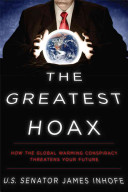
I decided to take a look at Senator Inhofe’s newly published book The Greatest Hoax: How the Global Warming Conspiracy Threatens Your Future, thinking I might get a better understanding of what impels a politician like him into aggressive denial of climate science and opposition to any moves to tackle the climate crisis. It wasn’t difficult to find out. He is a virulent opponent of what he regards as government over-regulation.  He describes earlier in life working “long hard hours” as a developer, and finding the chief obstacle to “living out my American dream” was the government. Bureaucrats, “pseudo-intellectuals in Washington who think they know best”, are holding back the enterprising spirit on which the American economy depends.

It’s not my purpose in this post to discuss Inhofe’s politics per se. It’s how they impinge on the challenge of climate change that concerns me. So far as I could see in reading his book climate change is denied in the name of free enterprise, the lifeblood of the American economy.

Continue reading “Inhofe’s “Hoax”: foolish and dangerous”